QUESTION IMAGE
Question
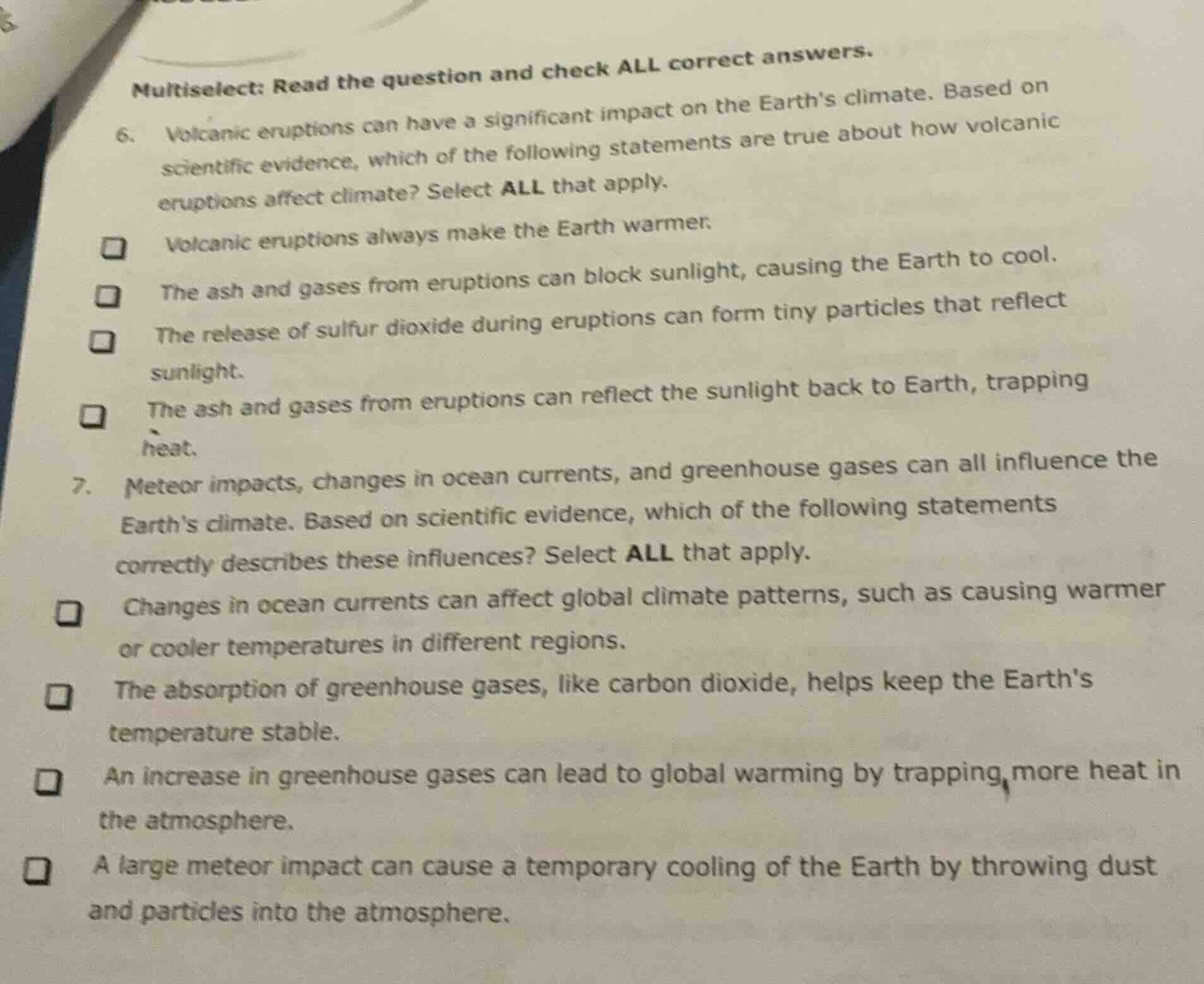
multiselect: read the question and check all correct answers.
- volcanic eruptions can have a significant impact on the earths climate. based on scientific evidence, which of the following statements are true about how volcanic eruptions affect climate? select all that apply.
- volcanic eruptions always make the earth warmer.
- the ash and gases from eruptions can block sunlight, causing the earth to cool.
- the release of sulfur dioxide during eruptions can form tiny particles that reflect sunlight.
- the ash and gases from eruptions can reflect the sunlight back to earth, trapping heat.
- meteor impacts, changes in ocean currents, and greenhouse gases can all influence the earths climate. based on scientific evidence, which of the following statements correctly describes these influences? select all that apply.
- changes in ocean currents can affect global climate patterns, such as causing warmer or cooler temperatures in different regions.
- the absorption of greenhouse gases, like carbon dioxide, helps keep the earths temperature stable.
- an increase in greenhouse gases can lead to global warming by trapping more heat in the atmosphere.
- a large meteor impact can cause a temporary cooling of the earth by throwing dust and particles into the atmosphere.
Brief Explanations
For Question 6:
- Volcanic eruptions do not always warm the Earth; most have a cooling effect.
- Ash/gases block sunlight, causing planetary cooling.
- Sulfur dioxide forms reflective aerosols that reduce sunlight reaching Earth's surface.
- Ash/gases reflect sunlight away, not trap heat.
For Question 7:
- Ocean currents redistribute heat, altering regional temperatures.
- Greenhouse gases (like CO₂) absorb heat to stabilize Earth's temperature.
- More greenhouse gases trap extra atmospheric heat, causing warming.
- Meteor impact dust blocks sunlight, leading to temporary cooling.

Snap & solve any problem in the app
Get step-by-step solutions on Sovi AI
Photo-based solutions with guided steps
Explore more problems and detailed explanations
Question 6 Correct Answers:
- The ash and gases from eruptions can block sunlight, causing the Earth to cool.
- The release of sulfur dioxide during eruptions can form tiny particles that reflect sunlight.
Question 7 Correct Answers:
- Changes in ocean currents can affect global climate patterns, such as causing warmer or cooler temperatures in different regions.
- The absorption of greenhouse gases, like carbon dioxide, helps keep the Earth's temperature stable.
- An increase in greenhouse gases can lead to global warming by trapping more heat in the atmosphere.
- A large meteor impact can cause a temporary cooling of the Earth by throwing dust and particles into the atmosphere.