QUESTION IMAGE
Question
name:
date:02-06-21
period:
station 4 business integration: imperialism in india
objective: swbat explain how british imperialism transformed india by using a source and answering analysis questions.
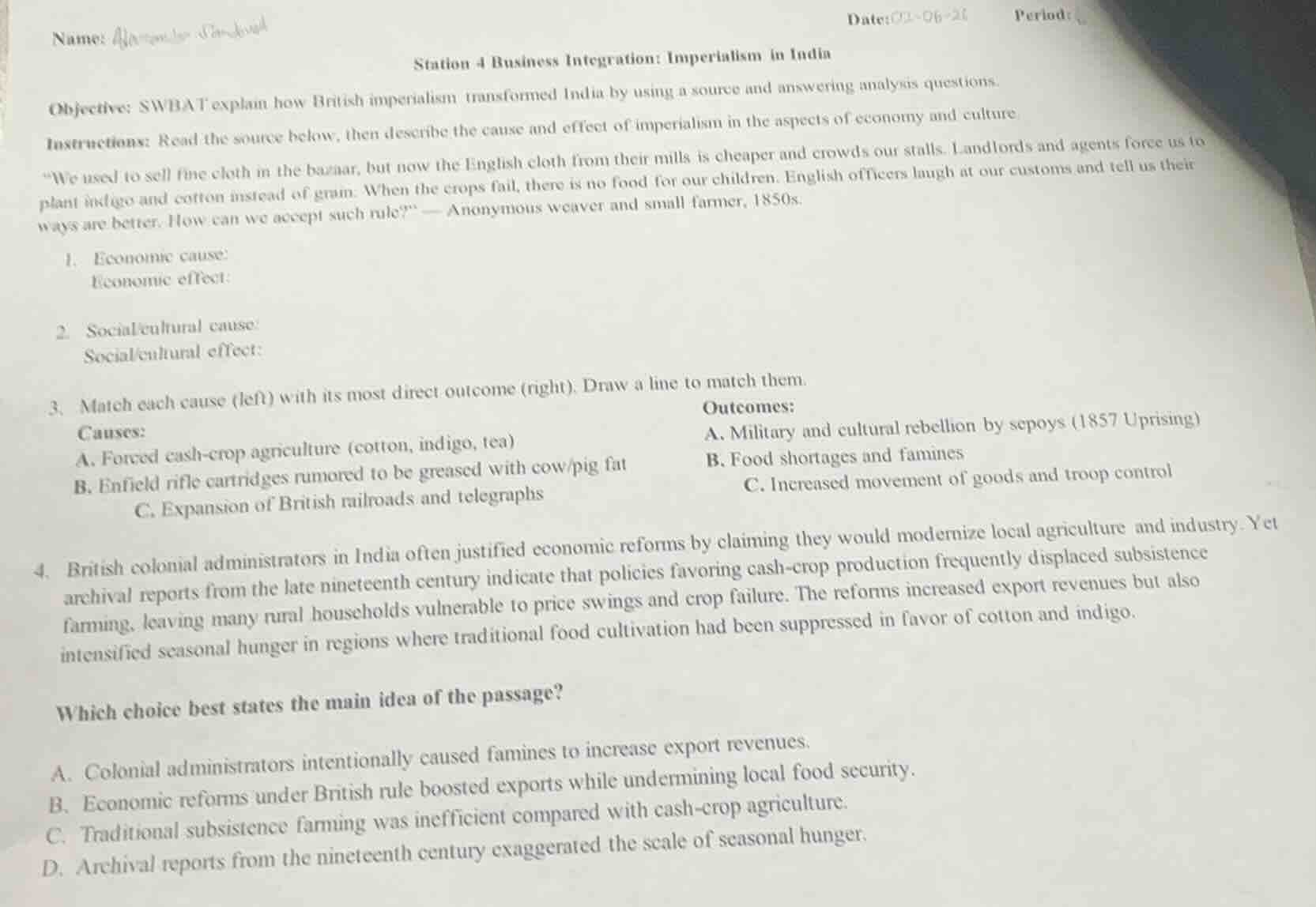
instructions: read the source below, then describe the cause and effect of imperialism in the aspects of economy and culture
\we used to sell fine cloth in the bazaar, but now the english cloth from their mills is cheaper and crowds our stalls. landlords and agents force us to plant indigo and cotton instead of gram. when the crops fail, there is no food for our children. english officers laugh at our customs and tell us their ways are better. how can we accept such rule?\ — anonymous weaver and small farmer, 1850s.
- economic cause:
economic effect:
- social/cultural cause:
social/cultural effect:
- match each cause (left) with its most direct outcome (right). draw a line to match them.
causes:
a. forced cash - crop agriculture (cotton, indigo, tea)
b. enfield rifle cartridges rumored to be greased with cow/pig fat
c. expansion of british railroads and telegraphs
outcomes:
a. military and cultural rebellion by sepoys (1857 uprising)
b. food shortages and famines
c. increased movement of goods and troop control
- british colonial administrators in india often justified economic reforms by claiming they would modernize local agriculture and industry. yet archival reports from the late nineteenth century indicate that policies favoring cash - crop production frequently displaced subsistence farming, leaving many rural households vulnerable to price swings and crop failure. the reforms increased export revenues but also intensified seasonal hunger in regions where traditional food cultivation had been suppressed in favor of cotton and indigo.
which choice best states the main idea of the passage?
a. colonial administrators intentionally caused famines to increase export revenues.
b. economic reforms under british rule boosted exports while undermining local food security.
c. traditional subsistence farming was inefficient compared with cash - crop agriculture.
d. archival reports from the nineteenth century exaggerated the scale of seasonal hunger.
- For the cause/effect questions, analyze the provided 1850s source text to identify direct economic and cultural drivers and their results. For the matching question, link each British colonial action to its specific, direct consequence. For the main idea question, compare each option to the core claim of the passage about British economic reforms.
- Economic cause: British imported cheap factory cloth + forced cash crops.
Economic effect: Local weavers lost livelihoods; farmers faced food shortages when cash crops failed.
- Social/cultural cause: British mocked Indian customs, imposed their own.
Social/cultural effect: Erosion of local cultural identity and resentment of colonial rule.
- Matching: Forced cash crops lead to food shortages; Enfield cartridges sparked the 1857 uprising; railroads/telegraphs enabled goods/troop control.
- Main idea: The passage focuses on British economic reforms that boosted exports but harmed local food security, so option B is correct.

Snap & solve any problem in the app
Get step-by-step solutions on Sovi AI
Photo-based solutions with guided steps
Explore more problems and detailed explanations
- Economic cause: British dumped cheap machine-made cloth; forced cash crop cultivation
Economic effect: Local weavers were put out of business; farmers faced food scarcity when cash crops failed
- Social/cultural cause: British dismissed and mocked Indian customs
Social/cultural effect: Erosion of traditional Indian cultural practices; growing resentment of colonial cultural dominance
- Matching:
A. Forced cash-crop agriculture (cotton, indigo, tea) → B. Food shortages and famines
B. Enfield rifle cartridges rumored to be greased with cow/pig fat → A. Military and cultural rebellion by sepoys (1857 Uprising)
C. Expansion of British railroads and telegraphs → C. Increased movement of goods and troop control
- B. Economic reforms under British rule boosted exports while undermining local food security.