QUESTION IMAGE
Question
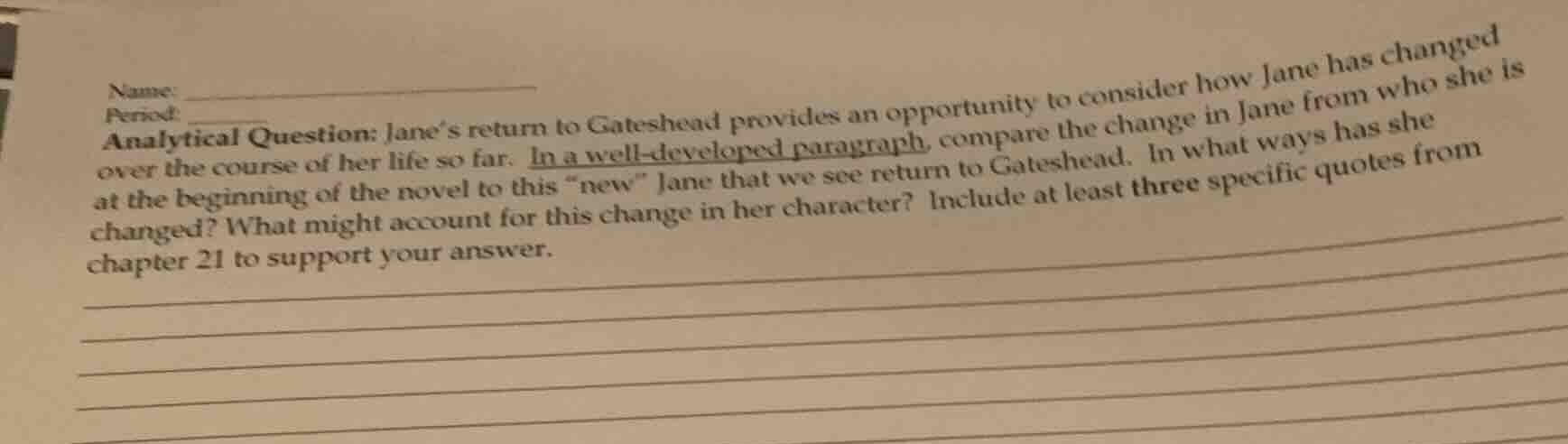
name:period:analytical question: janes return to gateshead provides an opportunity to consider how jane has changed over the course of her life so far. in a well-developed paragraph, compare the change in jane from who she is at the beginning of the novel to this “new” jane that we see return to gateshead. in what ways has she changed? what might account for this change in her character? include at least three specific quotes from chapter 21 to support your answer.
Jane Eyre evolves from a repressed, angry child to a confident, empathetic adult by her return to Gateshead. As a child, she rages against her mistreatment, crying "I am not deceitful... I will speak the truth" (Chapter 4) when punished for defending herself, showing her raw, unregulated defiance. By Chapter 21, she approaches Gateshead with calm self-assurance, stating "I had no longer the sense of inferiority, shyness, or timidity" when facing Mrs. Reed, reflecting her growth from Lowood's education and her time as a governess at Thornfield, where she gained financial independence and self-respect. She also shows new empathy: when Mrs. Reed admits hiding her uncle's letter, Jane responds "I forgive you now... let us forget it all" (Chapter 21), a stark contrast to her childhood desire for revenge. This change stems from her development of self-worth, exposure to compassionate mentors like Miss Temple, and the experience of being valued as an equal by Mr. Rochester, which taught her to balance self-respect with mercy.

Snap & solve any problem in the app
Get step-by-step solutions on Sovi AI
Photo-based solutions with guided steps
Explore more problems and detailed explanations
Jane transforms from a fiercely defensive, emotionally repressed child to a self-possessed, empathetic adult by her return to Gateshead. Key changes include:
- Shift from rage to calm resolve: As a child, she screams "I am not deceitful... I will speak the truth" (Chapter 4) in unfiltered anger at unfair punishment; in Chapter 21, she notes "I had no longer the sense of inferiority, shyness, or timidity" when confronting Mrs. Reed, showing quiet confidence.
- Growth of empathy: She abandons childhood desires for revenge to say "I forgive you now... let us forget it all" (Chapter 21) when Mrs. Reed confesses hiding her uncle's letter.
- New financial/self independence: Her role as a governess gives her stability, so she no longer depends on Gateshead's goodwill, stating "I have an independent income" (Chapter 21) when Mrs. Reed questions her presence.
This change is driven by her education at Lowood (where Miss Temple modeled compassion and self-discipline), her experience of being valued as an equal at Thornfield, and her hard-won financial autonomy, which allowed her to develop a secure, mature sense of self.