QUESTION IMAGE
Question
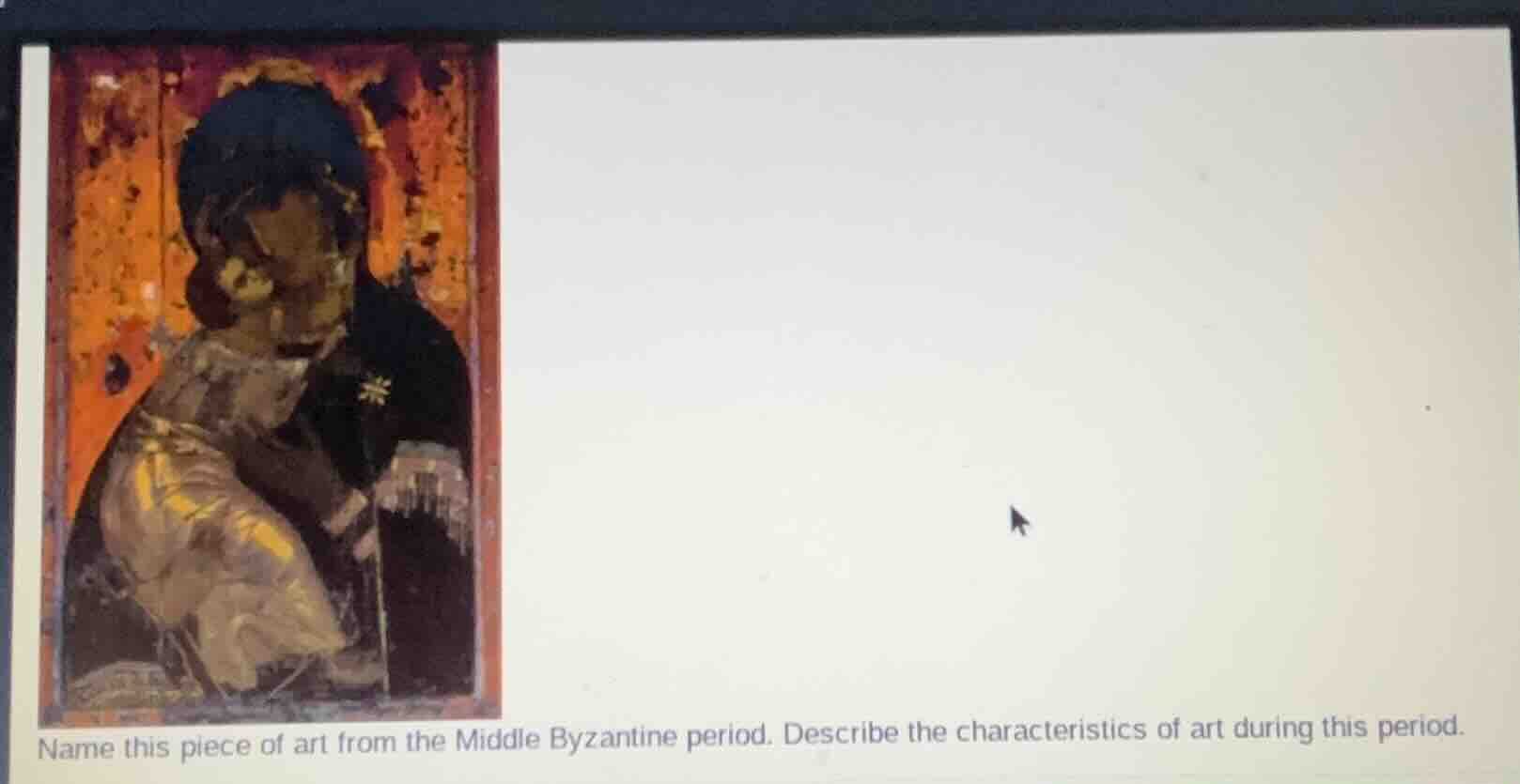
name this piece of art from the middle byzantine period. describe the characteristics of art during this period.
The artwork is the Virgin and Child (a typical Middle Byzantine icon). Middle Byzantine art (c. 843 - 1204) after Iconoclasm: 1. Religious focus (icons, mosaics, frescoes for churches, emphasizing spiritual over naturalistic representation). 2. Stylized figures: flat, frontal, rigid postures (less naturalism, more symbolic to convey holiness). 3. Gold backgrounds (to suggest heavenly space, timelessness). 4. Hieratic scale (important figures larger). 5. Use of line and color for decorative, symbolic effect (e.g., bold outlines, rich hues). 6. Return to classical Byzantine techniques (like egg - tempera on wood for icons) with a balance of tradition and new artistic exploration (e.g., more emotional or narrative elements in some works, though still stylized).

Snap & solve any problem in the app
Get step-by-step solutions on Sovi AI
Photo-based solutions with guided steps
Explore more problems and detailed explanations
- Name of the art piece: This is a Middle Byzantine icon, commonly identified as a Virgin and Child (Byzantine icon of the Virgin Mary and Jesus, often called a "Theotokos" icon, with specific examples like the "Virgin of Vladimir" - style or similar Middle Byzantine icons, though the exact title may vary by specific work, but the genre is a Middle Byzantine religious icon of the Virgin and Child).
- Characteristics of Middle Byzantine art:
- Religious iconography: Dominated by Christian themes (icons, mosaics, frescoes) to inspire devotion, with subjects like Christ, Virgin Mary, saints.
- Stylized figures: Flat, frontal, with simplified anatomy, rigid postures (prioritize spiritual essence over naturalistic realism); faces often have serene, otherworldly expressions.
- Gold backgrounds: Symbolize the heavenly realm, creating a sense of timeless, divine space.
- Hieratic scale: More important figures (e.g., Christ, Virgin) are larger to show their significance.
- Technique: Icons made with egg - tempera on wood (or mosaics/frescoes in churches); use of line and color for decorative, symbolic purposes (bold outlines, rich, flat color areas).
- Post - Iconoclasm revival: After the end of Iconoclasm (843), icons were re - established as central to Byzantine worship, with art balancing traditional Byzantine forms and some subtle new developments (e.g., slightly more naturalistic drapery or emotional nuance in later Middle Byzantine works, while still maintaining stylized sacredness).