QUESTION IMAGE
Question
norms: folkways and mores
allen - sem 2 / module 2 culture and society
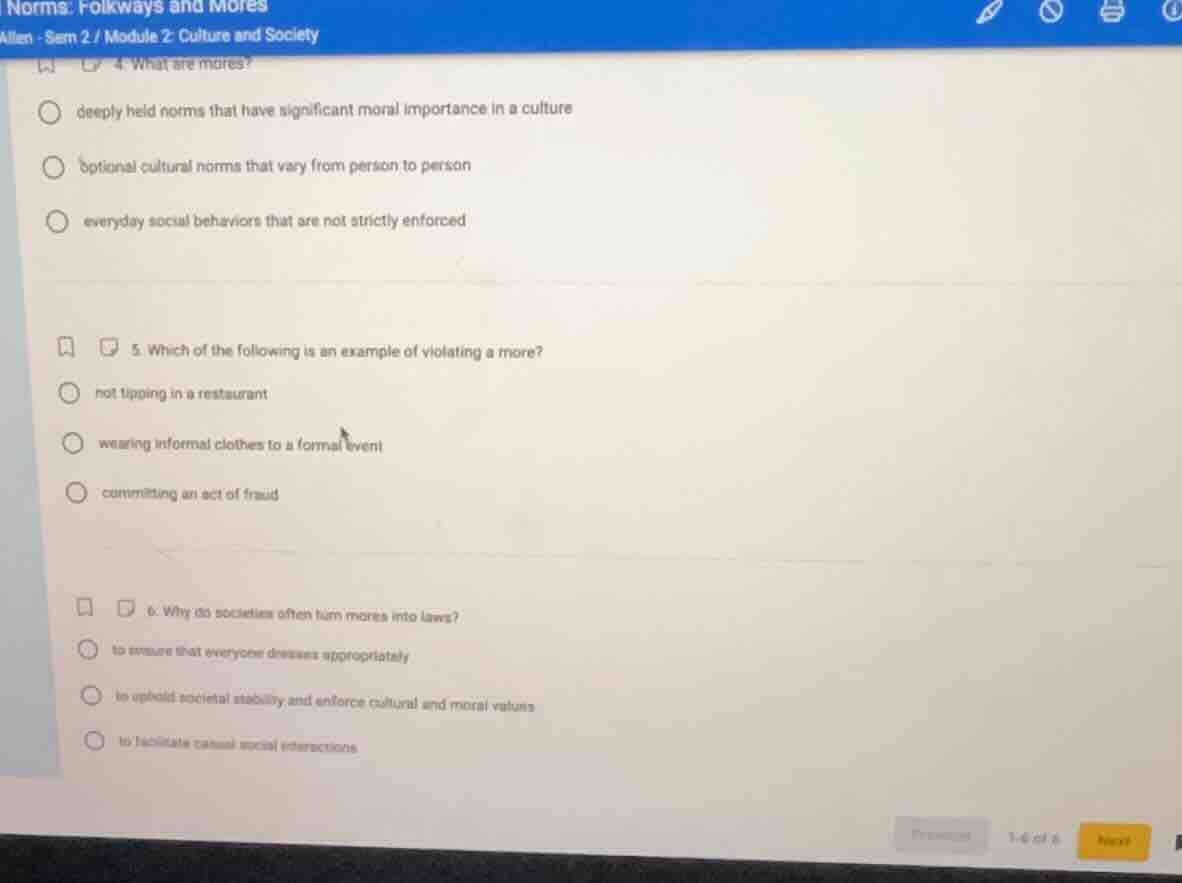
- what are mores?
- deeply held norms that have significant moral importance in a culture
- optional cultural norms that vary from person to person
- everyday social behaviors that are not strictly enforced
- which of the following is an example of violating a more?
- not tipping in a restaurant
- wearing informal clothes to a formal event
- committing an act of fraud
- why do societies often turn mores into laws?
- to ensure that everyone dresses appropriately
- to uphold societal stability and enforce cultural and moral values
- to facilitate casual social interactions
Question 4
Mores are norms with strong moral significance in a culture. The first option matches this definition. The second option describes optional norms (not mores), and the third describes folkways (less strict norms).
Mores relate to moral/ethical standards. Committing fraud is a moral violation (mores), while not tipping or informal clothes at formal events are folkway violations (less moral significance).
Turning mores into laws helps maintain social order and enforce moral values. Ensuring proper dressing is about folkways, and facilitating casual interactions is not the purpose of legalizing mores.

Snap & solve any problem in the app
Get step-by-step solutions on Sovi AI
Photo-based solutions with guided steps
Explore more problems and detailed explanations
A. deeply held norms that have significant moral importance in a culture