QUESTION IMAGE
Question
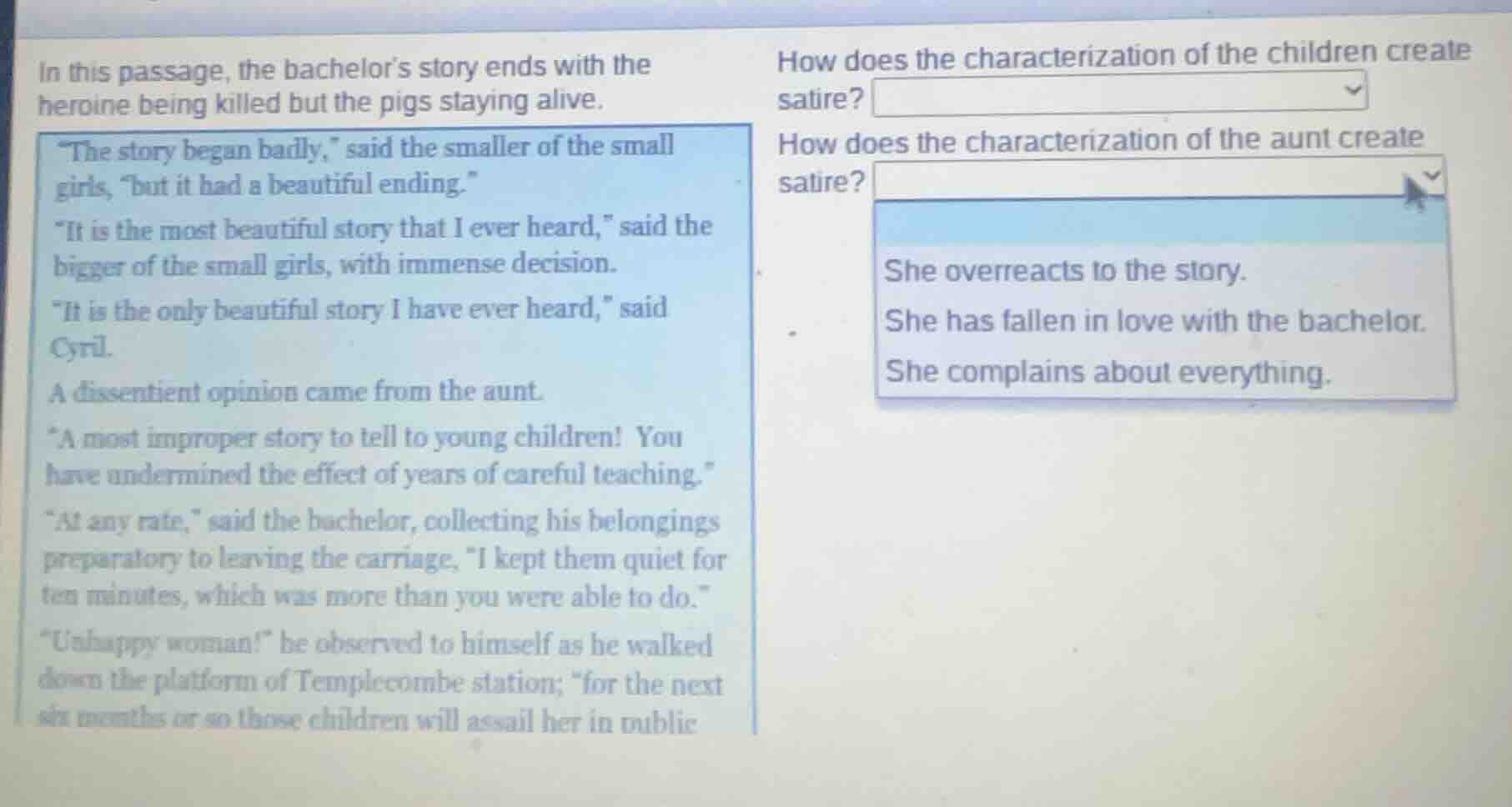
in this passage, the bachelor’s story ends with the heroine being killed but the pigs staying alive.
\the story began badly,\ said the smaller of the small girls, \but it had a beautiful ending.\
\it is the most beautiful story that i ever heard,\ said the bigger of the small girls, with immense decision.
\it is the only beautiful story i have ever heard,\ said cyril.
a dissentient opinion came from the aunt.
\a most improper story to tell to young children! you have undermined the effect of years of careful teaching.\
\at any rate,\ said the bachelor, collecting his belongings preparatory to leaving the carriage, \i kept them quiet for ten minutes, which was more than you were able to do.\
\unhappy woman!\ he observed to himself as he walked down the platform of templecombe station; \for the next six months or so those children will assail her in public
how does the characterization of the children create satire?
how does the characterization of the aunt create satire?
she overreacts to the story.
she has fallen in love with the bachelor.
she complains about everything.
For the children: Their enthusiastic approval of the bachelor's subversive, morally unorthodox story (where the "good" heroine dies and pigs live) satirizes the rigid, overly sentimental moral lessons adults force on children. They reject the aunt's boring, proper tales, exposing how adult moralizing is out of touch with children's actual tastes.
For the aunt: Her extreme, indignant reaction to the bachelor's story (claiming it undermines years of teaching) satirizes the pretension of adults who cling to rigid, outdated moral standards and refuse to acknowledge that their attempts to educate are ineffective.

Snap & solve any problem in the app
Get step-by-step solutions on Sovi AI
Photo-based solutions with guided steps
Explore more problems and detailed explanations
How does the characterization of the children create satire?
The children's enthusiastic embrace of the bachelor's morally unorthodox story satirizes the rigid, out-of-touch moral lessons adults impose on them, showing they reject boring, proper adult-approved tales.
How does the characterization of the aunt create satire?
A. She overreacts to the story.