QUESTION IMAGE
Question
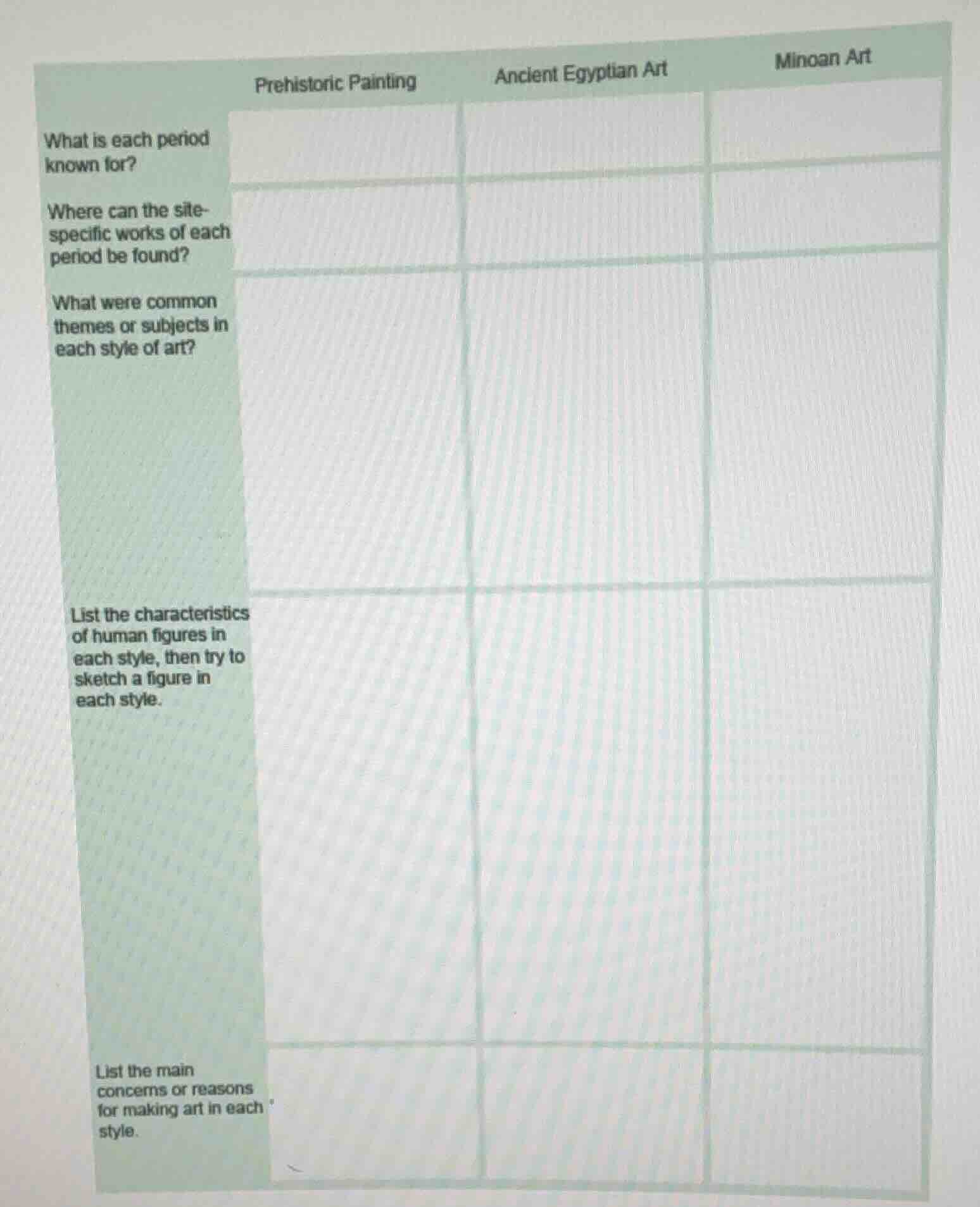
prehistoric painting ancient egyptian art minoan art
what is each period known for?
where can the site-specific works of each period be found?
what were common themes or subjects in each style of art?
list the characteristics of human figures in each style, then try to sketch a figure in each style.
list the main concerns or reasons for making art in each style.
Brief Explanations
This table compares three ancient art styles by their defining traits, locations, themes, figure characteristics, and artistic motivations, based on art historical scholarship:
- Prehistoric Painting: Focused on early symbolic/functional art in cave sites, centered on survival and ritual.
- Ancient Egyptian Art: Formal, symbolic art tied to religion and the afterlife, created for elite burials and monuments.
- Minoan Art: Vibrant, nature-focused art from the Aegean, reflecting a wealthy, sea-faring culture.

Snap & solve any problem in the app
Get step-by-step solutions on Sovi AI
Photo-based solutions with guided steps
Explore more problems and detailed explanations
| Category | Prehistoric Painting | Ancient Egyptian Art | Minoan Art |
|---|---|---|---|
| Where can the site-specific works of each period be found? | Cave sites (Lascaux, France; Altamira, Spain; Chauvet, France) | Nile Valley (Egypt, Sudan): tombs, temples, pyramids (Valley of the Kings, Giza) | Aegean Islands (Crete, Santorini): palaces (Knossos), villa murals |
| What were common themes or subjects in each style of art? | Large game animals, hunting scenes, abstract symbols | Pharaohs, gods, daily life, funerary rituals, hieroglyphs | Marine life, nature, religious rituals, athletic events, royal processions |
| List the characteristics of human figures in each style, then try to sketch a figure in each style. | Simplified, stick-like or outlined forms; often static, focused on action (hunting) rather than detail | Composite perspective (head/legs in profile, torso frontal); rigid, idealized proportions; symbolic scale (pharaohs largest) | Naturalistic, dynamic poses; soft, rounded forms; lifelike expressions, often in relaxed or active positions |
| List the main concerns or reasons for making art in each style. | Ritual for hunting success, recording survival needs, early symbolic communication | Ensuring pharaohs' afterlife, religious devotion, displaying political power | Celebrating nature, religious ritual, showcasing cultural prosperity and daily life |