QUESTION IMAGE
Question
pretest: realizing dreams
adapted from white fang
by jack london
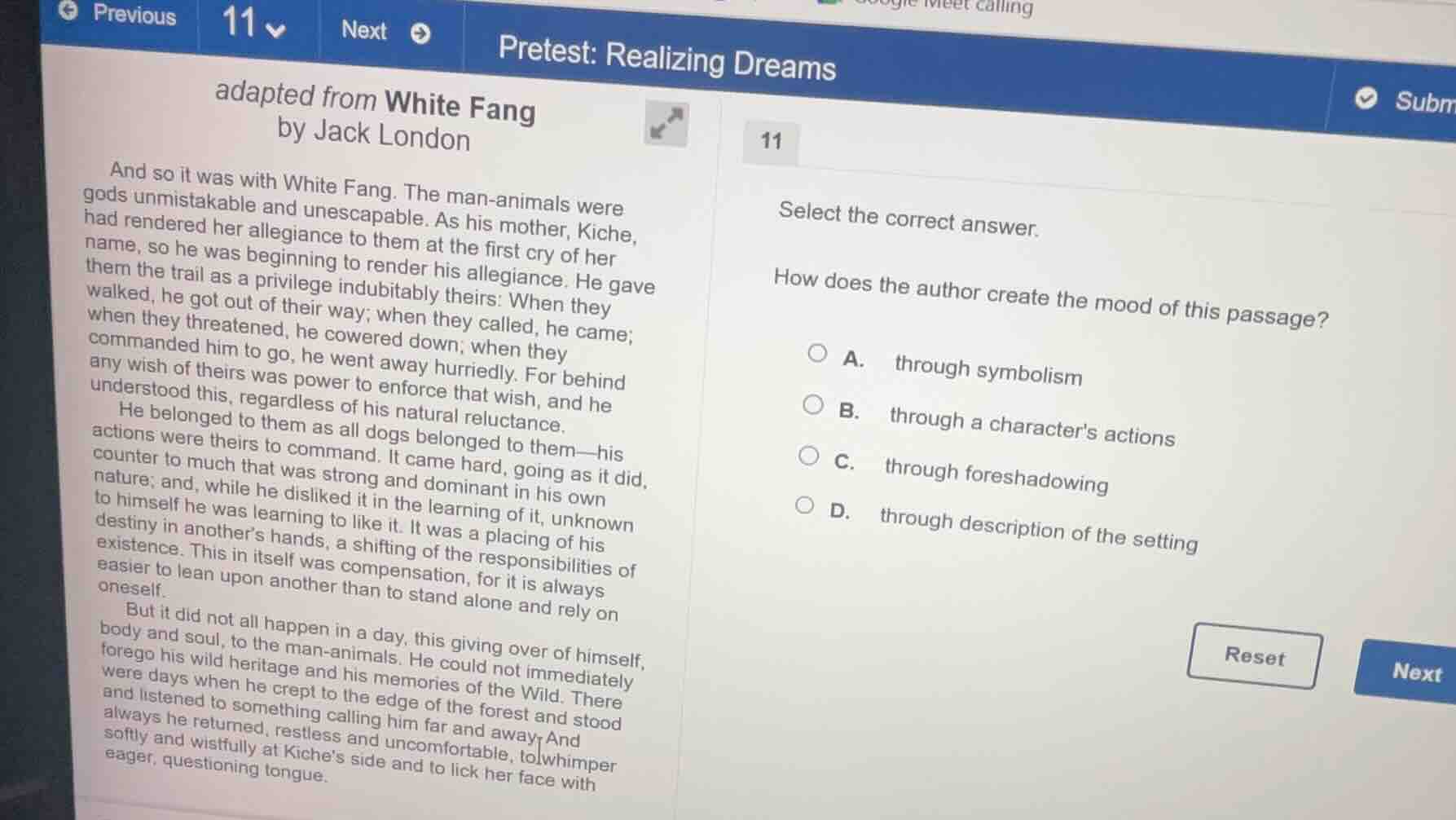
and so it was with white fang. the man - animals were
gods unmistakable and unescapable. as his mother, kiche,
had rendered her allegiance to them at the first cry of her
name, so he was beginning to render his allegiance. he gave
them the trail as a privilege indubitably theirs: when they
walked, he got out of their way; when they called, he came;
when they threatened, he cowered down; when they
commanded him to go, he went away hurriedly. for behind
any wish of theirs was power to enforce that wish, and he
understood this, regardless of his natural reluctance.
he belonged to them as all dogs belonged to them—his
actions were theirs to command. it came hard, going as it did,
counter to much that was strong and dominant in his own
nature; and, while he disliked it in the learning of it, unknown
to himself he was learning to like it. it was a placing of his
destiny in anothers hands, a shifting of the responsibilities of
existence. this in itself was compensation, for it is always
easier to lean upon another than to stand alone and rely on
oneself.
but it did not all happen in a day, this giving over of himself,
body and soul, to the man - animals. he could not immediately
forego his wild heritage and his memories of the wild. there
were days when he crept to the edge of the forest and stood
and listened to something calling him far and away. and
always he returned, restless and uncomfortable, to whimper
softly and wistfully at kiches side and to lick her face with
eager, questioning tongue.
11
select the correct answer.
how does the author create the mood of this passage?
a. through symbolism
b. through a characters actions
c. through foreshadowing
d. through description of the setting
The passage focuses on White Fang's behaviors: moving out of humans' way, coming when called, cowering when threatened, and his conflicted actions regarding his wild heritage. These specific character actions establish the mood of reluctant allegiance and gradual taming, rather than symbolism, foreshadowing, or setting description.

Snap & solve any problem in the app
Get step-by-step solutions on Sovi AI
Photo-based solutions with guided steps
Explore more problems and detailed explanations
B. through a character's actions