QUESTION IMAGE
Question
question 3 of 15
unit exam: global depression and the rise of dictatorships
due date: 01/22/26 points 100
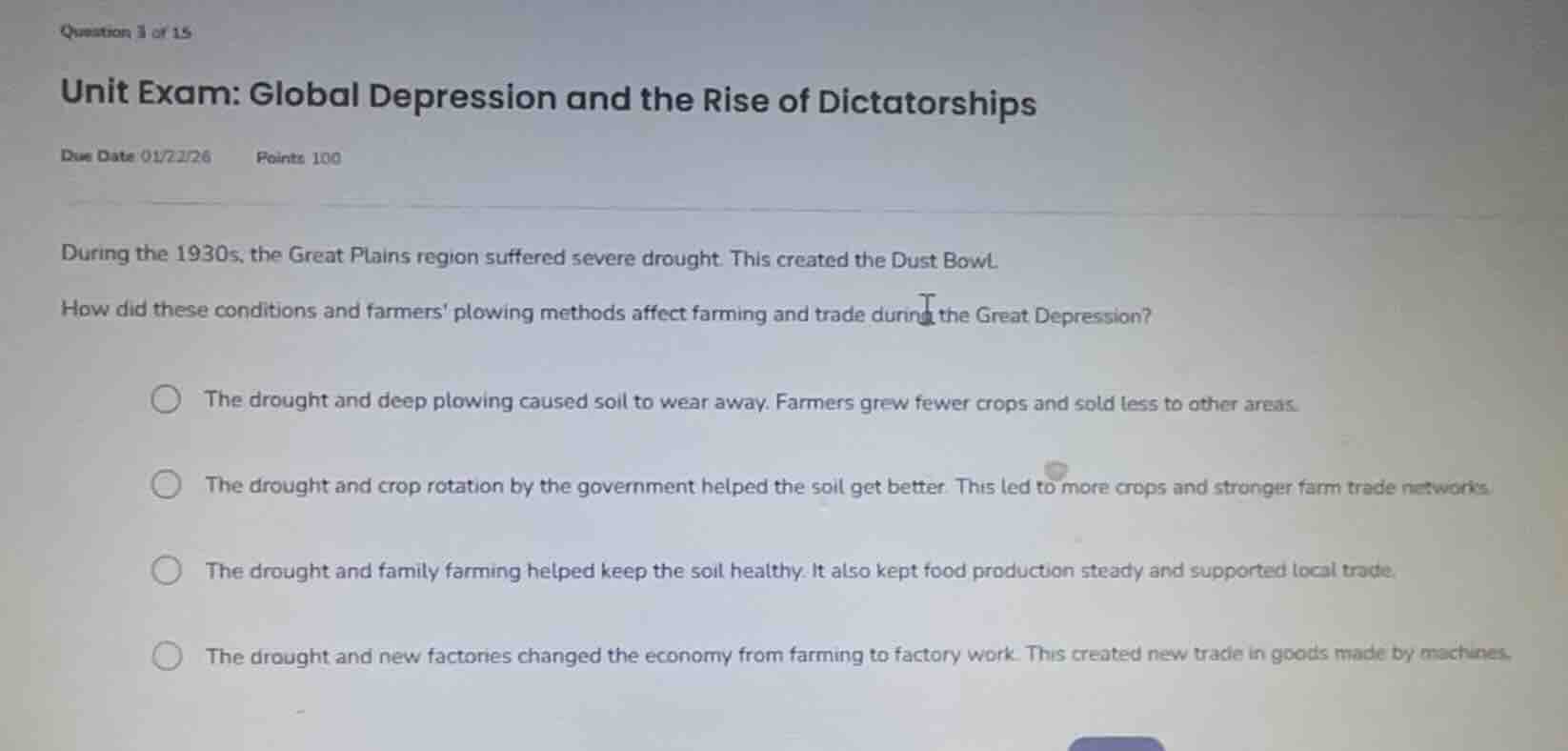
during the 1930s, the great plains region suffered severe drought. this created the dust bowl.
how did these conditions and farmers plowing methods affect farming and trade during the great depression?
the drought and deep plowing caused soil to wear away. farmers grew fewer crops and sold less to other areas.
the drought and crop rotation by the government helped the soil get better. this led to more crops and stronger farm trade networks.
the drought and family farming helped keep the soil healthy. it also kept food production steady and supported local trade.
the drought and new factories changed the economy from farming to factory work. this created new trade in goods made by machines.
The Dust Bowl was caused by severe drought combined with unsustainable deep plowing methods that stripped the Great Plains of native grass cover, leading to massive soil erosion. This destroyed farmland, reducing crop yields drastically. With fewer crops to sell, farmers had less to trade with other regions, worsening economic struggles during the Great Depression. The other options are incorrect: crop rotation was not a government action that improved soil during this crisis, family farming did not prevent soil degradation, and the Dust Bowl did not shift the economy to factory work in this context.

Snap & solve any problem in the app
Get step-by-step solutions on Sovi AI
Photo-based solutions with guided steps
Explore more problems and detailed explanations
The drought and deep plowing caused soil to wear away. Farmers grew fewer crops and sold less to other areas.