QUESTION IMAGE
Question
question 1
1 pts
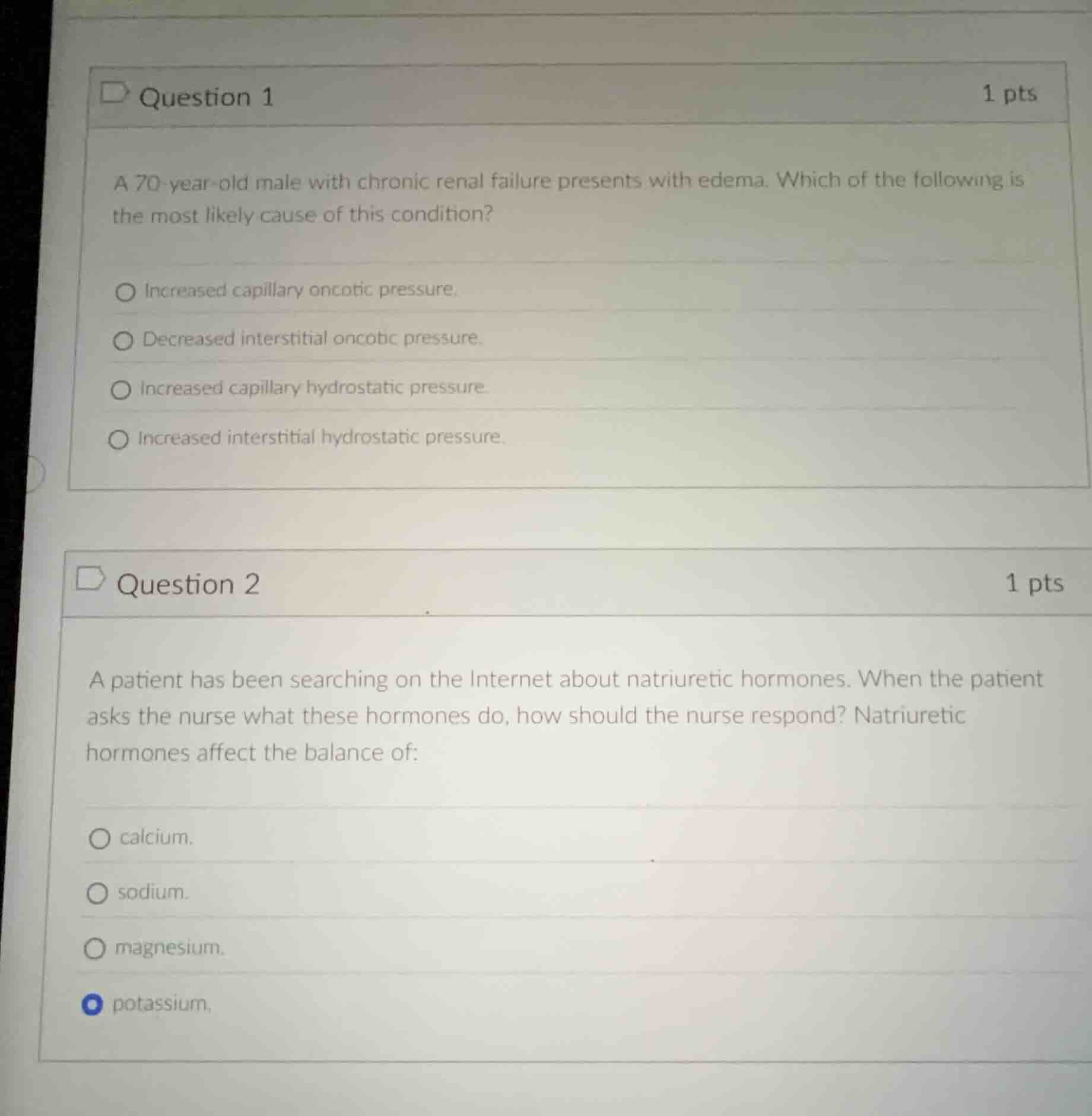
a 70 - year - old male with chronic renal failure presents with edema. which of the following is the most likely cause of this condition?
increased capillary oncotic pressure.
decreased interstitial oncotic pressure.
increased capillary hydrostatic pressure.
increased interstitial hydrostatic pressure.
question 2
1 pts
a patient has been searching on the internet about natriuretic hormones. when the patient asks the nurse what these hormones do, how should the nurse respond? natriuretic hormones affect the balance of:
calcium.
sodium.
magnesium.
potassium.
Question 1
In chronic renal failure, the kidneys can't regulate fluid and pressure well. Edema (fluid retention) in renal failure often comes from increased capillary hydrostatic pressure. Renal dysfunction leads to fluid overload, raising capillary hydrostatic pressure, which pushes fluid into interstitial spaces. Increased capillary oncotic pressure would pull fluid back, decreasing edema. Decreased interstitial oncotic pressure or increased interstitial hydrostatic pressure don't align with renal failure - related edema mechanisms.
Natriuretic hormones (like ANP, BNP) primarily regulate sodium (Na⁺) balance. "Natriuresis" means increased sodium excretion. These hormones act on the kidneys to increase sodium (and water) excretion, so they affect sodium balance. Calcium, magnesium, and potassium are not the main targets of natriuretic hormones in terms of their primary "natriuretic" (sodium - related) function.

Snap & solve any problem in the app
Get step-by-step solutions on Sovi AI
Photo-based solutions with guided steps
Explore more problems and detailed explanations
C. Increased capillary hydrostatic pressure.