QUESTION IMAGE
Question
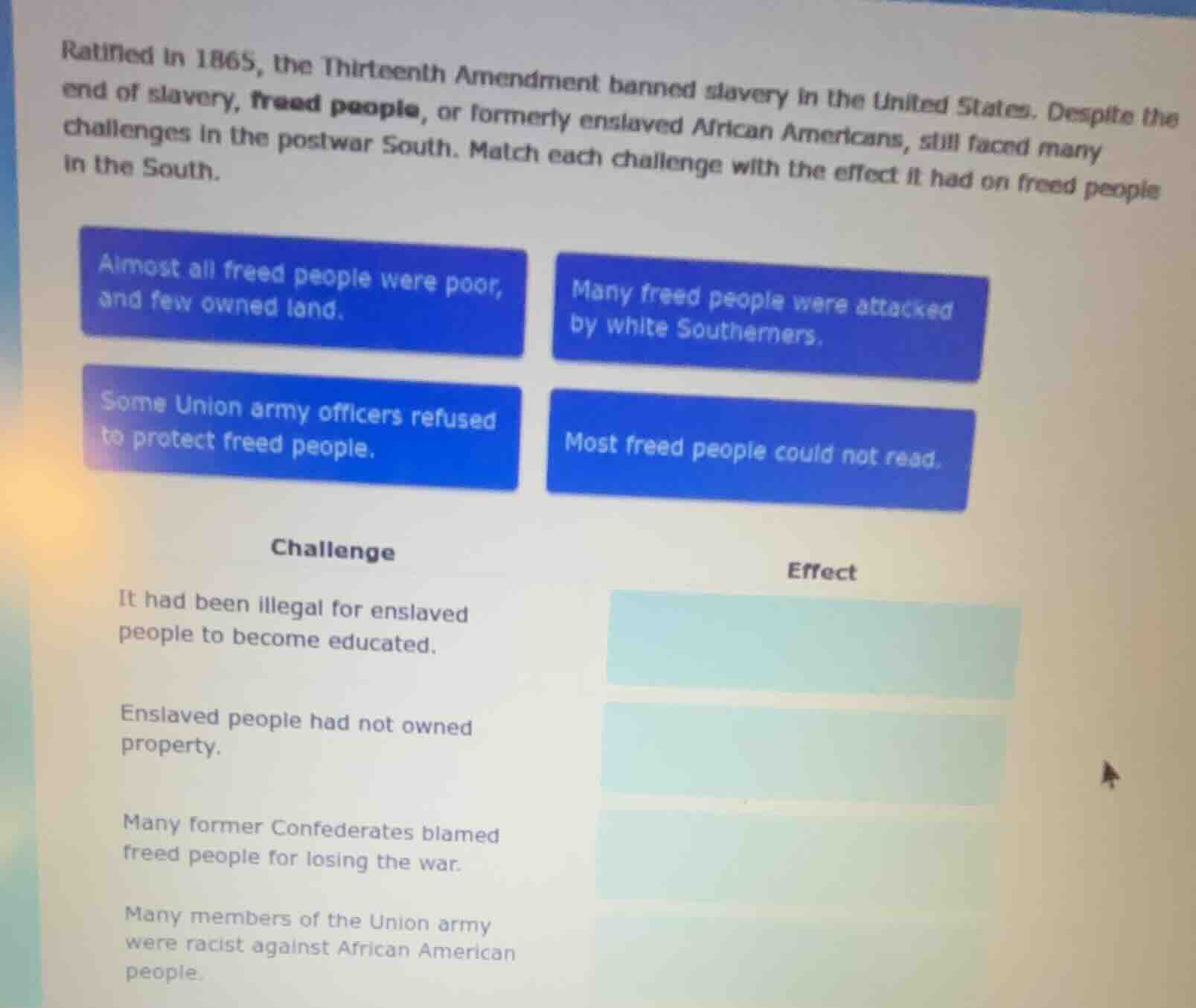
ratified in 1865, the thirteenth amendment banned slavery in the united states. despite the end of slavery, freed people, or formerly enslaved african americans, still faced many challenges in the postwar south. match each challenge with the effect it had on freed people in the south.
almost all freed people were poor, and few owned land.
many freed people were attacked by white southerners.
some union army officers refused to protect freed people.
most freed people could not read.
challenge
it had been illegal for enslaved people to become educated.
enslaved people had not owned property.
many former confederates blamed freed people for losing the war.
many members of the union army were racist against african american people.
effect
- The restriction on enslaved people's education directly led to widespread illiteracy among freed people.
- Enslaved people were barred from owning property, so most freed people had no land or wealth.
- Angry former Confederates targeted freed people for their perceived role in the war's outcome.
- Racist Union army officers failed to uphold their duty to protect freed people.

Snap & solve any problem in the app
Get step-by-step solutions on Sovi AI
Photo-based solutions with guided steps
Explore more problems and detailed explanations
- Challenge: It had been illegal for enslaved people to become educated.
Effect: Most freed people could not read.
- Challenge: Enslaved people had not owned property.
Effect: Almost all freed people were poor, and few owned land.
- Challenge: Many former Confederates blamed freed people for losing the war.
Effect: Many freed people were attacked by white Southerners.
- Challenge: Many members of the Union army were racist against African American people.
Effect: Some Union army officers refused to protect freed people.