QUESTION IMAGE
Question
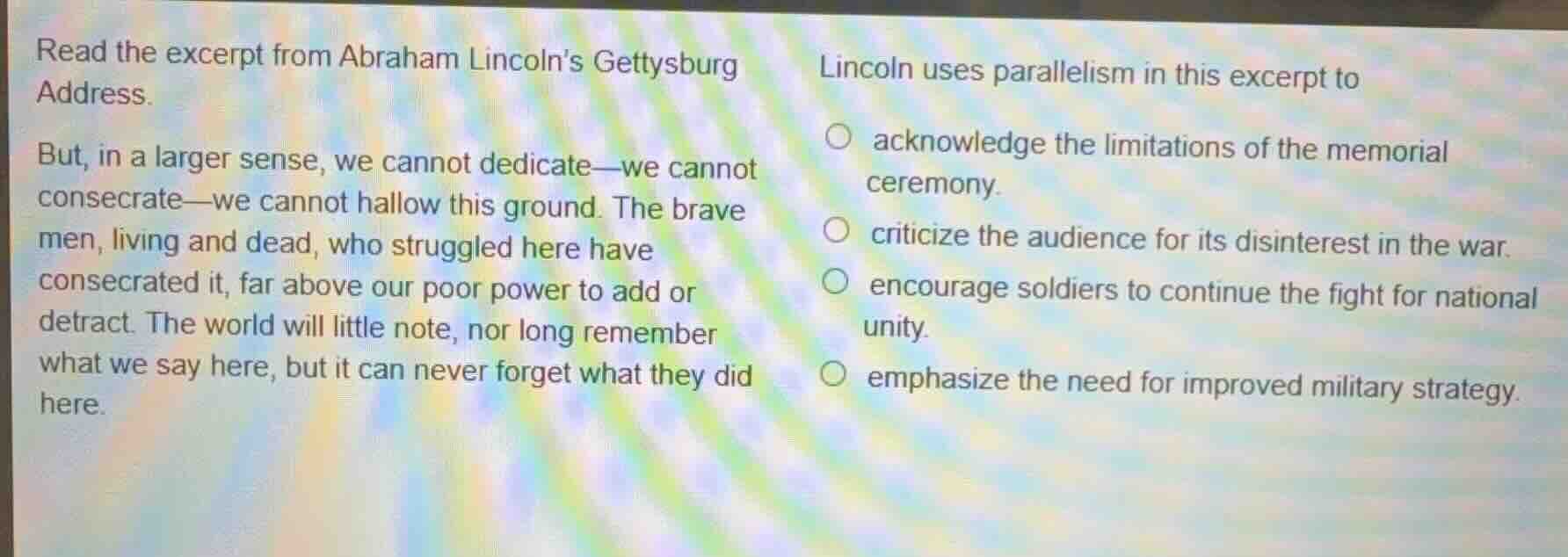
read the excerpt from abraham lincoln’s gettysburg address. but, in a larger sense, we cannot dedicate—we cannot consecrate—we cannot hallow this ground. the brave men, living and dead, who struggled here have consecrated it, far above our poor power to add or detract. the world will little note, nor long remember what we say here, but it can never forget what they did here. lincoln uses parallelism in this excerpt to acknowledge the limitations of the memorial ceremony. criticize the audience for its disinterest in the war. encourage soldiers to continue the fight for national unity. emphasize the need for improved military strategy.
To solve this, we analyze the excerpt and each option:
- Option 1: The excerpt focuses on the soldiers' actions, not memorial ceremony limitations. Eliminate.
- Option 2: Lincoln doesn't criticize the audience; he honors the soldiers. Eliminate.
- Option 3: The Gettysburg Address was about national unity after the Civil War. The parallelism ("we cannot dedicate—we cannot consecrate—we cannot hallow") and emphasis on soldiers' deeds support encouraging the fight for unity.
- Option 4: The excerpt doesn't discuss military strategy. Eliminate.

Snap & solve any problem in the app
Get step-by-step solutions on Sovi AI
Photo-based solutions with guided steps
Explore more problems and detailed explanations
C. encourage soldiers to continue the fight for national unity.