QUESTION IMAGE
Question
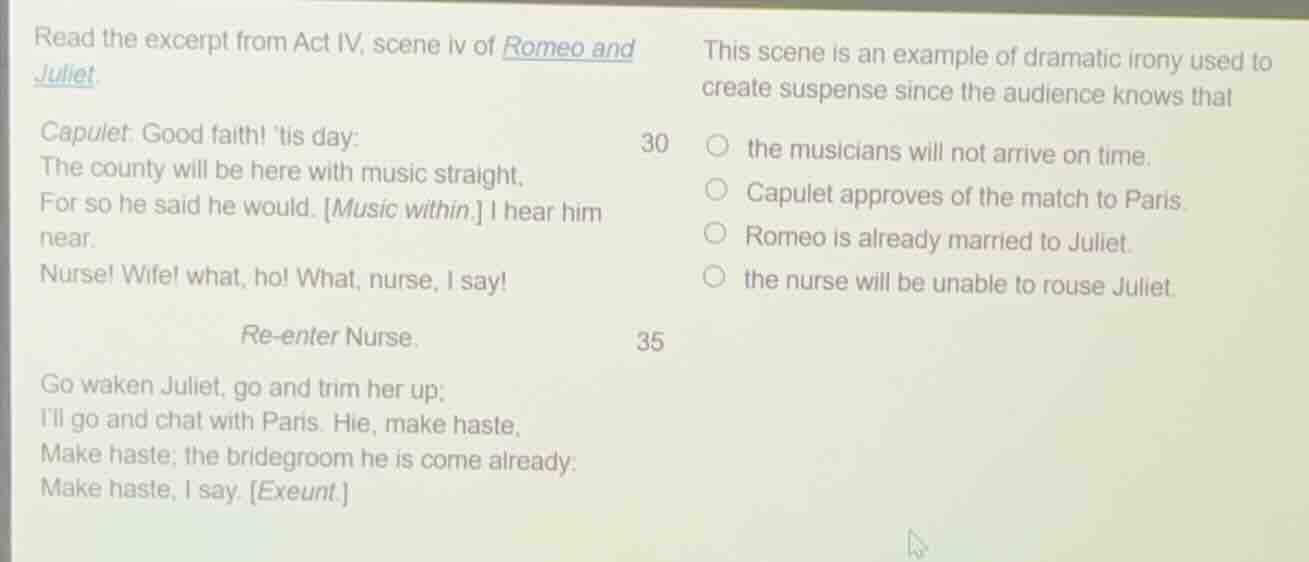
read the excerpt from act iv, scene iv of romeo and juliet. capulet. good faith! tis day: the county will be here with music straight, for so he said he would. music within. i hear him near. nurse! wife! what, ho! what, nurse, i say! re - enter nurse. go waken juliet, go and trim her up, ill go and chat with paris. hie, make haste, make haste; the bridegroom he is come already: make haste, i say. exeunt. this scene is an example of dramatic irony used to create suspense since the audience knows that 30 the musicians will not arrive on time. capulet approves of the match to paris. romeo is already married to juliet. the nurse will be unable to rouse juliet.
Dramatic irony occurs when the audience knows something the characters don't. In this scene, Capulet is preparing for Juliet's marriage to Paris, but the audience knows Romeo and Juliet are already married (so Juliet can't marry Paris). The other options: musicians arriving late, Capulet's approval (audience knows that too but it's not the irony here), or the nurse not rousing Juliet—only the Romeo - Juliet marriage is the key ironic suspense - creating factor as Capulet is unaware of it.

Snap & solve any problem in the app
Get step-by-step solutions on Sovi AI
Photo-based solutions with guided steps
Explore more problems and detailed explanations
Romeo is already married to Juliet.