QUESTION IMAGE
Question
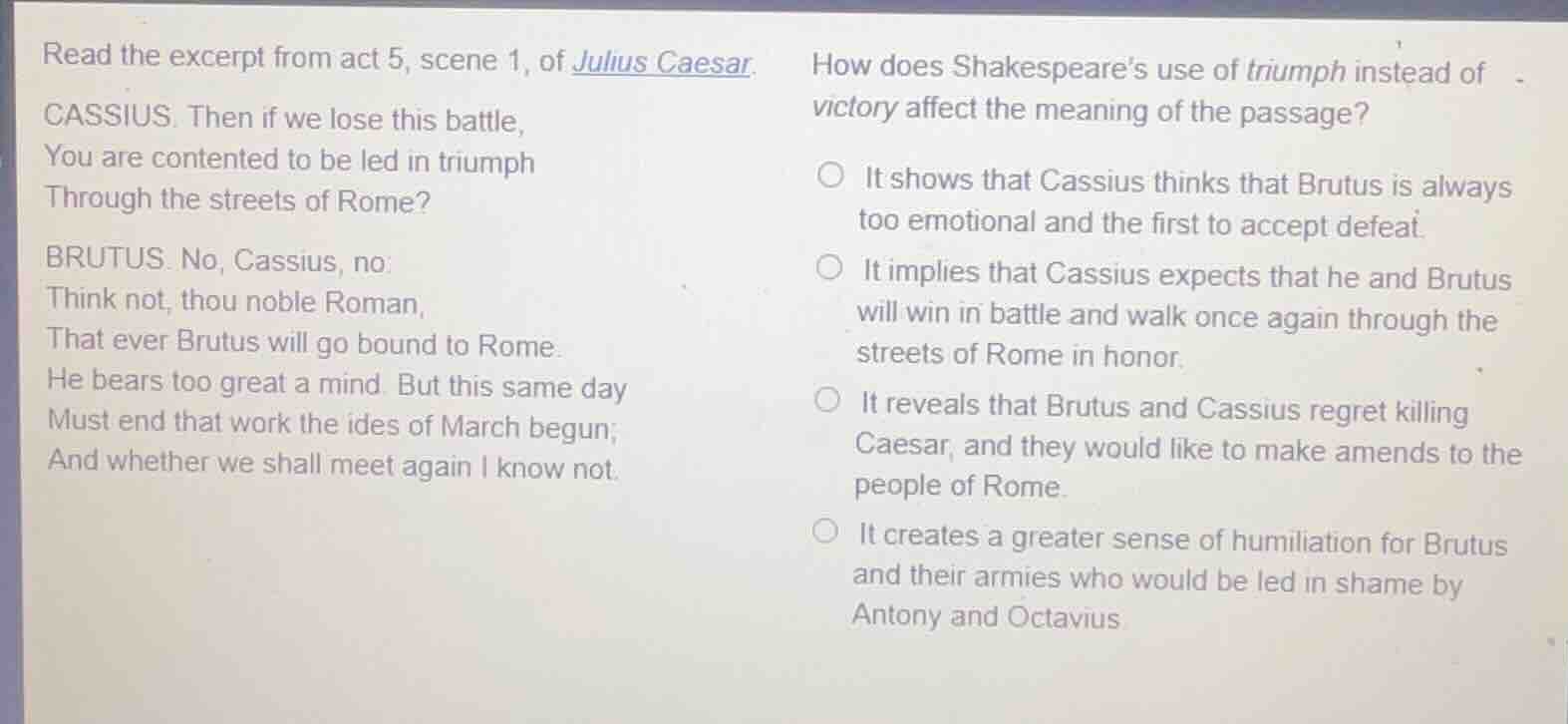
read the excerpt from act 5, scene 1, of julius caesar. cassius. then if we lose this battle, you are contented to be led in triumph through the streets of rome? brutus. no, cassius, no: think not, thou noble roman, that ever brutus will go bound to rome. he bears too great a mind. but this same day must end that work the ides of march begun; and whether we shall meet again i know not. how does shakespeare’s use of triumph instead of victory affect the meaning of the passage? it shows that cassius thinks that brutus is always too emotional and the first to accept defeat. it implies that cassius expects that he and brutus will win in battle and walk once again through the streets of rome in honor. it reveals that brutus and cassius regret killing caesar, and they would like to make amends to the people of rome. it creates a greater sense of humiliation for brutus and their armies who would be led in shame by antony and octavius.
In Roman context, a "triumph" was a celebratory parade for a victorious general, but being "led in triumph" as a defeated captive meant being paraded in public shame, unlike the neutral term "victory." Cassius uses "triumph" to frame the worst-case scenario of defeat: being paraded through Rome by their enemies, which is deeply humiliating. Brutus rejects this, stating he would never be taken bound to Rome, highlighting the shame tied to the word. The other options are incorrect: there is no focus on Brutus's emotion, expectation of victory, or regret for killing Caesar.

Snap & solve any problem in the app
Get step-by-step solutions on Sovi AI
Photo-based solutions with guided steps
Explore more problems and detailed explanations
It creates a greater sense of humiliation for Brutus and their armies who would be led in shame by Antony and Octavius