QUESTION IMAGE
Question
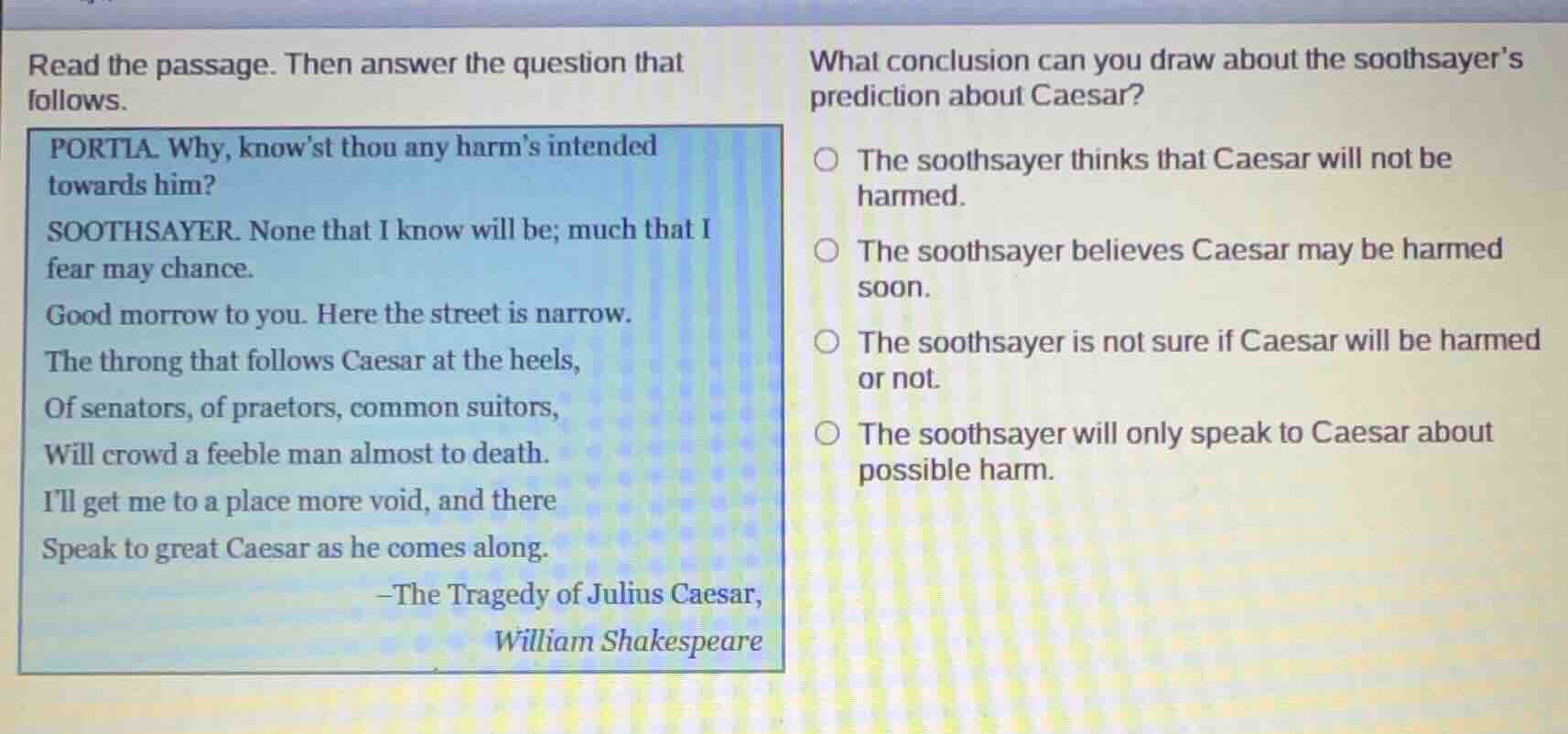
read the passage. then answer the question that follows.
portia. why, know’st thou any harm’s intended towards him?
soothsayer. none that i know will be; much that i fear may chance.
good morrow to you. here the street is narrow.
the throng that follows caesar at the heels,
of senators, of praetors, common suitors,
will crowd a feeble man almost to death.
i’ll get me to a place more void, and there
speak to great caesar as he comes along.
—the tragedy of julius caesar,
william shakespeare
what conclusion can you draw about the soothsayer’s prediction about caesar?
○ the soothsayer thinks that caesar will not be harmed.
○ the soothsayer believes caesar may be harmed soon.
○ the soothsayer is not sure if caesar will be harmed or not.
○ the soothsayer will only speak to caesar about possible harm.
The soothsayer says "None that I know will be; much that I fear may chance" and plans to speak to Caesar, implying concern about potential harm. The first option is wrong as he fears harm; the third is wrong because he fears (suggests likelihood of harm); the fourth is wrong as he's going to speak about it, not that he'll only speak. So the second option fits as he believes harm may occur soon.

Snap & solve any problem in the app
Get step-by-step solutions on Sovi AI
Photo-based solutions with guided steps
Explore more problems and detailed explanations
B. The soothsayer believes Caesar may be harmed soon.