QUESTION IMAGE
Question
remediation 5.2 human impact
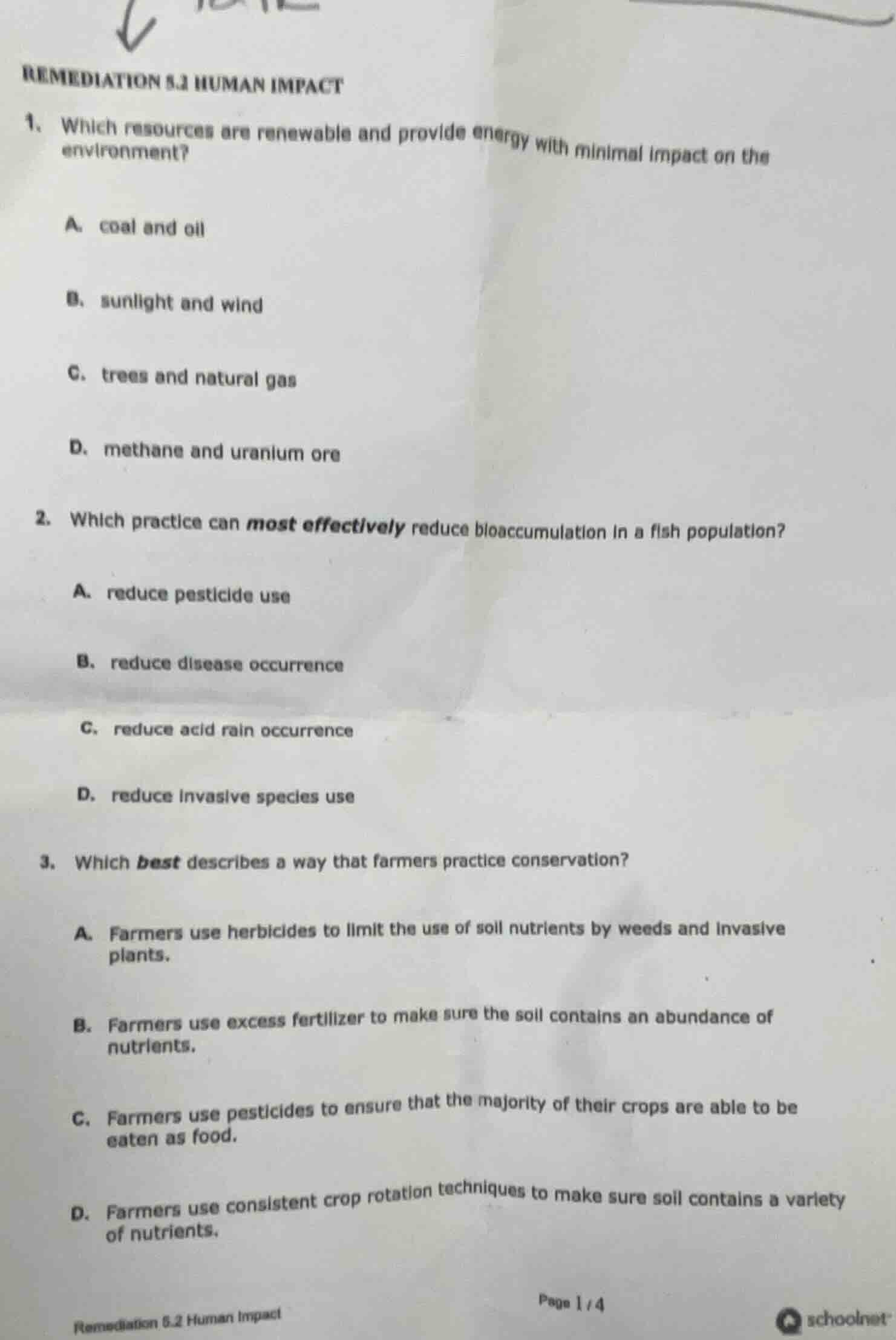
- which resources are renewable and provide energy with minimal impact on the environment?
a. coal and oil
b. sunlight and wind
c. trees and natural gas
d. methane and uranium ore
- which practice can most effectively reduce bioaccumulation in a fish population?
a. reduce pesticide use
b. reduce disease occurrence
c. reduce acid rain occurrence
d. reduce invasive species use
- which best describes a way that farmers practice conservation?
a. farmers use herbicides to limit the use of soil nutrients by weeds and invasive plants.
b. farmers use excess fertilizer to make sure the soil contains an abundance of nutrients.
c. farmers use pesticides to ensure that the majority of their crops are able to be eaten as food.
d. farmers use consistent crop rotation techniques to make sure soil contains a variety of nutrients.
remediation 5.2 human impact
page 1/4
- For the first question: Coal, oil, natural gas, methane, and uranium ore are non-renewable or have high environmental impacts. Sunlight and wind are renewable energy sources with minimal environmental harm.
- For the second question: Bioaccumulation in fish often happens when toxic pesticides enter the food chain. Reducing pesticide use directly cuts this toxic input.
- For the third question: Crop rotation is a conservation practice that maintains soil nutrient diversity and health, while herbicides, excess fertilizer, and pesticides are harmful to the environment or not conservation-focused.

Snap & solve any problem in the app
Get step-by-step solutions on Sovi AI
Photo-based solutions with guided steps
Explore more problems and detailed explanations
- B. sunlight and wind
- A. reduce pesticide use
- D. Farmers use consistent crop rotation techniques to make sure soil contains a variety of nutrients.