QUESTION IMAGE
Question
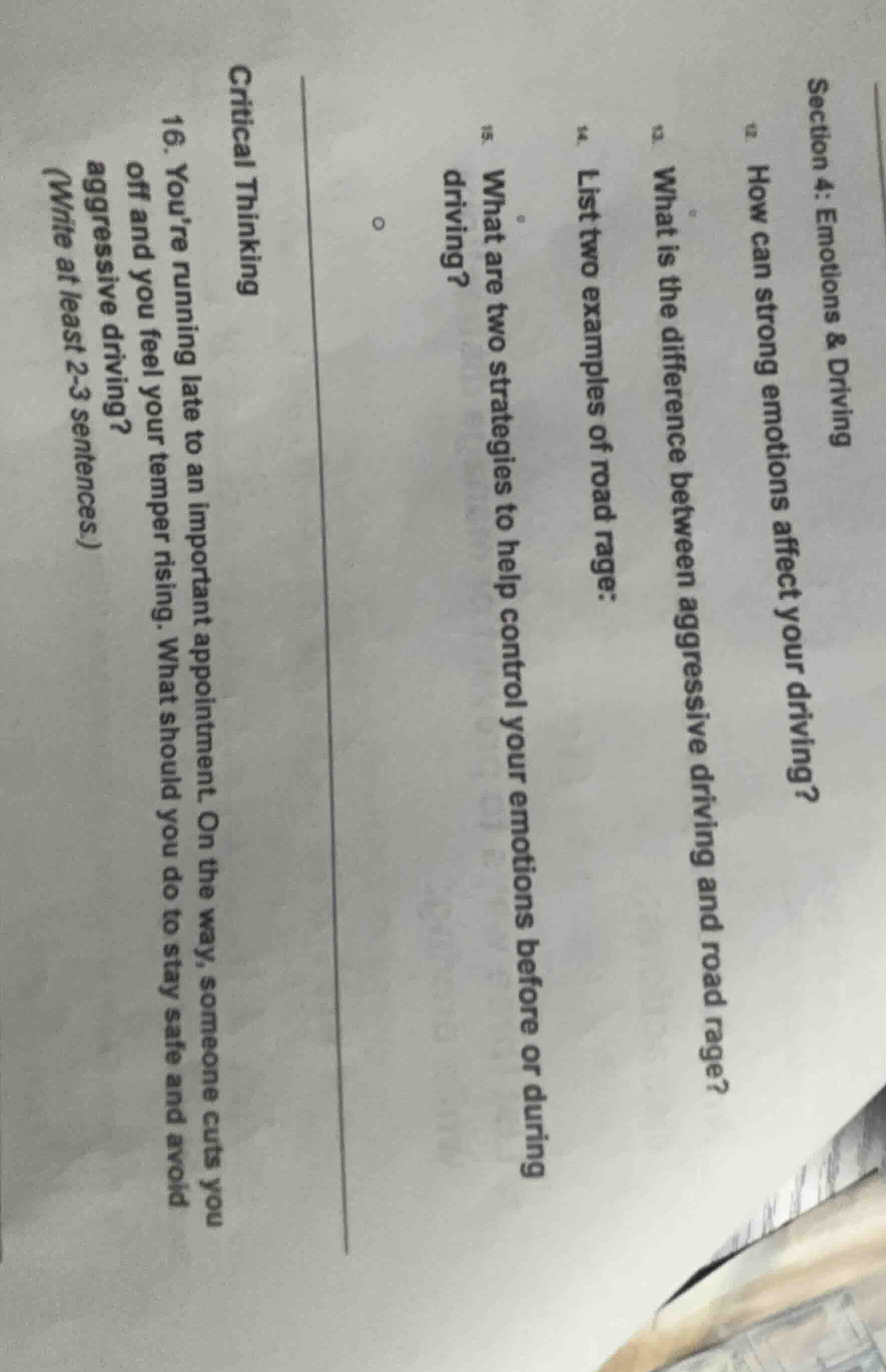
section 4: emotions & driving
- how can strong emotions affect your driving?
- what is the difference between aggressive driving and road rage?
- list two examples of road rage:
- what are two strategies to help control your emotions before or during driving?
critical thinking
- youre running late to an important appointment. on the way, someone cuts you off and you feel your temper rising. what should you do to stay safe and avoid aggressive driving?
(write at least 2-3 sentences)
Brief Explanations
- Strong emotions impair focus, slow reaction time, and lead to impulsive, risky decisions behind the wheel, increasing crash risk.
- Aggressive driving is risky, rule-breaking behavior (like speeding) on the road, while road rage is extreme, violent anger toward other drivers that often escalates to physical threats or harm.
- Road rage examples involve hostile, confrontational actions targeting other road users.
- These strategies help regulate emotional responses to avoid risky driving behavior.
- These actions prioritize de-escalation and safety to prevent aggressive driving.

Snap & solve any problem in the app
Get step-by-step solutions on Sovi AI
Photo-based solutions with guided steps
Explore more problems and detailed explanations
- Strong emotions can reduce focus, slow reaction times, and lead to impulsive, unsafe driving choices that increase the risk of collisions.
- Aggressive driving is risky, rule-violating behavior (e.g., speeding, tailgating) on the road, while road rage is an extreme, violent emotional outburst involving hostility or threats toward other drivers.
- - Deliberately tailgating another car while honking and yelling at the driver
- Getting out of your vehicle to confront or threaten another driver who made a minor mistake
- - Take 3 deep, slow breaths to calm your nervous system before driving
- Pull over to a safe spot and take a 5-minute break if you feel overwhelmed while driving
- First, I would immediately take 3 slow, deep breaths to physically calm my rising anger and prevent impulsive reactions. Next, I would remind myself that getting into a conflict will only make me later and put me in danger, shifting my focus to safely reaching my appointment instead of the other driver. Finally, if I still feel tense, I would pull over to a safe area for 2 minutes to reset before continuing my trip.