QUESTION IMAGE
Question
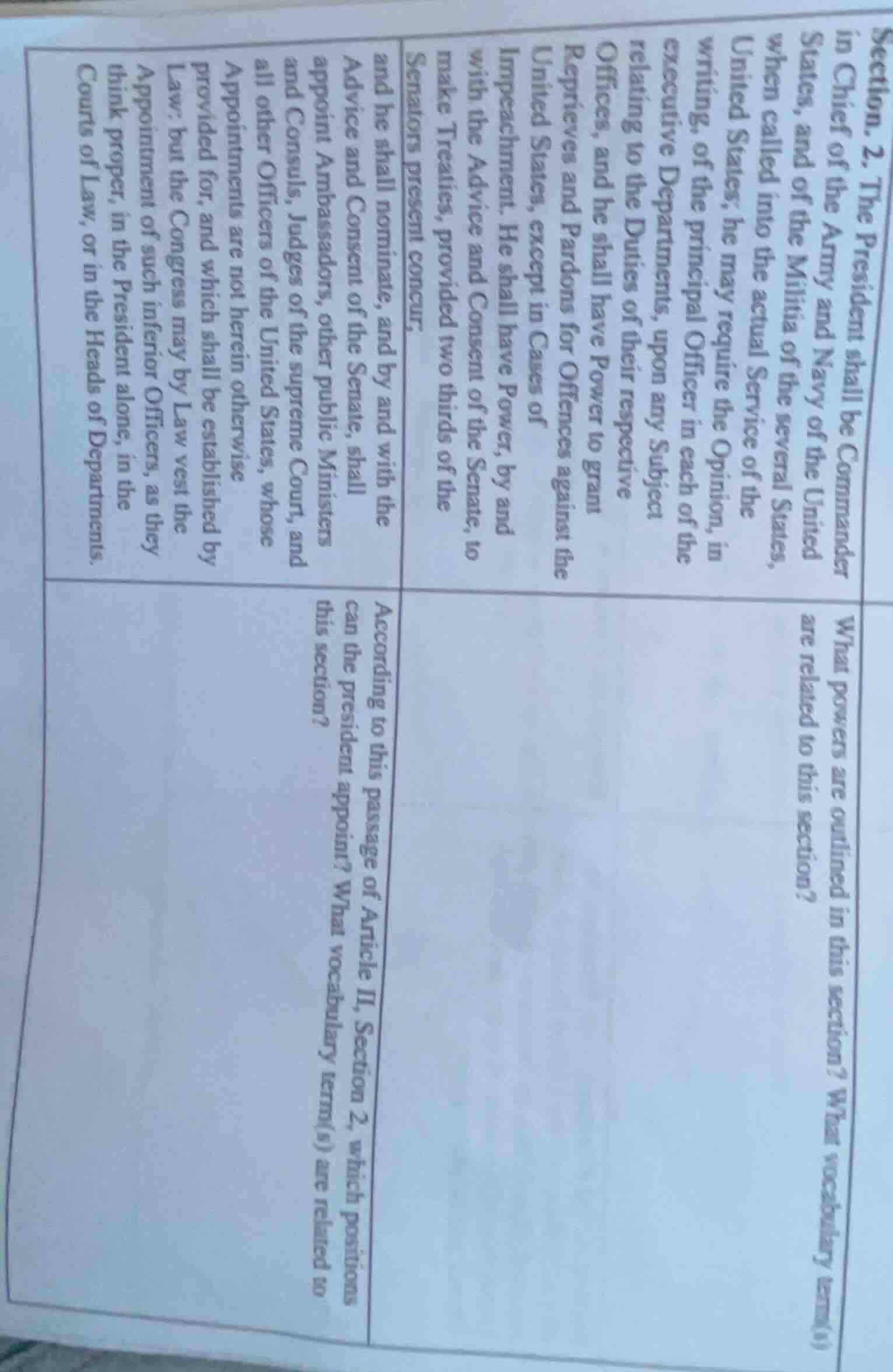
section 2. the president shall be commander in chief of the army and navy of the united states, and of the militia of the several states, when called into the actual service of the united states; he may require the opinion, in writing, of the principal officer in each of the executive departments, upon any subject relating to the duties of their respective offices, and he shall have power to grant reprieves and pardons for offences against the united states, except in cases of impeachment. he shall have power, by and with the advice and consent of the senate, to make treaties, provided two thirds of the senators present concur; and he shall nominate, and by and with the advice and consent of the senate, shall appoint ambassadors, other public ministers and consuls, judges of the supreme court, and all other officers of the united states, whose appointments are not herein otherwise provided for, and which shall be established by law: but the congress may by law vest the appointment of such inferior officers, as they think proper, in the president alone, in the courts of law, or in the heads of departments. what powers are outlined in this section? what vocabulary term(s) are related to this section? according to this passage of article ii, section 2, which positions can the president appoint? what vocabulary term(s) are related to this section?
First, identify the powers from the text, then extract related vocabulary and appointable positions.
- Outlined Powers: Compile all explicit powers granted to the President in the section.
- Related Vocabulary: Extract terms specific to presidential authority and government operations in the text.
- Appointable Positions: List all roles the President is authorized to appoint, as stated in the text.

Snap & solve any problem in the app
Get step-by-step solutions on Sovi AI
Photo-based solutions with guided steps
Explore more problems and detailed explanations
- Outlined Powers:
- Commander in Chief of the U.S. Army, Navy, and state Militia (when called into U.S. service)
- Require written opinions from executive department principal officers
- Grant reprieves and pardons for federal offenses (except impeachment cases)
- Make treaties (with 2/3 Senate concurrence)
- Nominate and appoint (with Senate advice/consent) ambassadors, public ministers, consuls, Supreme Court judges, and other U.S. officers (or appoint inferior officers alone/Court/Department head-approved if Congress allows)
- Related Vocabulary Terms:
Commander in Chief, Militia, executive Departments, reprieves, pardons, impeachment, treaties, Advice and Consent, Ambassadors, public Ministers, Consuls, Judges, Officers, inferior Officers, Courts of Law
- Positions the President Can Appoint:
Ambassadors, other public Ministers, Consuls, Judges of the supreme Court, all other Officers of the United States (as established by law), inferior Officers (when allowed by Congress, either alone, with Courts of Law, or with Department heads)