QUESTION IMAGE
Question
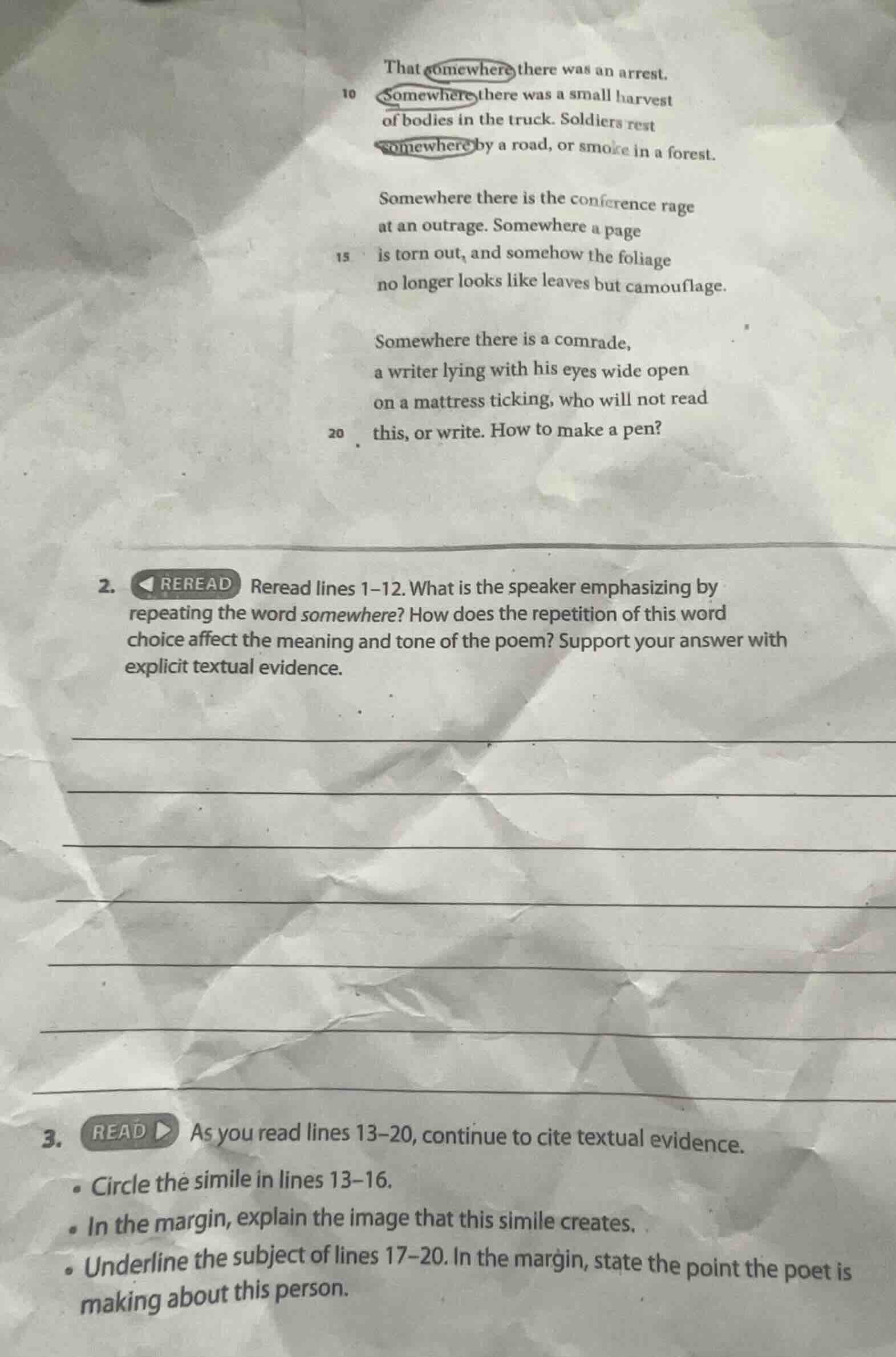
that somewhere there was an arrest.
10 somewhere there was a small harvest
of bodies in the truck. soldiers rest
somewhere by a road, or smoke in a forest.
somewhere there is the conference rage
at an outrage. somewhere a page
15 is torn out, and somehow the foliage
no longer looks like leaves but camouflage.
somewhere there is a comrade,
a writer lying with his eyes wide open
on a mattress ticking, who will not read
20 this, or write. how to make a pen?
- reread reread lines 1–12. what is the speaker emphasizing by repeating the word somewhere? how does the repetition of this word choice affect the meaning and tone of the poem? support your answer with explicit textual evidence.
- read as you read lines 13–20, continue to cite textual evidence.
- circle the simile in lines 13–16.
- in the margin, explain the image that this simile creates.
- underline the subject of lines 17–20. in the margin, state the point the poet is making about this person.
For Question 2:
- Emphasis & Meaning: Repeating "somewhere" highlights that these violent, tragic events (arrest, truck of bodies, soldiers resting, forest smoke) are happening out of direct sight, unobserved or ignored by mainstream attention. It suggests these are not isolated, one-off incidents but widespread, underreported suffering in unseen places.
- Tone: The repetition creates a somber, detached, and unsettling tone. It conveys a sense of powerlessness—these events are distant but pervasive, building a mood of quiet despair and urgency about overlooked human harm.
- Textual Evidence: Lines 7-12 use "somewhere" three times to reference "an arrest," "a small harvest of bodies in the truck," and soldiers resting "by a road, or smoke in a forest," reinforcing that these grim events are taking place in unmarked, hidden locations.
For Question 3:
- Simile (Lines 13-16): The simile is "somehow the foliage no longer looks like leaves but camouflage."
- Image from Simile: This simile creates an image of natural foliage transformed into a symbol of conflict and danger. It blurs the line between peaceful nature and the tools of warfare, suggesting the environment itself is tied to violence and surveillance.
- Subject of Lines 17-20: The subject is "a comrade, a writer lying with his eyes wide open on a mattress ticking."
- Poet's Point: The poet emphasizes that this writer (a witness or voice of truth) is silenced—he "will not read this, or write." This highlights the loss of intellectual and moral voice in a context of violence, suggesting that conflict destroys those who could document or speak against it.

Snap & solve any problem in the app
Get step-by-step solutions on Sovi AI
Photo-based solutions with guided steps
Explore more problems and detailed explanations
Question 2:
The speaker emphasizes that tragic, violent events are widespread but unobserved, hidden from public view. The repetition of "somewhere" shapes the poem's meaning by framing these harms (arrest, truck of bodies, forest smoke) as underreported, pervasive suffering, not isolated incidents. It creates a somber, detached, unsettling tone, conveying powerlessness over unseen, ongoing violence. Textual evidence includes lines 7 ("That somewhere there was an arrest"), 9 ("Somewhere there was a small harvest of bodies in the truck"), and 11 ("somewhere by a road, or smoke in a forest").
Question 3:
- Simile to circle: "somehow the foliage no longer looks like leaves but camouflage"
- Image from simile: It creates an image of peaceful natural foliage twisted into a symbol of warfare, blurring nature and violent conflict.
- Subject to underline: "a comrade, a writer lying with his eyes wide open on a mattress ticking"
- Poet's point: The poet highlights that this writer, a potential voice of truth, is silenced (he cannot read or write), showing violence destroys those who could document or oppose it.