QUESTION IMAGE
Question
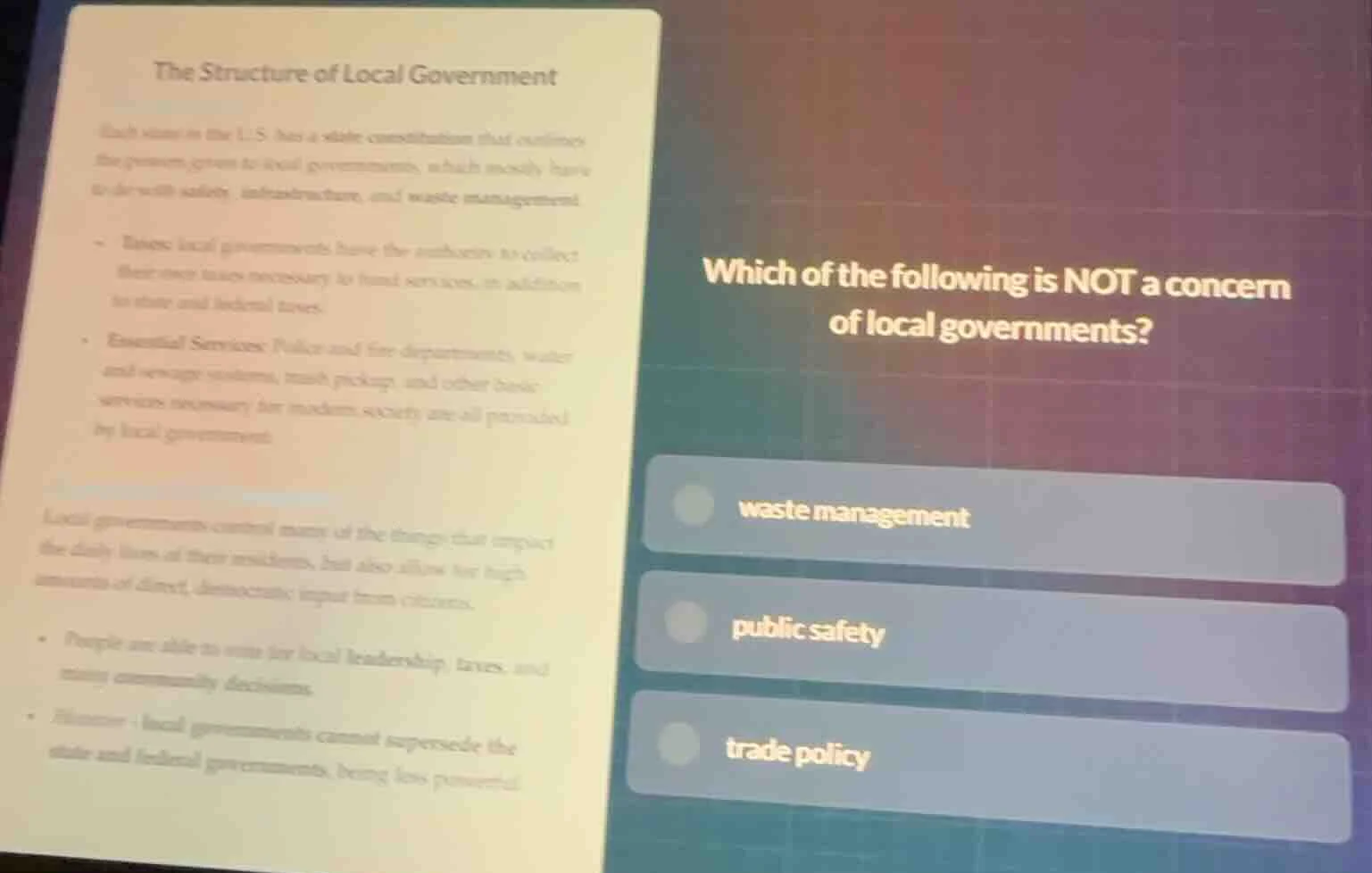
the structure of local government
each state in the u.s. has a state constitution that outlines the powers given to local governments, which mostly have to do with safety, infrastructure, and waste management.
- most local governments have the authority to collect their own taxes necessary to fund services, in addition to state and federal taxes.
- essential services: police and fire departments, water and sewage systems, trash pickup, and other basic services necessary for modern society are all provided by local governments.
local governments control many of the things that impact the daily lives of their residents, but also allow for high amounts of direct, democratic input from citizens.
- people are able to vote for local leadership, taxes, and many community decisions.
- however, local governments cannot supersede the state and federal governments, being less powerful.
which of the following is not a concern of local governments?
- waste management
- public safety
- trade policy
The left text states local governments handle safety, infrastructure, waste management, and essential services like public safety (police/fire). Trade policy is a federal/state-level concern, not local.

Snap & solve any problem in the app
Get step-by-step solutions on Sovi AI
Photo-based solutions with guided steps
Explore more problems and detailed explanations
trade policy