QUESTION IMAGE
Question
study guide / unit 5: a changing america
date: 1/8/26
block: 2
our notes and the resources available to you on canvas to complete the following study guide. this
guide is due before the test! work turned in after the test will not receive full credit.
nt: how did westward movement intensify after the civil war?
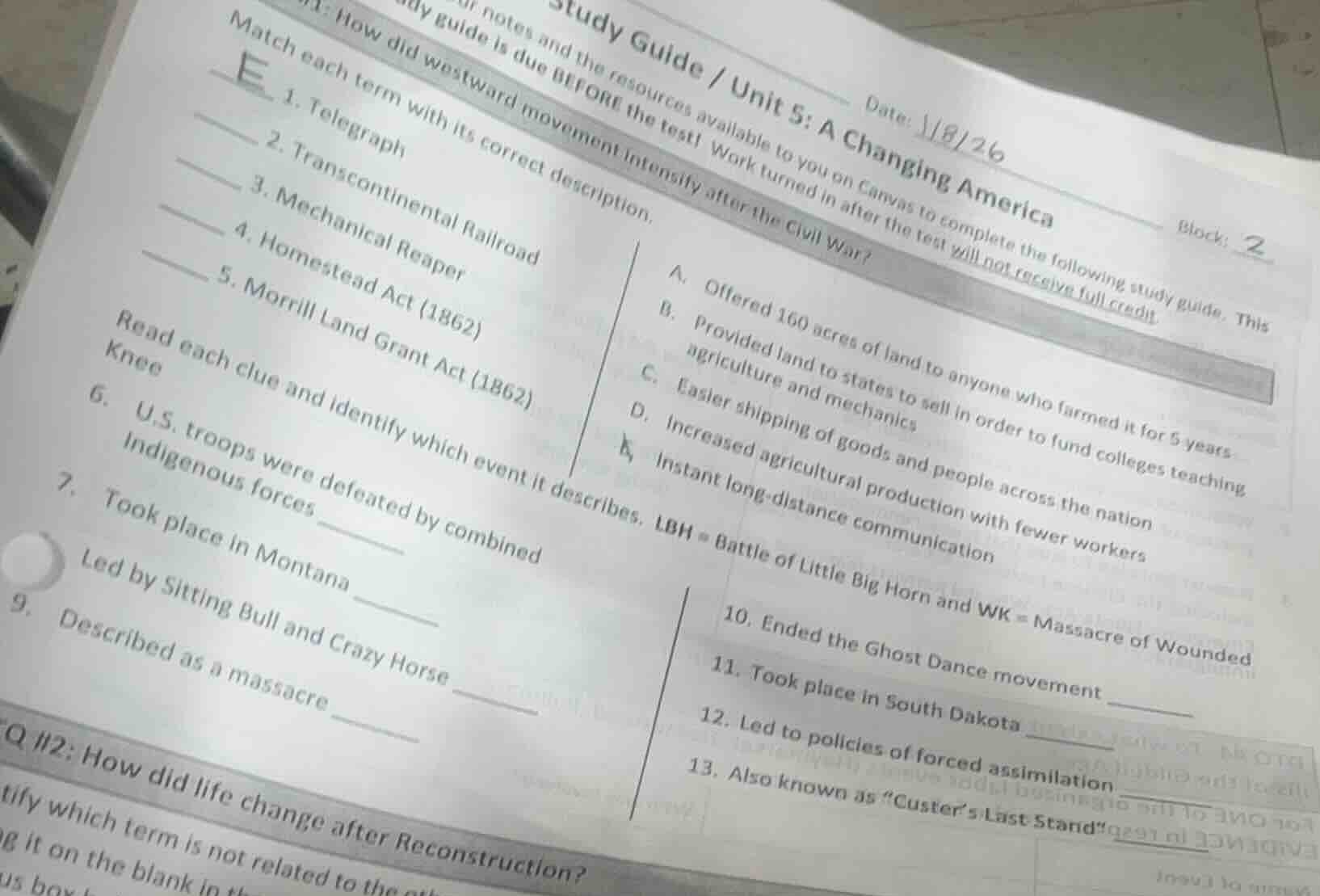
match each term with its correct description.
e 1. telegraph
- transcontinental railroad
- mechanical reaper
- homestead act (1862)
- morrill land grant act (1862)
a. offered 160 acres of land to anyone who farmed it for 5 years.
b. provided land to states to sell in order to fund colleges teaching
agriculture and mechanics
c. easier shipping of goods and people across the nation
d. increased agricultural production with fewer workers
e. instant long - distance communication
read each clue and identify which event it describes. lbh = battle of little big horn and wk = massacre of wounded
knee
- u.s. troops were defeated by combined indigenous forces
- took place in montana
led by sitting bull and crazy horse
- described as a massacre
- ended the ghost dance movement
- took place in south dakota
- led to policies of forced assimilation
- also known as “custer’s last stand”?
q #2: how did life change after reconstruction?
tify which term is not related to the
g it on the blank in
s box
Matching Section:
- The Telegraph enabled instant long-distance communication across large areas.
- The Transcontinental Railroad made shipping goods/people easier nationwide.
- The Mechanical Reaper reduced the number of workers needed for farming, boosting agricultural production.
- The Homestead Act gave 160 acres of land to those who farmed it for 5 years.
- The Morrill Land Grant Act provided land to states to sell, funding colleges focused on agriculture and mechanics.
Event Identification Section:
- The Battle of Little Bighorn (LBH) was the battle where U.S. troops were defeated by combined Indigenous forces, also called "Custer's Last Stand".
- The Battle of Little Bighorn took place in Montana.
- The Battle of Little Bighorn was led by Sitting Bull and Crazy Horse.
- The Massacre of Wounded Knee (WK) is described as a massacre.
- The Massacre of Wounded Knee ended the Ghost Dance movement.
- The Massacre of Wounded Knee took place in South Dakota.
- The Massacre of Wounded Knee led to policies of forced assimilation of Indigenous peoples.
- The Battle of Little Bighorn is also known as "Custer's Last Stand".

Snap & solve any problem in the app
Get step-by-step solutions on Sovi AI
Photo-based solutions with guided steps
Explore more problems and detailed explanations
Matching Answers:
- E. Instant long-distance communication
- C. Easier shipping of goods and people across the nation
- D. Increased agricultural production with fewer workers
- A. Offered 160 acres of land to anyone who farmed it for 5 years
- B. Provided land to states to sell in order to fund colleges teaching agriculture and mechanics
Event Identification Answers:
- LBH (Battle of Little Big Horn)
- LBH (Battle of Little Big Horn)
- LBH (Battle of Little Big Horn)
- WK (Massacre of Wounded Knee)
- WK (Massacre of Wounded Knee)
- WK (Massacre of Wounded Knee)
- WK (Massacre of Wounded Knee)
- LBH (Battle of Little Big Horn)