QUESTION IMAGE
Question
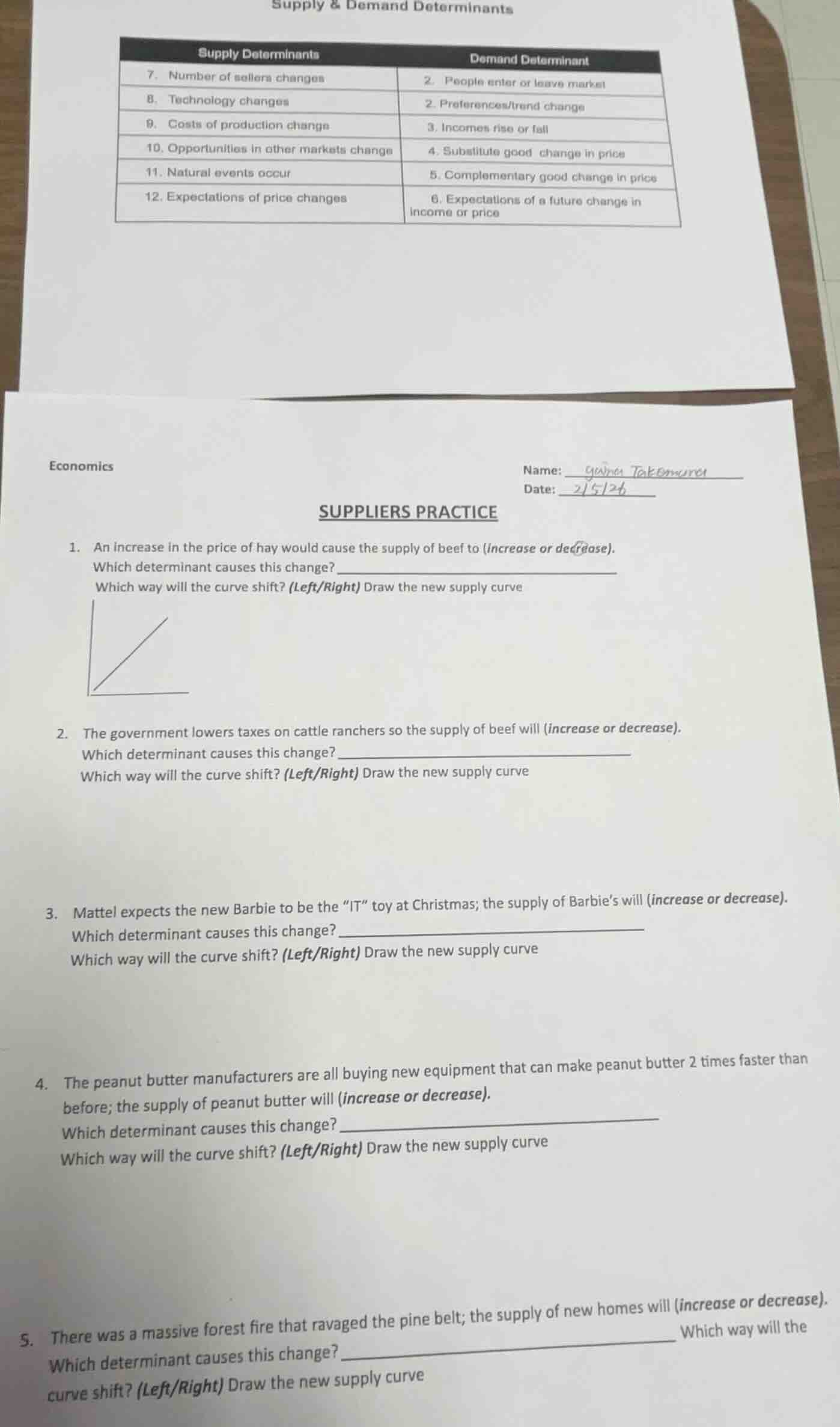
supply & demand determinants
supply determinants\tdemand determinant
- number of sellers changes\t2. people enter or leave market
- technology changes\t2. preferences/trend change
- costs of production change\t3. incomes rise or fall
- opportunities in other markets change\t4. substitute good change in price
- natural events occur\t5. complementary good change in price
- expectations of price changes\t6. expectations of a future change in income or price
economics
name:
date:
suppliers practice
- an increase in the price of hay would cause the supply of beef to (increase or decrease).
which determinant causes this change?
which way will the curve shift? (left/right) draw the new supply curve
- the government lowers taxes on cattle ranchers so the supply of beef will (increase or decrease).
which determinant causes this change?
which way will the curve shift? (left/right) draw the new supply curve
- mattel expects the new barbie to be the “it” toy at christmas; the supply of barbie’s will (increase or decrease).
which determinant causes this change?
which way will the curve shift? (left/right) draw the new supply curve
- the peanut butter manufacturers are all buying new equipment that can make peanut butter 2 times faster than before; the supply of peanut butter will (increase or decrease).
which determinant causes this change?
which way will the curve shift? (left/right) draw the new supply curve
- there was a massive forest fire that ravaged the pine belt; the supply of new homes will (increase or decrease).
which determinant causes this change?
which way will the curve shift? (left/right) draw the new supply curve
Question 1
Step1: Analyze the cost impact
Hay is an input for beef production (cattle feed). An increase in hay price raises production costs.
Step2: Determine supply change
Higher production costs reduce the profit - making ability of beef producers, so the supply of beef will decrease.
Step3: Identify the determinant
The determinant is "Costs of production change" (from the supply determinants table, item 9).
Step4: Determine curve shift
A decrease in supply shifts the supply curve to the left (less quantity supplied at each price).
Step1: Analyze the tax impact
Lowering taxes on cattle ranchers reduces their production costs (since taxes are a cost for the producers).
Step2: Determine supply change
Lower production costs increase the profit - making ability, so the supply of beef will increase.
Step3: Identify the determinant
The determinant is "Costs of production change" (a decrease in tax is equivalent to a decrease in production costs for the ranchers).
Step4: Determine curve shift
An increase in supply shifts the supply curve to the right (more quantity supplied at each price).
Step1: Analyze the expectation impact
Mattel expects the new Barbie to be very popular (high demand) at Christmas. Producers will want to supply more now or plan to supply more in anticipation of higher future prices.
Step2: Determine supply change
The expectation of higher future demand (and potentially higher prices) will lead Mattel to increase the supply of Barbies now (to meet the expected future demand or to take advantage of expected higher prices).
Step3: Identify the determinant
The determinant is "Expectations of price changes" (from the supply determinants table, item 12).
Step4: Determine curve shift
An increase in supply (due to positive price expectations) shifts the supply curve to the right.

Snap & solve any problem in the app
Get step-by-step solutions on Sovi AI
Photo-based solutions with guided steps
Explore more problems and detailed explanations
- Supply of beef: Decrease
- Determinant: Costs of production change
- Curve shift: Left