QUESTION IMAGE
Question
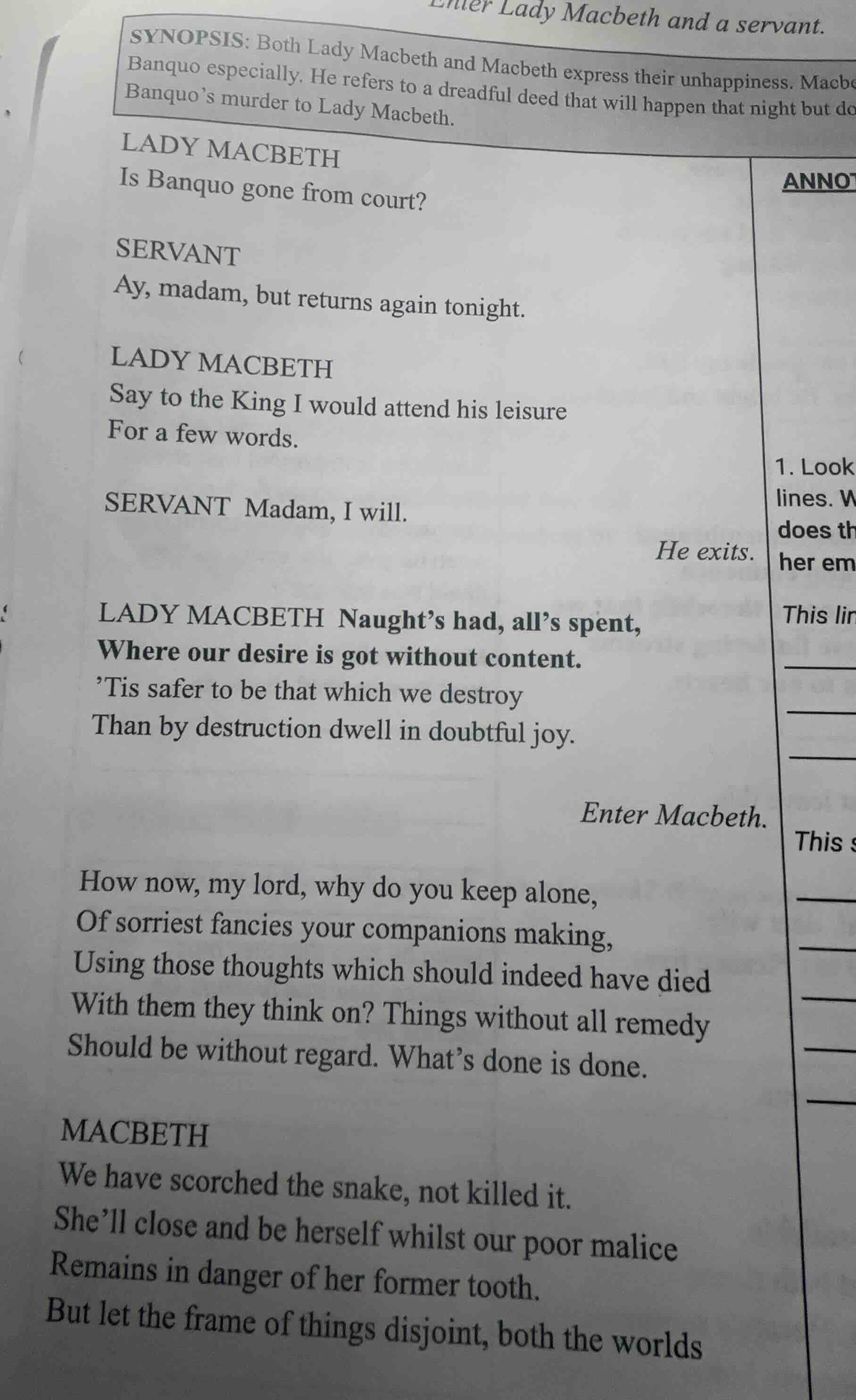
synopsis: both lady macbeth and macbeth express their unhappiness. macbe banquo especially. he refers to a dreadful deed that will happen that night but do banquo’s murder to lady macbeth.
lady macbeth
is banquo gone from court?
servant
ay, madam, but returns again tonight.
lady macbeth
say to the king i would attend his leisure
for a few words.
servant madam, i will.
he exits.
lady macbeth naught’s had, all’s spent,
where our desire is got without content.
’tis safer to be that which we destroy
than by destruction dwell in doubtful joy.
enter macbeth.
how now, my lord, why do you keep alone,
of sorriest fancies your companions making,
using those thoughts which should indeed have died
with them they think on? things without all remedy
should be without regard. what’s done is done.
macbeth
we have scorched the snake, not killed it.
she’ll close and be herself whilst our poor malice
remains in danger of her former tooth.
but let the frame of things disjoint, both the worlds
Since the problem is not clearly stated (the image shows a scene from Macbeth with some annotation blanks but no specific question), I'll assume a common question like analyzing the quote "What's done is done" by Lady Macbeth.
This quote reflects Lady Macbeth's attempt to rationalize their deeds (like Duncan's murder) and move past guilt. It shows her initial resolve, though later her guilt overwhelms her. The phrase suggests acceptance of irreversible actions, a theme of fate vs. free will and moral consequences in the play.

Snap & solve any problem in the app
Get step-by-step solutions on Sovi AI
Photo-based solutions with guided steps
Explore more problems and detailed explanations
The quote "What's done is done" by Lady Macbeth reflects her attempt to accept and move past their immoral actions, showing initial resolve (though guilt later undermines this), and touches on themes of irreversible deeds and moral consequences in Macbeth.