QUESTION IMAGE
Question
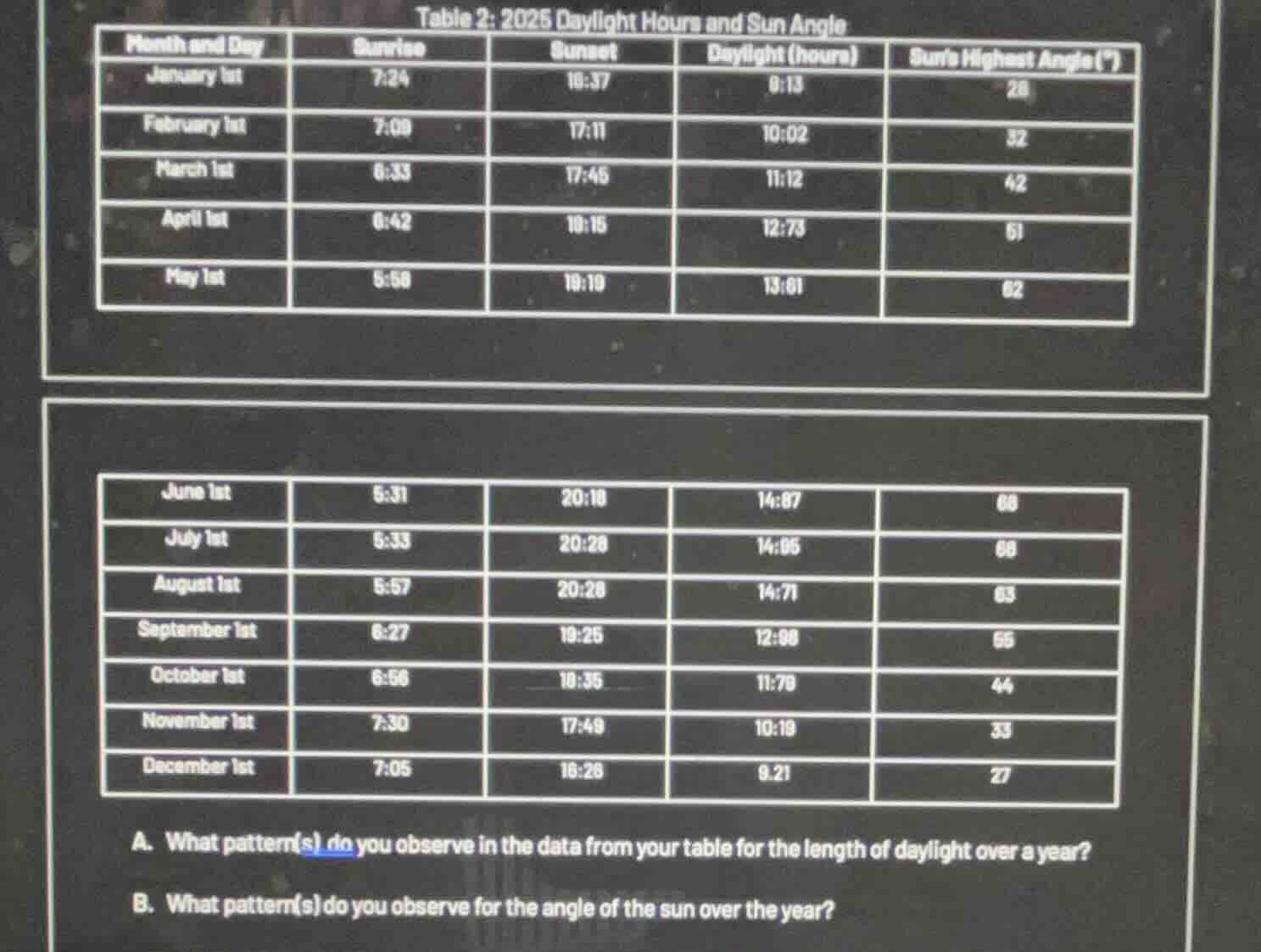
table 2: 2025 daylight hours and sun angle
month and day | sunrise | sunset | daylight (hours) | suns highest angle (°)
january 1st | 7:24 | 16:37 | 9:13 | 28
february 1st | 7:00 | 17:11 | 10:02 | 32
march 1st | 6:33 | 17:45 | 11:12 | 42
april 1st | 6:42 | 19:15 | 12:73 | 51
may 1st | 5:58 | 19:19 | 13:01 | 62
june 1st | 5:31 | 20:18 | 14:87 | 68
july 1st | 5:33 | 20:28 | 14:95 | 68
august 1st | 5:57 | 20:28 | 14:71 | 63
september 1st | 6:27 | 19:25 | 12:98 | 55
october 1st | 6:56 | 18:35 | 11:79 | 44
november 1st | 7:30 | 17:49 | 10:19 | 33
december 1st | 7:05 | 16:26 | 9.21 | 27
a. what pattern(s) do you observe in the data from your table for the length of daylight over a year?
b. what pattern(s) do you observe for the angle of the sun over the year?
A. From January to June, daylight hours increase gradually, reaching the longest duration in June. From July to December, daylight hours decrease steadily, hitting the shortest length in December.
B. The sun's highest angle rises from January to June, peaking in June and July. After that, it decreases through the rest of the year, reaching its lowest point in December.

Snap & solve any problem in the app
Get step-by-step solutions on Sovi AI
Photo-based solutions with guided steps
Explore more problems and detailed explanations
A. Daylight hours increase from January to June (peaking in June), then decrease from July to December (bottoming out in December).
B. The sun's highest angle increases from January to June (peaking in June-July), then decreases from August to December (reaching its lowest in December).