QUESTION IMAGE
Question
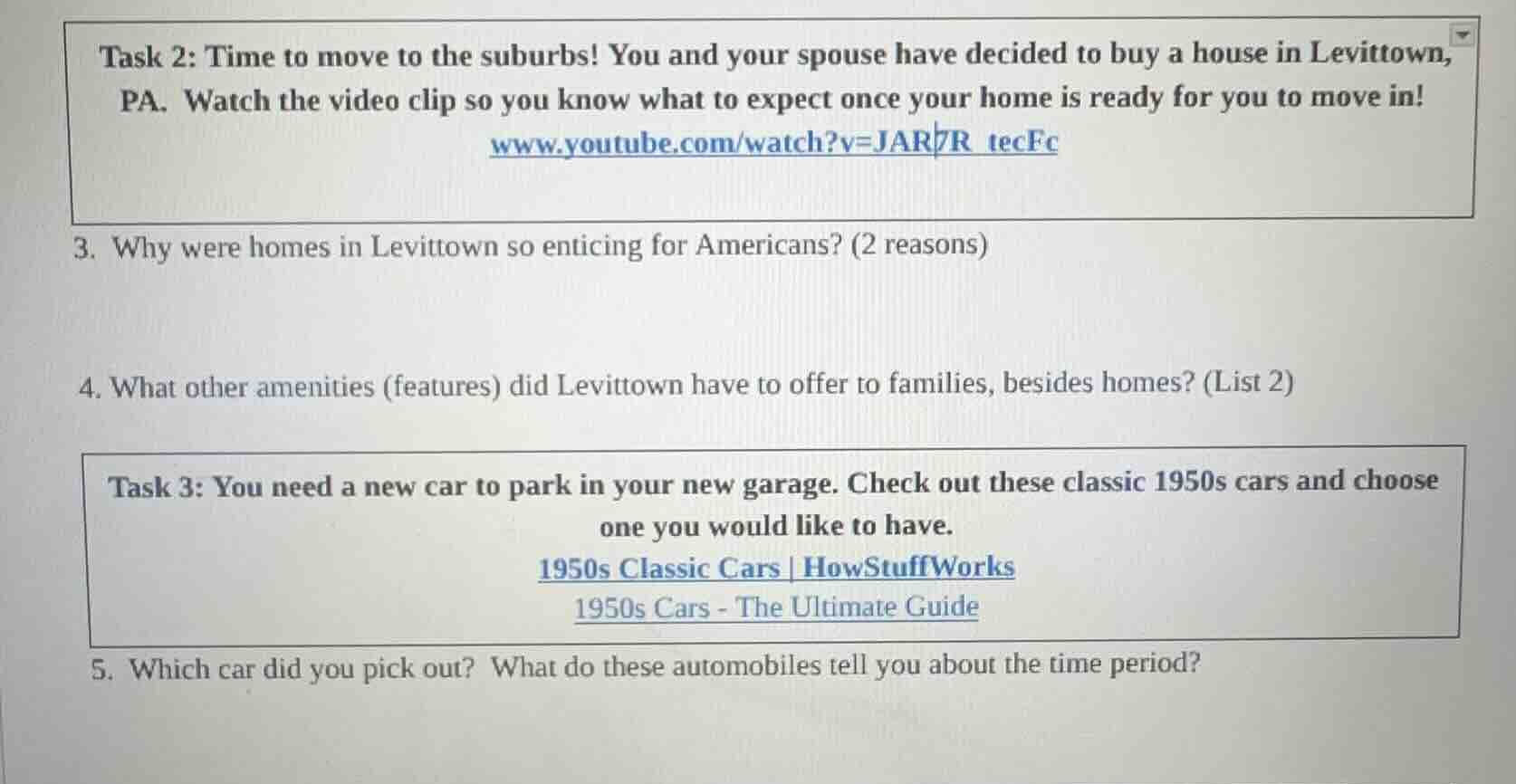
task 2: time to move to the suburbs! you and your spouse have decided to buy a house in levittown, pa. watch the video clip so you know what to expect once your home is ready for you to move in! www.youtube.com/watch?v=jar7r_tecfc 3. why were homes in levittown so enticing for americans? (2 reasons) 4. what other amenities (features) did levittown have to offer to families, besides homes? (list 2) task 3: you need a new car to park in your new garage. check out these classic 1950s cars and choose one you would like to have. 1950s classic cars | howstuffworks 1950s cars - the ultimate guide 5. which car did you pick out? what do these automobiles tell you about the time period?
To answer these questions, we analyze the context of Levittown and 1950s America:
Question 3
Levittown homes were enticing for two main reasons:
- Affordability: William Levitt’s mass - production techniques (like using pre - fabricated parts and assembly - line building) made homes much cheaper than traditional housing. This allowed middle - class families, including many returning WWII veterans, to afford homeownership.
- Suburban Lifestyle & Newness: They offered a chance to escape crowded city living. The homes were new, had modern features (like indoor plumbing, garages), and were part of planned communities with green spaces, appealing to those wanting a “post - war American dream” of a family - friendly, peaceful suburban life.
Question 4
Levittown offered amenities beyond homes, such as:
- Schools: New, well - planned schools were built to accommodate the families moving in, ensuring children had access to education.
- Recreational Spaces: Parks, playgrounds, and community centers were available. These spaces allowed families to enjoy outdoor activities, socialize, and build a sense of community.
Question 5
- Car Pick: For example, the 1955 Chevrolet Bel Air. It was a popular classic with its stylish design (two - tone paint, chrome accents) and V8 engine options.
- Time Period Insight: 1950s cars like the Bel Air reflect a post - war economic boom. The focus on style, power, and consumerism showed that Americans had more disposable income to spend on luxury (or at least stylish) goods. Cars also symbolized freedom and the growth of suburban life, as people needed reliable transportation to commute from suburbs to cities for work or to enjoy leisure activities.
(Note: For questions 3–5, the video linked likely provides more specific details, so watching it would refine these answers further.)

Snap & solve any problem in the app
Get step-by-step solutions on Sovi AI
Photo-based solutions with guided steps
Explore more problems and detailed explanations
To answer these questions, we analyze the context of Levittown and 1950s America:
Question 3
Levittown homes were enticing for two main reasons:
- Affordability: William Levitt’s mass - production techniques (like using pre - fabricated parts and assembly - line building) made homes much cheaper than traditional housing. This allowed middle - class families, including many returning WWII veterans, to afford homeownership.
- Suburban Lifestyle & Newness: They offered a chance to escape crowded city living. The homes were new, had modern features (like indoor plumbing, garages), and were part of planned communities with green spaces, appealing to those wanting a “post - war American dream” of a family - friendly, peaceful suburban life.
Question 4
Levittown offered amenities beyond homes, such as:
- Schools: New, well - planned schools were built to accommodate the families moving in, ensuring children had access to education.
- Recreational Spaces: Parks, playgrounds, and community centers were available. These spaces allowed families to enjoy outdoor activities, socialize, and build a sense of community.
Question 5
- Car Pick: For example, the 1955 Chevrolet Bel Air. It was a popular classic with its stylish design (two - tone paint, chrome accents) and V8 engine options.
- Time Period Insight: 1950s cars like the Bel Air reflect a post - war economic boom. The focus on style, power, and consumerism showed that Americans had more disposable income to spend on luxury (or at least stylish) goods. Cars also symbolized freedom and the growth of suburban life, as people needed reliable transportation to commute from suburbs to cities for work or to enjoy leisure activities.
(Note: For questions 3–5, the video linked likely provides more specific details, so watching it would refine these answers further.)