QUESTION IMAGE
Question
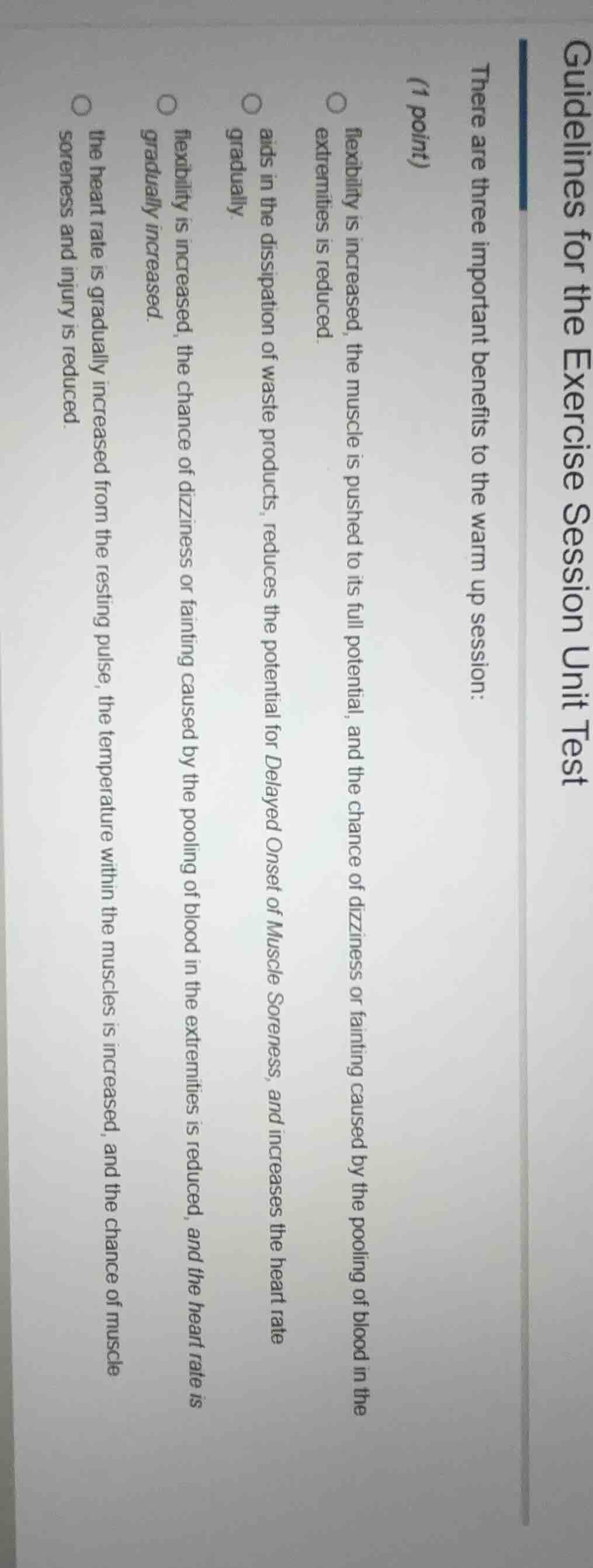
there are three important benefits to the warm up session: (1 point) flexibility is increased, the muscle is pushed to its full potential, and the chance of dizziness or fainting caused by the pooling of blood in the extremities is reduced. aids in the dissipation of waste products, reduces the potential for delayed onset of muscle soreness, and increases the heart rate gradually. flexibility is increased, the chance of dizziness or fainting caused by the pooling of blood in the extremities is reduced, and the heart rate is gradually increased. the heart rate is gradually increased from the resting pulse, the temperature within the muscles is increased, and the chance of muscle soreness and injury is reduced.
To determine the correct answer, we analyze the benefits of a warm - up session:
- A warm - up gradually increases heart rate from resting pulse, increases muscle temperature (which helps with flexibility and function), and reduces muscle soreness and injury risk.
- Option 1: Saying flexibility increases and muscle is pushed to full potential with reduced dizziness is incorrect. Warm - up doesn't push muscle to full potential (that's the workout phase), and the dizziness reduction mechanism is different.
- Option 2: Aiding waste product dissipation and reducing Delayed Onset Muscle Soreness (DOMS) is more related to cool - down, not warm - up. Also, heart rate increase in warm - up is gradual but the description here is off.
- Option 3: The description of dizziness reduction and heart rate increase is inaccurate for warm - up benefits.
- Option 4: This option correctly states that during warm - up, heart rate gradually increases from resting pulse, muscle temperature increases, and the chance of muscle soreness and injury is reduced. This aligns with the physiological effects of a proper warm - up (increasing blood flow to muscles, preparing them for activity, and reducing injury risk).

Snap & solve any problem in the app
Get step-by-step solutions on Sovi AI
Photo-based solutions with guided steps
Explore more problems and detailed explanations
The fourth option (the one with "the heart rate is gradually increased from the resting pulse, the temperature within the muscles is increased, and the chance of muscle soreness and injury is reduced")