QUESTION IMAGE
Question
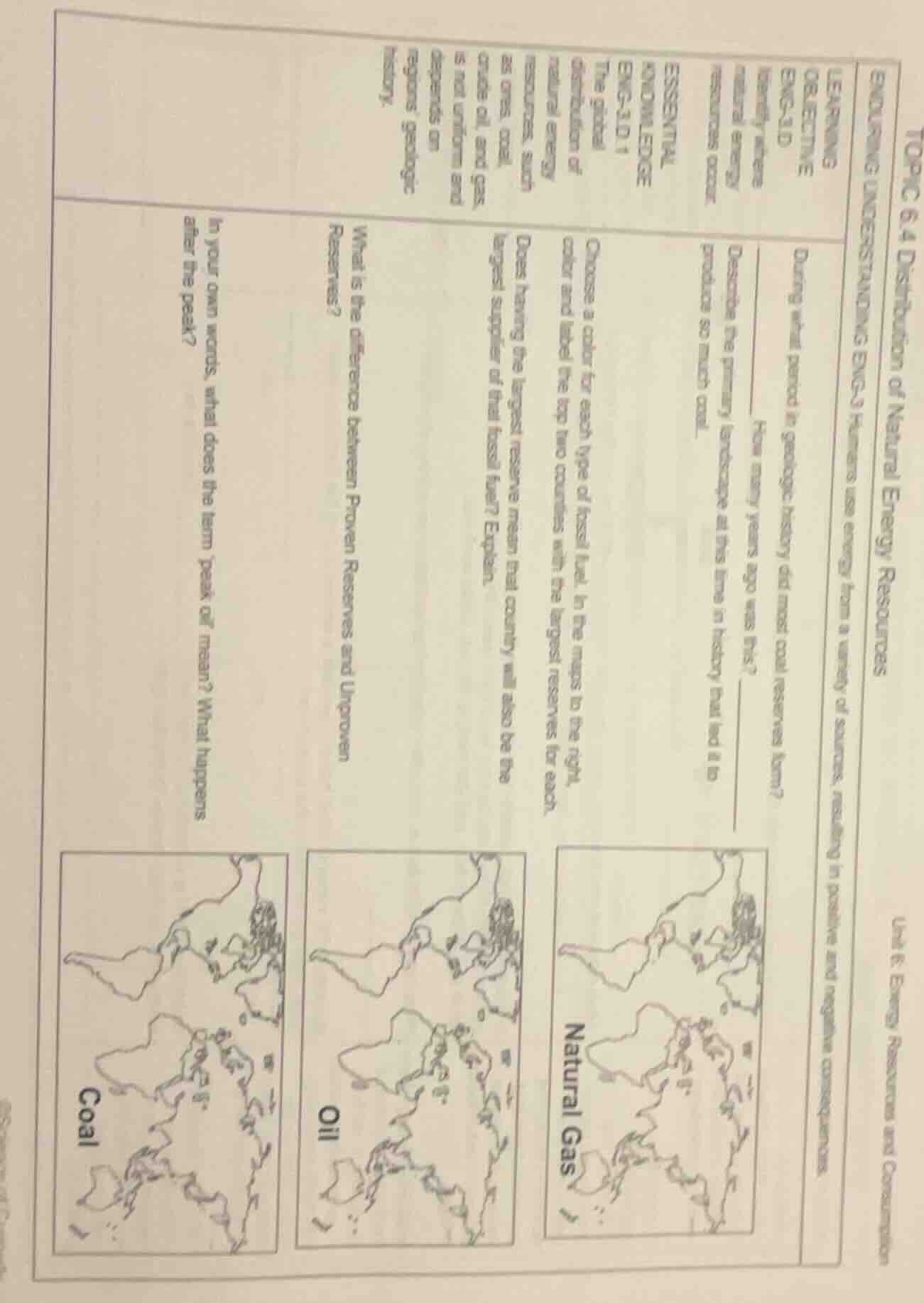
topic 6.4 distribution of natural energy resources enduring understanding eng-3 humans use energy from a variety of sources, resulting in positive and negative consequences. learning objective eng-3.d describe when, where, and why humans use energy resources. essential knowledge eng-3.d.1 the global distribution of natural energy resources (coal, oil, and gas, a not uniform and depends on geologic history. during what period in geologic history did most coal reserves form? how many years ago was this? describe the primary landscape at this time in history that led to the production of so much coal. choose a color for each type of fossil fuel. in the maps to the right, color and label the top two countries with the largest reserves for each. does having the largest reserve mean that country will also be the largest supplier of that fossil fuel? explain. what is the difference between proven reserves and unproven reserves? in your own words, what does the term peak oil mean? what happens after the peak?
To answer the question "What is the difference between Proven Reserves and Unproven Reserves?":
Proven Reserves are fossil fuel deposits (like oil, gas, coal) that are confirmed to exist, accessible, and economically viable to extract with current technology and market conditions. Unproven Reserves (also called Probable or Possible Reserves) are estimated deposits—their existence is less certain, or extraction may not be economically feasible now (due to tech, cost, or regulatory issues). The key difference lies in certainty of existence, accessibility, and economic viability for extraction.

Snap & solve any problem in the app
Get step-by-step solutions on Sovi AI
Photo-based solutions with guided steps
Explore more problems and detailed explanations
Proven Reserves: Confirmed, accessible, and economically viable to extract with current tech/market. Unproven Reserves: Estimated (less certain existence, or extraction not yet economic/tech - feasible).