QUESTION IMAGE
Question
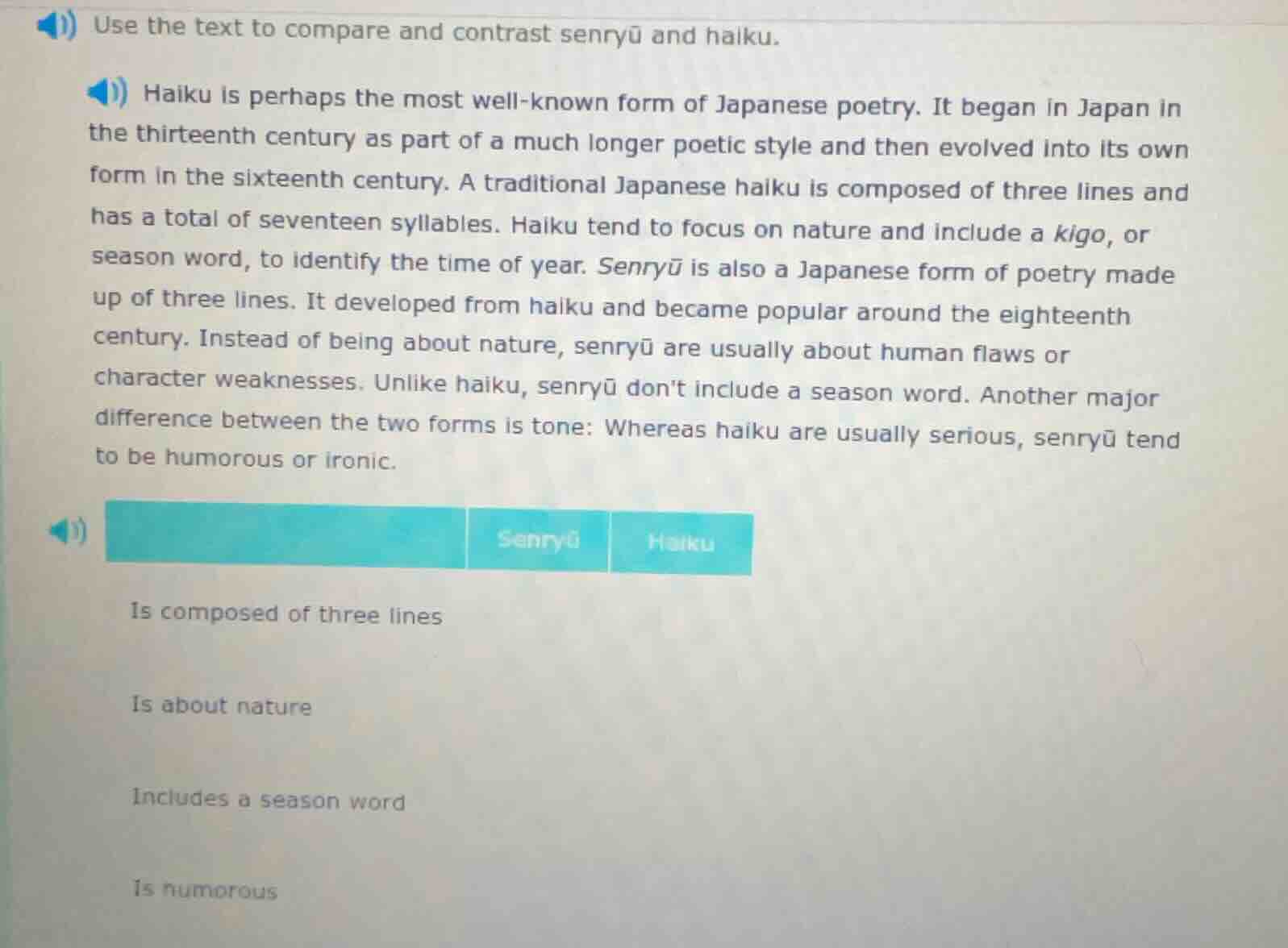
use the text to compare and contrast senryū and haiku. haiku is perhaps the most well - known form of japanese poetry. it began in japan in the thirteenth century as part of a much longer poetic style and then evolved into its own form in the sixteenth century. a traditional japanese haiku is composed of three lines and has a total of seventeen syllables. haiku tend to focus on nature and include a kigo, or season word, to identify the time of year. senryū is also a japanese form of poetry made up of three lines. it developed from haiku and became popular around the eighteenth century. instead of being about nature, senryū are usually about human flaws or character weaknesses. unlike haiku, senryū dont include a season word. another major difference between the two forms is tone: whereas haiku are usually serious, senryū tend to be humorous or ironic. senryū haiku is composed of three lines is about nature includes a season word is humorous
For "Is composed of three lines":
- From the text: "A traditional Japanese haiku is composed of three lines" and "Senryū is also a Japanese form of poetry made up of three lines". So both Senryū and Haiku are composed of three lines. So we mark "Yes" (or a check) for both columns.
For "Is about nature":
- From the text: "Haiku tend to focus on nature" and "Instead of being about nature, senryū are usually about human flaws or character weaknesses". So Haiku is about nature (mark "Yes" for Haiku), Senryū is not (mark "No" for Senryū).
For "Includes a season word":
- From the text: "Haiku... include a kigo, or season word" and "Unlike haiku, senryū don't include a season word". So Haiku includes a season word (mark "Yes" for Haiku), Senryū does not (mark "No" for Senryū).
For "Is humorous":
- From the text: "senryū tend to be humorous or ironic" and "haiku are usually serious". So Senryū is humorous (mark "Yes" for Senryū), Haiku is not (mark "No" for Haiku).
We can fill the table as follows:
| Senryū | Haiku | |
|---|---|---|
| Is about nature | No | Yes |
| Includes a season word | No | Yes |
| Is humorous | Yes | No |

Snap & solve any problem in the app
Get step-by-step solutions on Sovi AI
Photo-based solutions with guided steps
Explore more problems and detailed explanations
For "Is composed of three lines":
- From the text: "A traditional Japanese haiku is composed of three lines" and "Senryū is also a Japanese form of poetry made up of three lines". So both Senryū and Haiku are composed of three lines. So we mark "Yes" (or a check) for both columns.
For "Is about nature":
- From the text: "Haiku tend to focus on nature" and "Instead of being about nature, senryū are usually about human flaws or character weaknesses". So Haiku is about nature (mark "Yes" for Haiku), Senryū is not (mark "No" for Senryū).
For "Includes a season word":
- From the text: "Haiku... include a kigo, or season word" and "Unlike haiku, senryū don't include a season word". So Haiku includes a season word (mark "Yes" for Haiku), Senryū does not (mark "No" for Senryū).
For "Is humorous":
- From the text: "senryū tend to be humorous or ironic" and "haiku are usually serious". So Senryū is humorous (mark "Yes" for Senryū), Haiku is not (mark "No" for Haiku).
We can fill the table as follows:
| Senryū | Haiku | |
|---|---|---|
| Is about nature | No | Yes |
| Includes a season word | No | Yes |
| Is humorous | Yes | No |