QUESTION IMAGE
Question
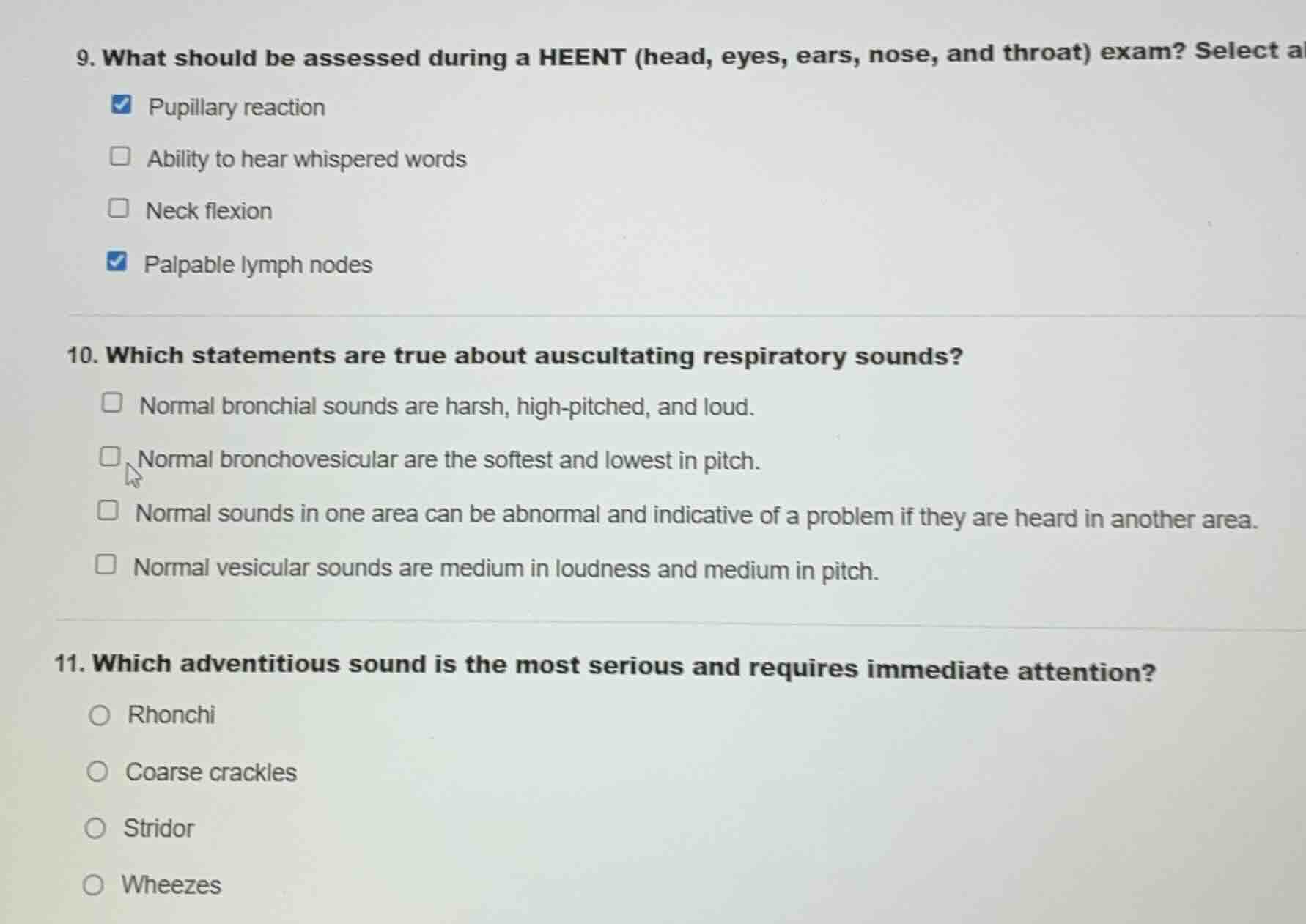
- what should be assessed during a heent (head, eyes, ears, nose, and throat) exam? select al
☑️ pupillary reaction
□ ability to hear whispered words
□ neck flexion
☑️ palpable lymph nodes
- which statements are true about auscultating respiratory sounds?
□ normal bronchial sounds are harsh, high - pitched, and loud.
□ normal bronchovesicular are the softest and lowest in pitch.
□ normal sounds in one area can be abnormal and indicative of a problem if they are heard in another area.
□ normal vesicular sounds are medium in loudness and medium in pitch.
- which adventitious sound is the most serious and requires immediate attention?
○ rhonchi
○ coarse crackles
○ stridor
○ wheezes
Question 9:
HEENT exams evaluate head, eyes, ears, nose, throat structures/function. Pupillary reaction assesses eye function, whispered words test ear hearing, palpable lymph nodes relate to throat/head drainage, while neck flexion is a musculoskeletal test.
Question 10:
Bronchial sounds are harsh/high-pitched; vesicular sounds are soft/low-pitched. Bronchovesicular sounds are medium, and sounds in abnormal locations signal issues.
Question 11:
Stridor is a high-pitched sound from upper airway obstruction, a life-threatening emergency needing immediate care.

Snap & solve any problem in the app
Get step-by-step solutions on Sovi AI
Photo-based solutions with guided steps
Explore more problems and detailed explanations
9.
- Pupillary reaction
- Ability to hear whispered words
- Palpable lymph nodes
10.
- Normal bronchial sounds are harsh, high-pitched, and loud.
- Normal sounds in one area can be abnormal and indicative of a problem if they are heard in another area.
11.
- Stridor