QUESTION IMAGE
Question
why was 2023 canadas smokiest year on record?
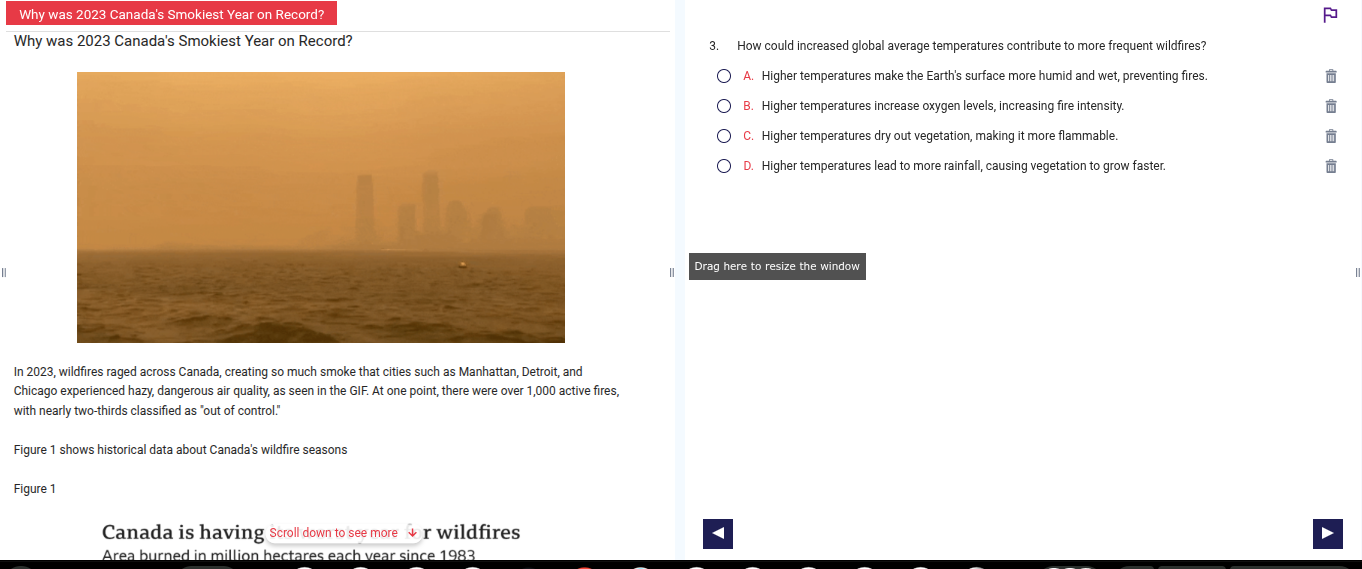
in 2023, wildfires raged across canada, creating so much smoke that cities such as manhattan, detroit, and chicago experienced hazy, dangerous air quality, as seen in the gif. at one point, there were over 1,000 active fires, with nearly two - thirds classified as out of control.
figure 1 shows historical data about canadas wildfire seasons
figure 1
canada is having scroll down to see more r wildfires
area burned in million hectares each year since 1983
- how could increased global average temperatures contribute to more frequent wildfires?
a. higher temperatures make the earths surface more humid and wet, preventing fires.
b. higher temperatures increase oxygen levels, increasing fire intensity.
c. higher temperatures dry out vegetation, making it more flammable.
d. higher temperatures lead to more rainfall, causing vegetation to grow faster.
To determine the correct answer, we analyze each option:
- Option A: Higher temperatures typically reduce humidity and dry the surface, not make it more humid/wet to prevent fires. Eliminate A.
- Option B: Higher temperatures do not directly increase oxygen levels. Oxygen levels in the atmosphere are relatively stable. Eliminate B.
- Option C: Higher temperatures lead to increased evaporation and drying of vegetation. Dry vegetation is more flammable, which can lead to more frequent and intense wildfires. This matches our understanding of how temperature affects wildfire risk.
- Option D: While higher temperatures can sometimes lead to more rainfall in certain regions, the primary impact of rising global temperatures on wildfires is drying, not increased rainfall for vegetation growth (and even if vegetation grew faster, it would need to dry to be flammable, which is more directly caused by temperature-related drying). Eliminate D.

Snap & solve any problem in the app
Get step-by-step solutions on Sovi AI
Photo-based solutions with guided steps
Explore more problems and detailed explanations
C. Higher temperatures dry out vegetation, making it more flammable.