QUESTION IMAGE
Question
the women of world war i
directions: use the information from the previous page, to help you answer the following questions.
- what were two things that women proved through their heroic service in world war i?
through their heroic service in world war i
- how are the roles of women in society and in the military different today than from what they were during world war i?
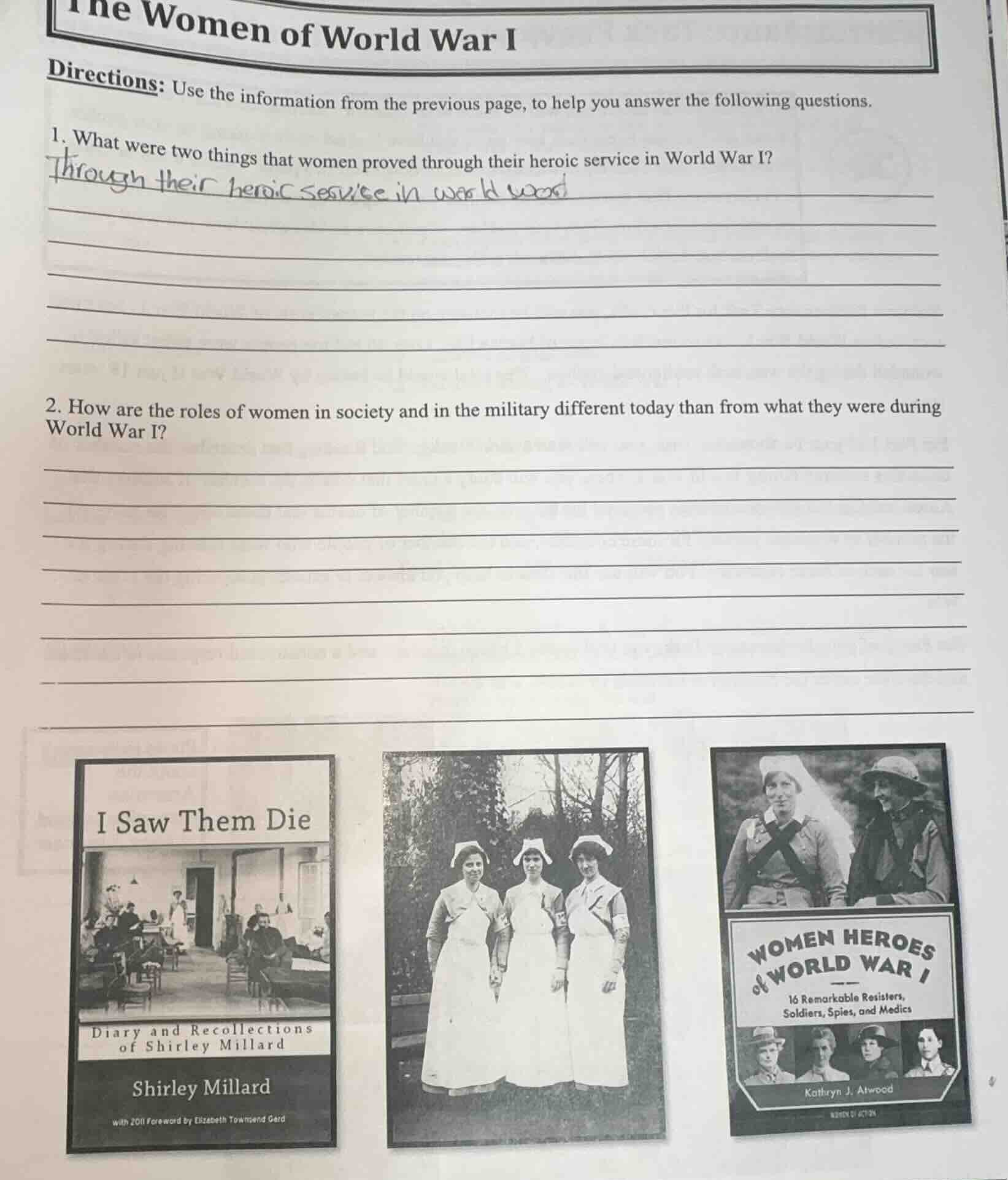
images: 1. book cover: i saw them die - diary and recollections of shirley millard by shirley millard; 2. photo of three nurses; 3. book cover: women heroes of world war i - 16 remarkable resisters, soldiers, spies, and medics by kathryn j. atwood
To answer these questions, we would typically need the information from the "previous page" referenced in the directions. Since that content isn't provided here, I can offer general guidance on how to approach them based on historical knowledge about women in World War I:
Question 1: What were two things that women proved through their heroic service in World War I?
Historically, women’s service in WWI (e.g., as nurses, ambulance drivers, spies, factory workers, or in auxiliary military roles) demonstrated:
- Capability in non - traditional roles: They showed they could perform jobs and tasks previously considered “male - only,” like industrial labor, medical support at the front, or logistical work.
- Patriotism and courage: Their willingness to risk their lives (e.g., nurses in combat zones, spies behind enemy lines) proved they were as dedicated to the war effort and their countries as men.
Question 2: How are the roles of women in society and in the military different today than from what they were during World War I?
- In society: During WWI, women’s roles were still largely confined to domesticity or “feminine” professions (e.g., nursing, teaching) outside of wartime labor. Today, women have broader access to careers in science, technology, leadership, and politics, with fewer gender - based restrictions.
- In the military: During WWI, women’s military roles were mostly non - combat (e.g., nurses, clerks, support staff). Today, women serve in combat roles, hold high - ranking officer positions, and have equal opportunities for advancement in most military branches globally.
If you can share the information from the “previous page” (e.g., key facts, themes, or details about women’s WWI service), I can help refine these answers to match the specific context!

Snap & solve any problem in the app
Get step-by-step solutions on Sovi AI
Photo-based solutions with guided steps
Explore more problems and detailed explanations
To answer these questions, we would typically need the information from the "previous page" referenced in the directions. Since that content isn't provided here, I can offer general guidance on how to approach them based on historical knowledge about women in World War I:
Question 1: What were two things that women proved through their heroic service in World War I?
Historically, women’s service in WWI (e.g., as nurses, ambulance drivers, spies, factory workers, or in auxiliary military roles) demonstrated:
- Capability in non - traditional roles: They showed they could perform jobs and tasks previously considered “male - only,” like industrial labor, medical support at the front, or logistical work.
- Patriotism and courage: Their willingness to risk their lives (e.g., nurses in combat zones, spies behind enemy lines) proved they were as dedicated to the war effort and their countries as men.
Question 2: How are the roles of women in society and in the military different today than from what they were during World War I?
- In society: During WWI, women’s roles were still largely confined to domesticity or “feminine” professions (e.g., nursing, teaching) outside of wartime labor. Today, women have broader access to careers in science, technology, leadership, and politics, with fewer gender - based restrictions.
- In the military: During WWI, women’s military roles were mostly non - combat (e.g., nurses, clerks, support staff). Today, women serve in combat roles, hold high - ranking officer positions, and have equal opportunities for advancement in most military branches globally.
If you can share the information from the “previous page” (e.g., key facts, themes, or details about women’s WWI service), I can help refine these answers to match the specific context!