QUESTION IMAGE
Question
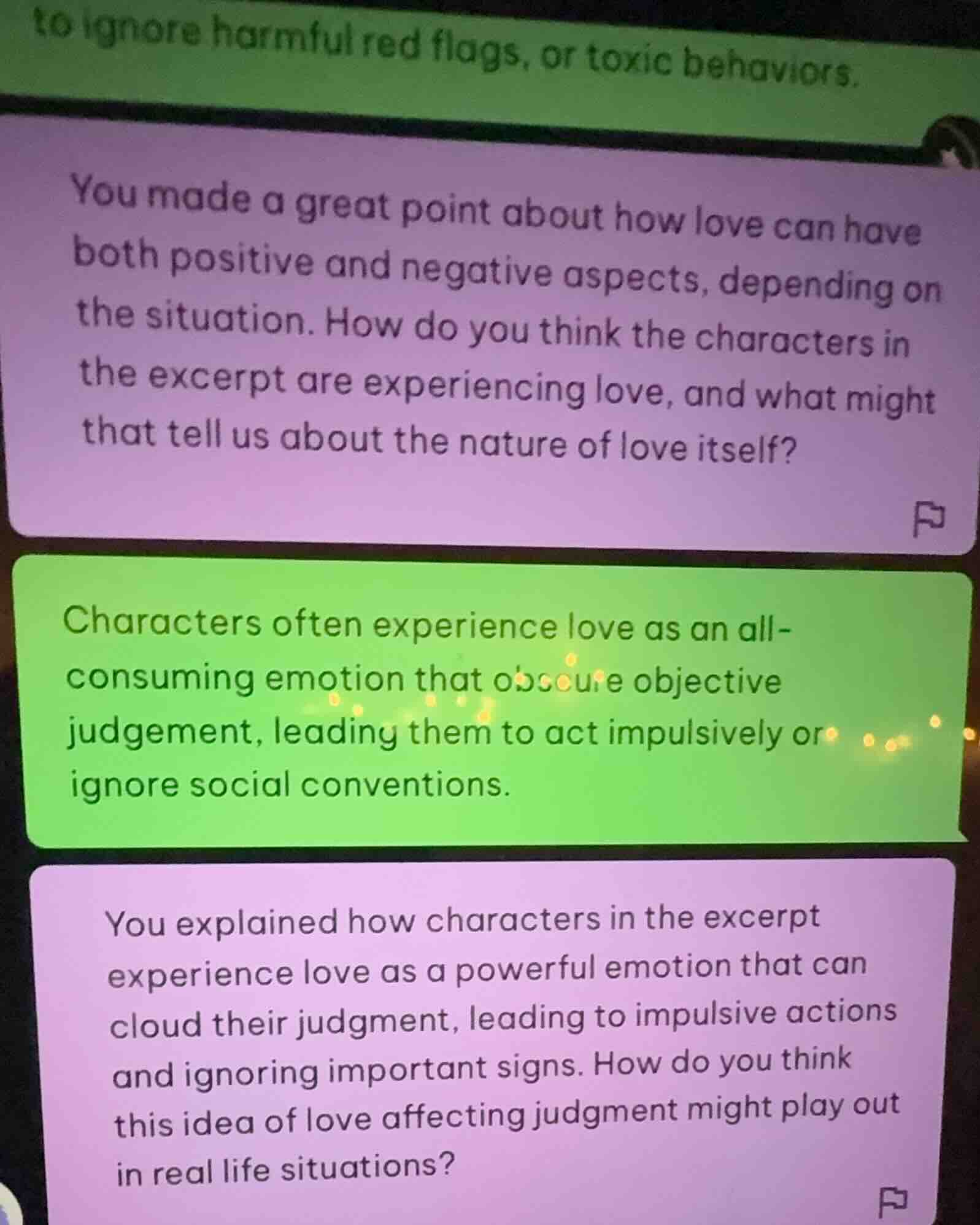
you made a great point about how love can have both positive and negative aspects, depending on the situation. how do you think the characters in the excerpt are experiencing love, and what might that tell us about the nature of love itself? characters often experience love as an all-consuming emotion that obscure objective judgement, leading them to act impulsively or ignore social conventions. you explained how characters in the excerpt experience love as a powerful emotion that can cloud their judgment, leading to impulsive actions and ignoring important signs. how do you think this idea of love affecting judgment might play out in real life situations?
- For romantic relationships: A person may overlook a partner's consistent neglect, dishonesty, or controlling behaviors because they are focused on the intense positive feelings of early love, rationalizing the harmful actions instead of addressing them.
- For familial relationships: A parent might ignore signs that their adult child is struggling with substance abuse (like missed commitments, financial instability) because they hold onto the idealized image of their child and refuse to accept the negative reality, delaying intervention that could help the child.
- For platonic relationships: A person might repeatedly lend money to a friend who never repays them, or overlook the friend's pattern of canceling plans last minute, because they value the bond so much that they downplay the friend's unreliable, self-serving behavior.
In all these cases, love creates a bias that clouds objective judgment, leading people to prioritize the relationship or the positive feelings of love over their own well-being or realistic assessment of a situation.

Snap & solve any problem in the app
Get step-by-step solutions on Sovi AI
Photo-based solutions with guided steps
Explore more problems and detailed explanations
In real life, this dynamic can appear in several common scenarios:
- Romantic relationships: Ignoring a partner's toxic red flags (like dishonesty, control) due to intense romantic infatuation, rationalizing harmful behavior.
- Familial relationships: A parent overlooking clear signs of a child's substance abuse or self-harm, clinging to an idealized view of their child instead of seeking help.
- Platonic relationships: Repeatedly making allowances for a friend's unreliable, self-serving actions (e.g., constant broken promises, one-sided support) because of loyalty to the friendship.
In each case, love distorts objective judgment, making people prioritize the relationship or positive emotional bond over their own well-being or a realistic evaluation of the situation.