QUESTION IMAGE
Question
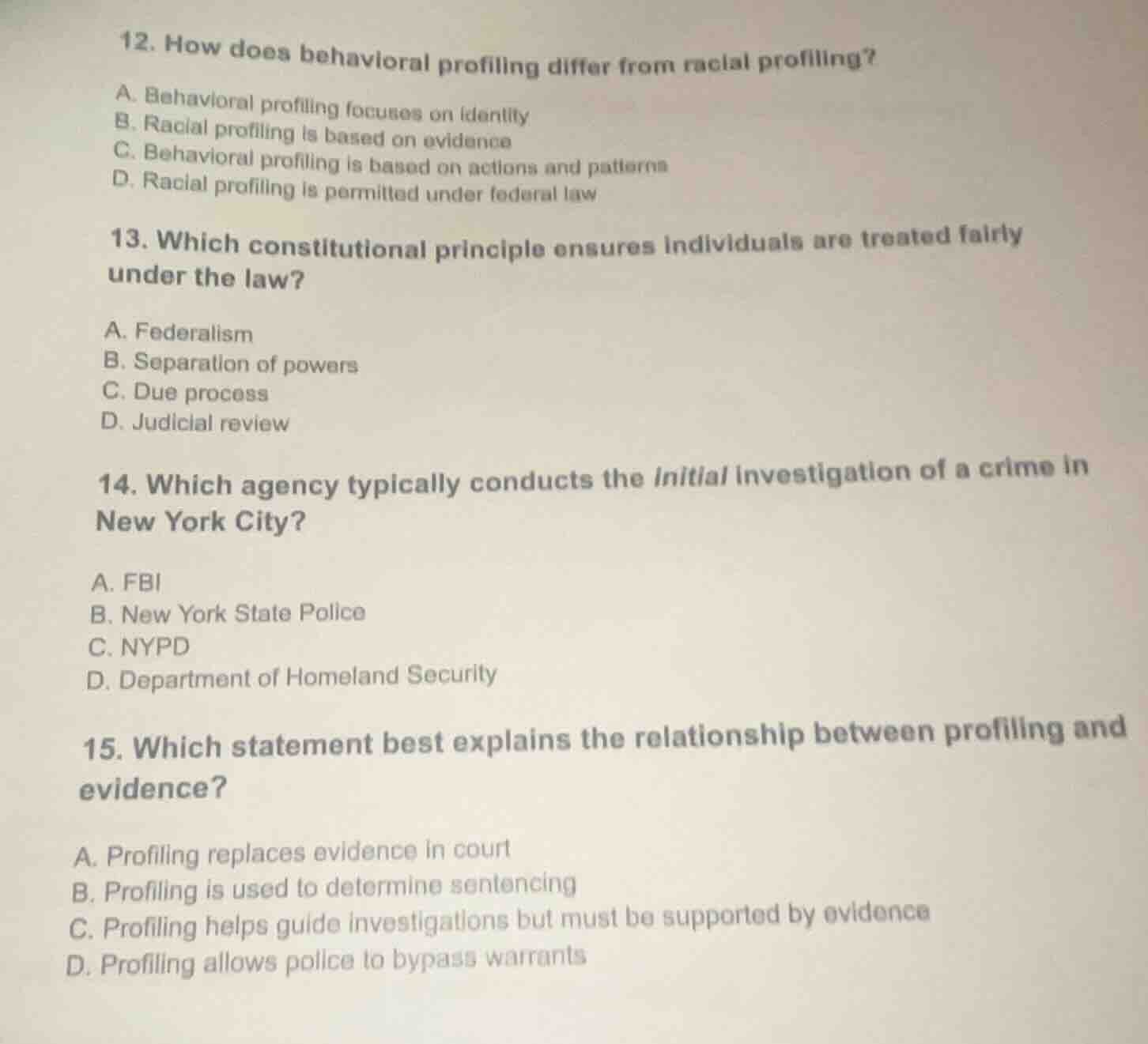
- how does behavioral profiling differ from racial profiling?
a. behavioral profiling focuses on identity
b. racial profiling is based on evidence
c. behavioral profiling is based on actions and patterns
d. racial profiling is permitted under federal law
- which constitutional principle ensures individuals are treated fairly under the law?
a. federalism
b. separation of powers
c. due process
d. judicial review
- which agency typically conducts the initial investigation of a crime in new york city?
a. fbi
b. new york state police
c. nypd
d. department of homeland security
- which statement best explains the relationship between profiling and evidence?
a. profiling replaces evidence in court
b. profiling is used to determine sentencing
c. profiling helps guide investigations but must be supported by evidence
d. profiling allows police to bypass warrants
Brief Explanations
- Behavioral profiling relies on observable actions and patterns, while racial profiling uses race/identity. Option C correctly states this key difference.
- Due process is the constitutional principle that guarantees fair treatment under the law for all individuals.
- The New York City Police Department (NYPD) is the local agency responsible for initial crime investigations within New York City.
- Profiling is an investigative tool to narrow focus, but it cannot stand alone; it must be supported by concrete evidence to be valid.

Snap & solve any problem in the app
Get step-by-step solutions on Sovi AI
Photo-based solutions with guided steps
Explore more problems and detailed explanations
- C. Behavioral profiling is based on actions and patterns
- C. Due process
- C. NYPD
- C. Profiling helps guide investigations but must be supported by evidence