QUESTION IMAGE
Question
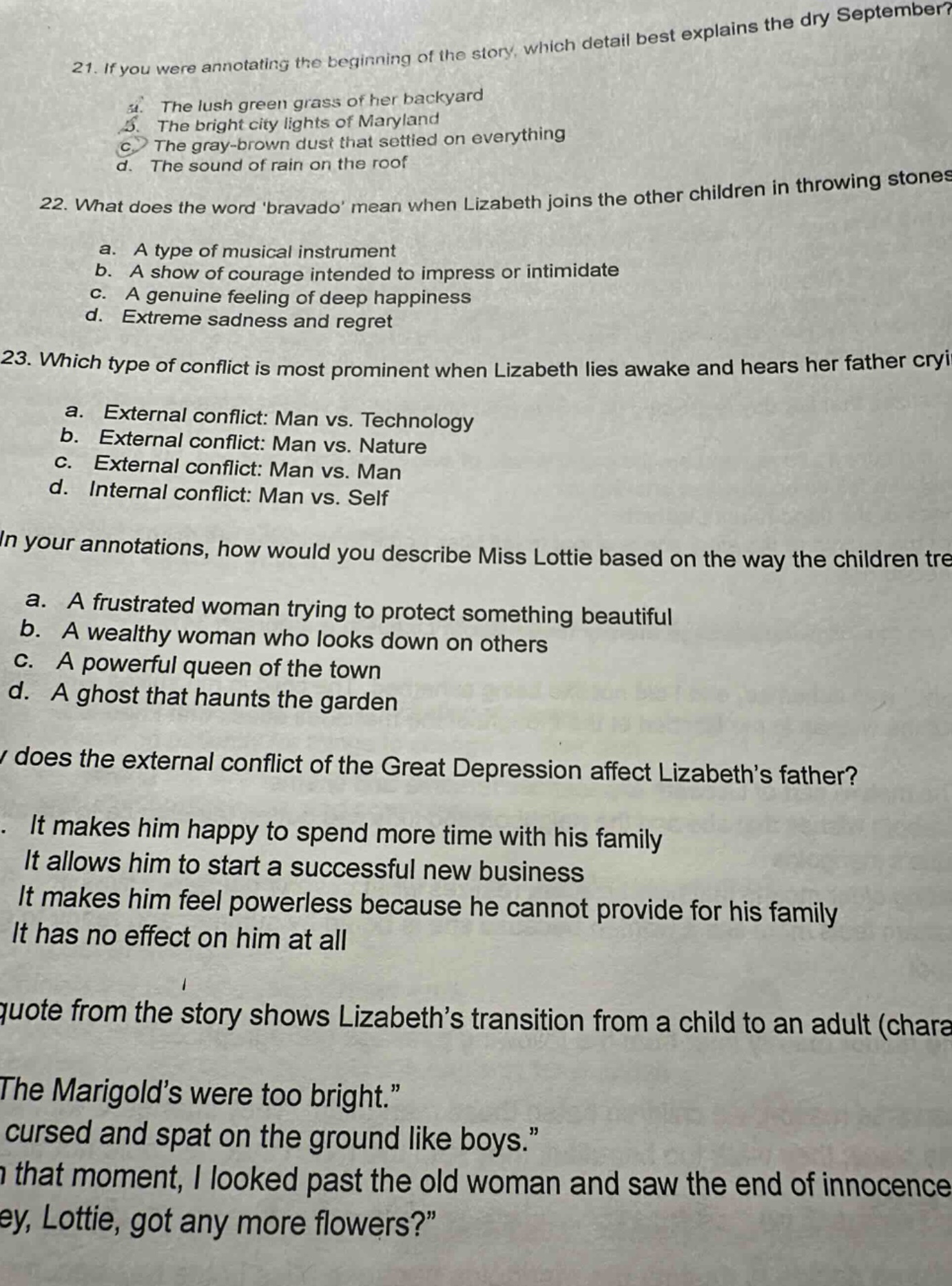
- if you were annotating the beginning of the story, which detail best explains the dry september?
a. the lush green grass of her backyard
b. the bright city lights of maryland
c. the gray - brown dust that settled on everything
d. the sound of rain on the roof
- what does the word bravado mean when lizabeth joins the other children in throwing stones?
a. a type of musical instrument
b. a show of courage intended to impress or intimidate
c. a genuine feeling of deep happiness
d. extreme sadness and regret
- which type of conflict is most prominent when lizabeth lies awake and hears her father cry?
a. external conflict: man vs. technology
b. external conflict: man vs. nature
c. external conflict: man vs. man
d. internal conflict: man vs. self
in your annotations, how would you describe miss lottie based on the way the children treat her?
a. a frustrated woman trying to protect something beautiful
b. a wealthy woman who looks down on others
c. a powerful queen of the town
d. a ghost that haunts the garden
how does the external conflict of the great depression affect lizabeth’s father?
it makes him happy to spend more time with his family
it allows him to start a successful new business
it makes him feel powerless because he cannot provide for his family
it has no effect on him at all
which quote from the story shows lizabeth’s transition from a child to an adult (character development)?
\the marigold’s were too bright.\
\i cursed and spat on the ground like boys.\
\in that moment, i looked past the old woman and saw the end of innocence.\
\hey, lottie, got any more flowers?\
- A dry September would lack rain, leading to dust buildup; other options contradict dry conditions.
- "Bravado" refers to a false show of courage to impress others, matching the context of joining peers in a bold act.
- Lizabeth's internal turmoil upon hearing her father cry is a conflict within herself.
- In Marigolds, Miss Lottie is a frustrated woman guarding her marigolds, her only beautiful thing, from children.
- The Great Depression left many men unable to provide, causing feelings of powerlessness, which aligns with Lizabeth's father's experience.
- Recognizing the end of innocence marks Lizabeth's shift from childhood to adult understanding.

Snap & solve any problem in the app
Get step-by-step solutions on Sovi AI
Photo-based solutions with guided steps
Explore more problems and detailed explanations
- c. The gray-brown dust that settled on everything
- b. A show of courage intended to impress or intimidate
- d. Internal conflict: Man vs. Self
- a. A frustrated woman trying to protect something beautiful
- It makes him feel powerless because he cannot provide for his family
- In that moment, I looked past the old woman and saw the end of innocence