QUESTION IMAGE
Question
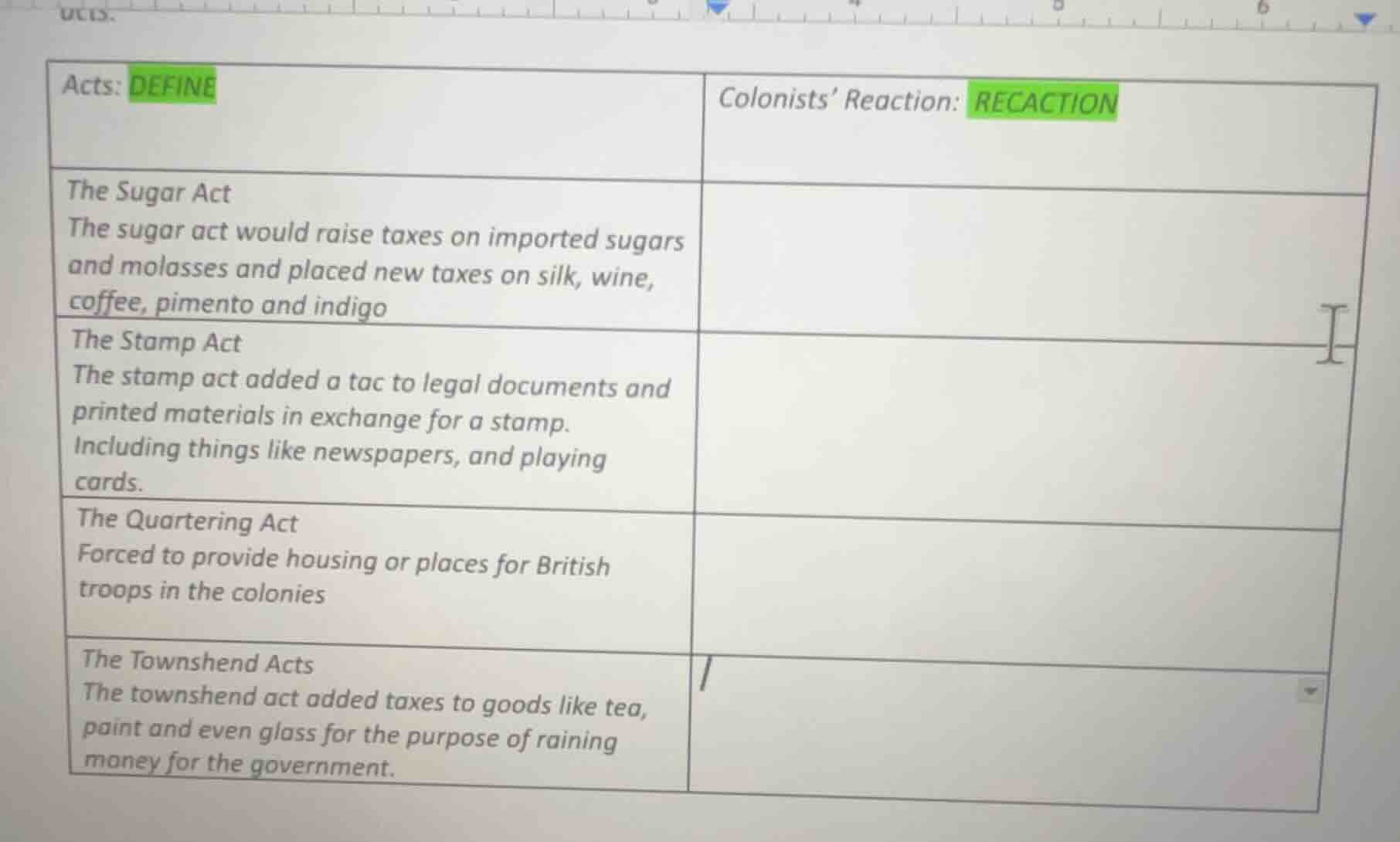
acts: define
colonists’ reaction: recaction
the sugar act
the sugar act would raise taxes on imported sugars and molasses and placed new taxes on silk, wine, coffee, pimento and indigo
the stamp act
the stamp act added a tac to legal documents and printed materials in exchange for a stamp. including things like newspapers, and playing cards.
the quartering act
forced to provide housing or places for british troops in the colonies
the townshend acts
the townshend act added taxes to goods like tea, paint and even glass for the purpose of raining money for the government.
To answer this, we analyze each act and the typical colonial reactions:
The Sugar Act
- Define: Raised taxes on imported sugars, molasses, and new taxes on silk, wine, coffee, pimento, indigo.
- Colonists’ Reaction: Protests, boycotts of British goods, and calls for "no taxation without representation" began. Smuggling (to avoid taxes) increased.
The Stamp Act
- Define: Taxed legal documents, printed materials (newspapers, playing cards) with a stamp.
- Colonists’ Reaction: Violent protests (e.g., Stamp Act Congress, Sons of Liberty), widespread boycotts, and the act was eventually repealed due to colonial resistance.
The Quartering Act
- Define: Forced colonists to house British troops (provide housing, supplies).
- Colonists’ Reaction: Anger over loss of privacy/property rights, some colonies (like New York) initially resisted (though later complied under pressure).
The Townshend Acts
- Define: Taxed imported goods (tea, paint, glass) to raise revenue for British governance.
- Colonists’ Reaction: Boycotts of British imports, protests (e.g., non-importation agreements), and tensions escalated (contributed to events like the Boston Massacre).
Filling the Table (Example Completion):
| Acts: DEFINE | Colonists’ Reaction: REACTION |
|---|---|
| The Stamp Act <br> Taxed legal documents/printed materials (newspapers, playing cards) with a stamp. | Violent protests (Sons of Liberty), Stamp Act Congress, boycotts; act repealed. |
| The Quartering Act <br> Forced colonists to house British troops. | Anger over property rights; some colonies (e.g., NY) initially resisted. |
| The Townshend Acts <br> Taxed imported goods (tea, paint, glass) to raise government revenue. | Boycotts of British imports, non - importation agreements, escalating tensions. |
(Note: Spelling correction: "RECACTION" → "REACTION" in the table header.)

Snap & solve any problem in the app
Get step-by-step solutions on Sovi AI
Photo-based solutions with guided steps
Explore more problems and detailed explanations
To answer this, we analyze each act and the typical colonial reactions:
The Sugar Act
- Define: Raised taxes on imported sugars, molasses, and new taxes on silk, wine, coffee, pimento, indigo.
- Colonists’ Reaction: Protests, boycotts of British goods, and calls for "no taxation without representation" began. Smuggling (to avoid taxes) increased.
The Stamp Act
- Define: Taxed legal documents, printed materials (newspapers, playing cards) with a stamp.
- Colonists’ Reaction: Violent protests (e.g., Stamp Act Congress, Sons of Liberty), widespread boycotts, and the act was eventually repealed due to colonial resistance.
The Quartering Act
- Define: Forced colonists to house British troops (provide housing, supplies).
- Colonists’ Reaction: Anger over loss of privacy/property rights, some colonies (like New York) initially resisted (though later complied under pressure).
The Townshend Acts
- Define: Taxed imported goods (tea, paint, glass) to raise revenue for British governance.
- Colonists’ Reaction: Boycotts of British imports, protests (e.g., non-importation agreements), and tensions escalated (contributed to events like the Boston Massacre).
Filling the Table (Example Completion):
| Acts: DEFINE | Colonists’ Reaction: REACTION |
|---|---|
| The Stamp Act <br> Taxed legal documents/printed materials (newspapers, playing cards) with a stamp. | Violent protests (Sons of Liberty), Stamp Act Congress, boycotts; act repealed. |
| The Quartering Act <br> Forced colonists to house British troops. | Anger over property rights; some colonies (e.g., NY) initially resisted. |
| The Townshend Acts <br> Taxed imported goods (tea, paint, glass) to raise government revenue. | Boycotts of British imports, non - importation agreements, escalating tensions. |
(Note: Spelling correction: "RECACTION" → "REACTION" in the table header.)