QUESTION IMAGE
Question
agricultural revolution leads to industrialization
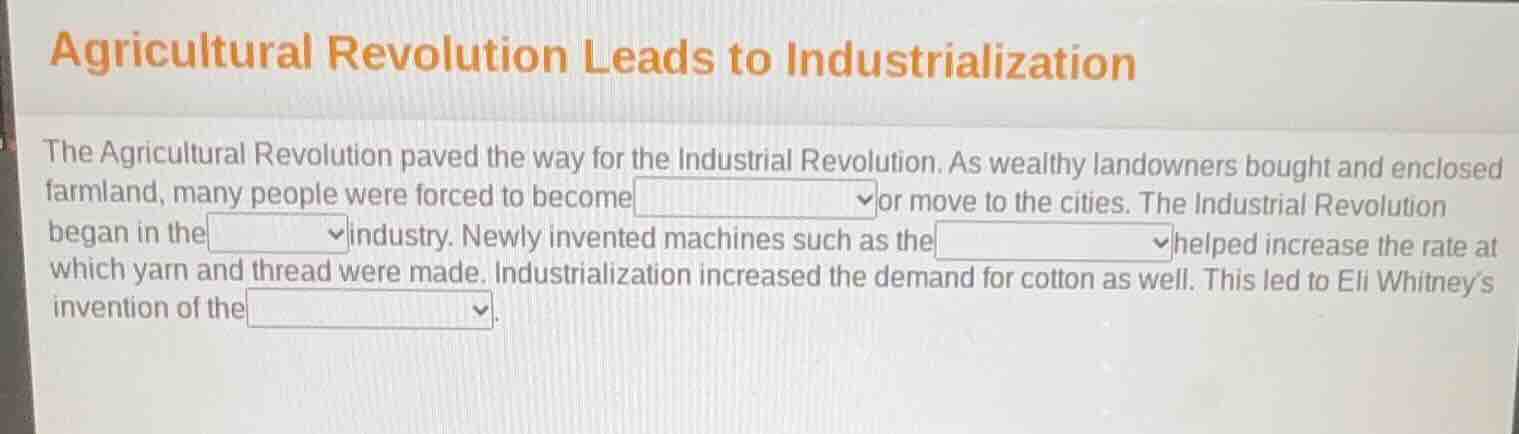
the agricultural revolution paved the way for the industrial revolution. as wealthy landowners bought and enclosed farmland, many people were forced to become
or move to the cities. the industrial revolution began in the
industry. newly invented machines such as the
helped increase the rate at which yarn and thread were made. industrialization increased the demand for cotton as well. this led to eli whitney’s invention of the
.
Brief Explanations
- First blank: When land was enclosed, many rural people had to become tenant farmers (or sometimes "laborers", but "tenant farmers" fits the context of land enclosure pushing them to new roles in agriculture or moving to cities) or move to cities. But more accurately, the common outcome was people becoming workers or moving, but historically, many became landless laborers or moved. However, the key historical context: Enclosure led to people being forced to become wage laborers (or "workers") or move to cities. But the first blank's typical answer is "laborers" or "workers", but more precisely, in the context of the Agricultural Revolution leading to Industrial, the first blank is about people's new role—often "laborers" or "workers", but the standard fill here is "laborers" (or "workers") as they were forced off land and into working for others or moving to cities.
- Second blank: The Industrial Revolution began in the textile industry. This is a key historical fact—textile (cloth - making) was the first industry to industrialize with machines.
- Third blank: The machine that increased yarn/thread production was the spinning jenny (or "water frame", "spinning mule"—but spinning jenny is a common early one for this purpose).
- Fourth blank: Eli Whitney invented the cotton gin (gin = engine) to process cotton, which was in high demand due to textile industrialization.

Snap & solve any problem in the app
Get step-by-step solutions on Sovi AI
Photo-based solutions with guided steps
Explore more problems and detailed explanations
- First blank: laborers (or workers, tenant farmers - but "laborers" is common)
- Second blank: textile
- Third blank: spinning jenny (or water frame, spinning mule)
- Fourth blank: cotton gin