QUESTION IMAGE
Question
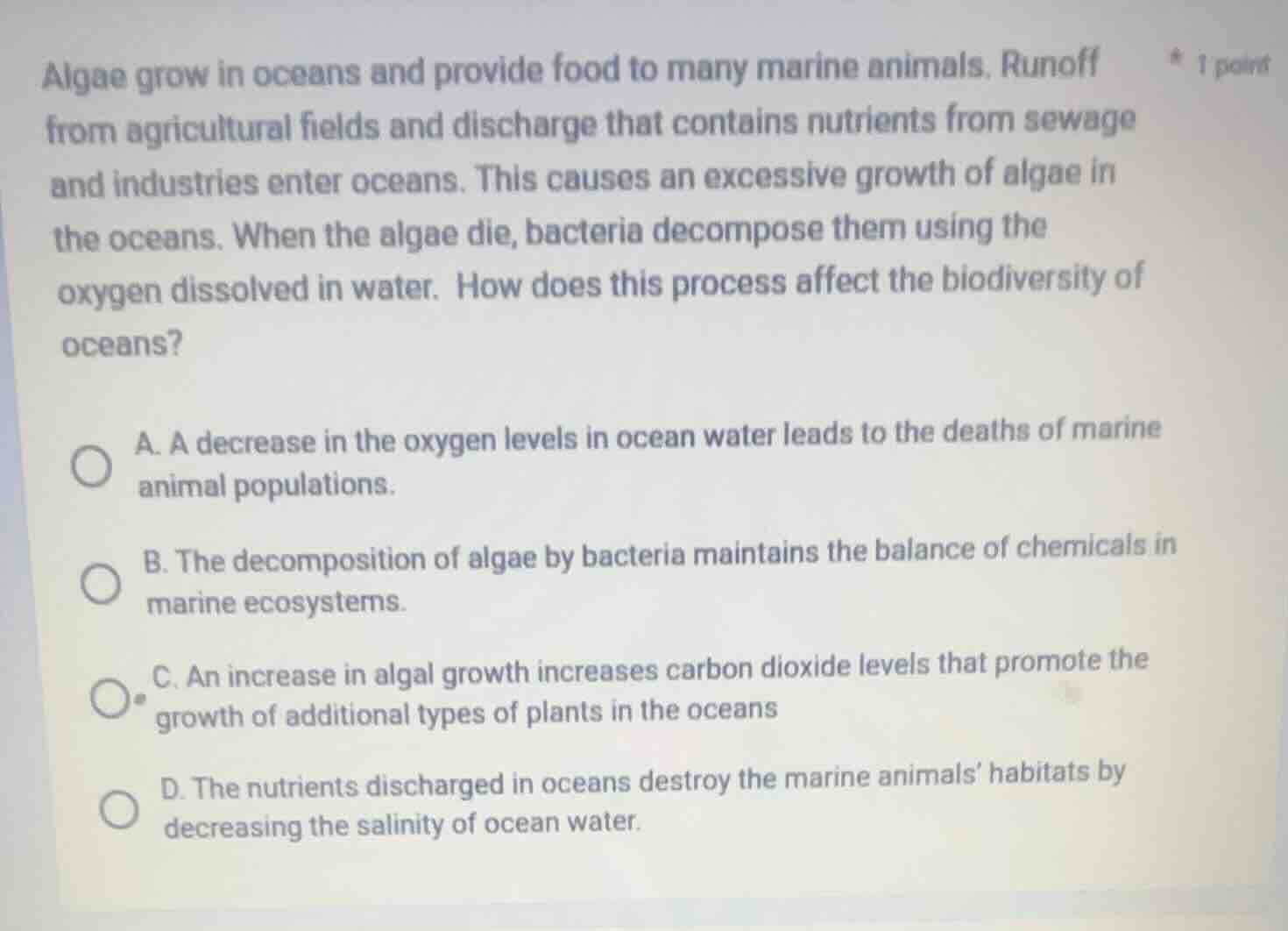
algae grow in oceans and provide food to many marine animals. runoff from agricultural fields and discharge that contains nutrients from sewage and industries enter oceans. this causes an excessive growth of algae in the oceans. when the algae die, bacteria decompose them using the oxygen dissolved in water. how does this process affect the biodiversity of oceans? a. a decrease in the oxygen levels in ocean water leads to the deaths of marine animal populations. b. the decomposition of algae by bacteria maintains the balance of chemicals in marine ecosystems. c. an increase in algal growth increases carbon dioxide levels that promote the growth of additional types of plants in the oceans d. the nutrients discharged in oceans destroy the marine animals’ habitats by decreasing the salinity of ocean water.
The process described is eutrophication: nutrient runoff causes algal blooms. When algae die, bacteria use dissolved oxygen to decompose them, lowering oxygen levels. This oxygen depletion (hypoxia) kills marine animals, reducing ocean biodiversity. Option B is incorrect as the process disrupts, not maintains, chemical balance. Option C is wrong because algal blooms do not promote additional plant growth, and they actually reduce oxygen, not support more species. Option D is incorrect because the runoff does not primarily affect salinity to destroy habitats.

Snap & solve any problem in the app
Get step-by-step solutions on Sovi AI
Photo-based solutions with guided steps
Explore more problems and detailed explanations
A. A decrease in the oxygen levels in ocean water leads to the deaths of marine animal populations.