QUESTION IMAGE
Question
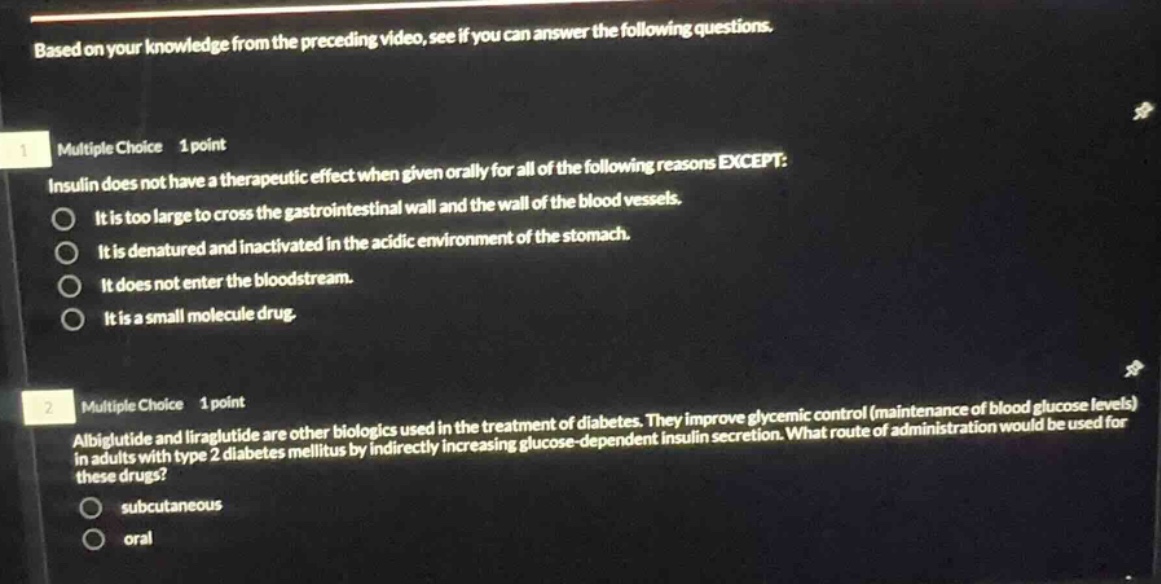
based on your knowledge from the preceding video, see if you can answer the following questions. 1 multiple choice 1 point insulin does not have a therapeutic effect when given orally for all of the following reasons except: it is too large to cross the gastrointestinal wall and the wall of the blood vessels. it is denatured and inactivated in the acidic environment of the stomach. it does not enter the bloodstream. it is a small molecule drug. 2 multiple choice 1 point albiglutide and liraglutide are other biologics used in the treatment of diabetes. they improve glycemic control (maintenance of blood glucose levels) in adults with type 2 diabetes mellitus by indirectly increasing glucose - dependent insulin secretion. what route of administration would be used for these drugs? subcutaneous oral
Question 1
To solve this, we analyze each option:
- "It is too large to cross the gastrointestinal wall and the wall of the blood vessels." – Insulin is a protein (large molecule), so this is a reason it can't be oral.
- "It is denatured and inactivated in the acidic environment of the stomach." – Stomach acid can denature proteins like insulin, a valid reason.
- "It does not enter the bloodstream." – If it can't cross barriers, it won't enter blood, valid.
- "It is a small molecule drug." – Insulin is a large protein molecule, so this statement is false (the exception).
Albiglutide and liraglutide are peptide - like (biologic) drugs. Similar to insulin, oral administration would face issues like degradation in stomach acid and inability to cross gastrointestinal barriers. Subcutaneous administration allows them to be absorbed into the bloodstream to exert their effect on glycemic control.

Snap & solve any problem in the app
Get step-by-step solutions on Sovi AI
Photo-based solutions with guided steps
Explore more problems and detailed explanations
D. It is a small molecule drug.