QUESTION IMAGE
Question
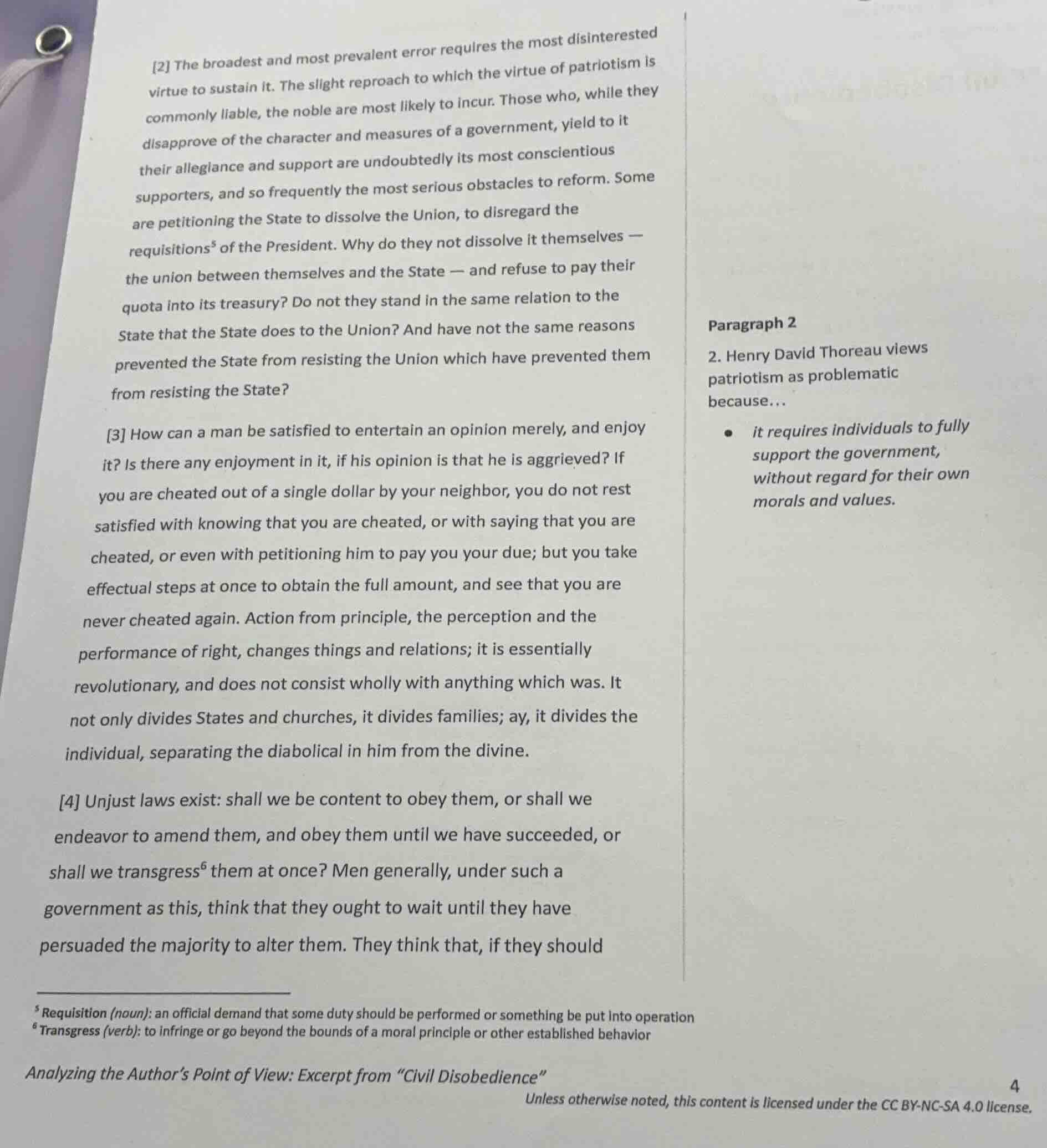
2 the broadest and most prevalent error requires the most disinterested virtue to sustain it. the slight reproach to which the virtue of patriotism is commonly liable, the noble are most likely to incur. those who, while they disapprove of the character and measures of a government, yield to it their allegiance and support are undoubtedly its most conscientious supporters, and so frequently the most serious obstacles to reform. some are petitioning the state to dissolve the union, to disregard the requisitions⁵ of the president. why do they not dissolve it themselves — the union between themselves and the state — and refuse to pay their quota into its treasury? do not they stand in the same relation to the state that the state does to the union? and have not the same reasons prevented the state from resisting the union which have prevented them from resisting the state? 3 how can a man be satisfied to entertain an opinion merely, and enjoy it? is there any enjoyment in it, if his opinion is that he is aggrieved? if you are cheated out of a single dollar by your neighbor, you do not rest satisfied with knowing that you are cheated, or with saying that you are cheated, or even with petitioning him to pay you your due; but you take effectual steps at once to obtain the full amount, and see that you are never cheated again. action from principle, the perception and the performance of right, changes things and relations; it is essentially revolutionary, and does not consist wholly with anything which was. it not only divides states and churches, it divides families; ay, it divides the individual, separating the diabolical in him from the divine. 4 unjust laws exist: shall we be content to obey them, or shall we endeavor to amend them, and obey them until we have succeeded, or shall we transgress⁶ them at once? men generally, under such a government as this, think that they ought to wait until they have persuaded the majority to alter them. they think that, if they should ⁵ requisition (noun): an official demand that some duty should be performed or something be put into operation ⁶ transgress (verb): to infringe or go beyond the bounds of a moral principle or other established behavior analyzing the author’s point of view: excerpt from “civil disobedience” 4 unless otherwise noted, this content is licensed under the cc by - nc - sa 4.0 license. paragraph 2 2. henry david thoreau views patriotism as problematic because... - it requires individuals to fully support the government, without regard for their own morals and values.
To answer the question about why Thoreau views patriotism as problematic, we analyze the text:
- In Paragraph 2, the text states that those who disapprove of a government’s character/measures yet yield allegiance are “conscientious supporters” but “obstacles to reform.”
- The bullet point explains: Patriotism requires full government support, ignoring one’s morals/values. This aligns with Thoreau’s critique—patriotism pressures people to back the government unconditionally, even if it conflicts with their ethics, hindering reform and personal integrity.

Snap & solve any problem in the app
Get step-by-step solutions on Sovi AI
Photo-based solutions with guided steps
Explore more problems and detailed explanations
It requires individuals to fully support the government, without regard for their own morals and values.