QUESTION IMAGE
Question
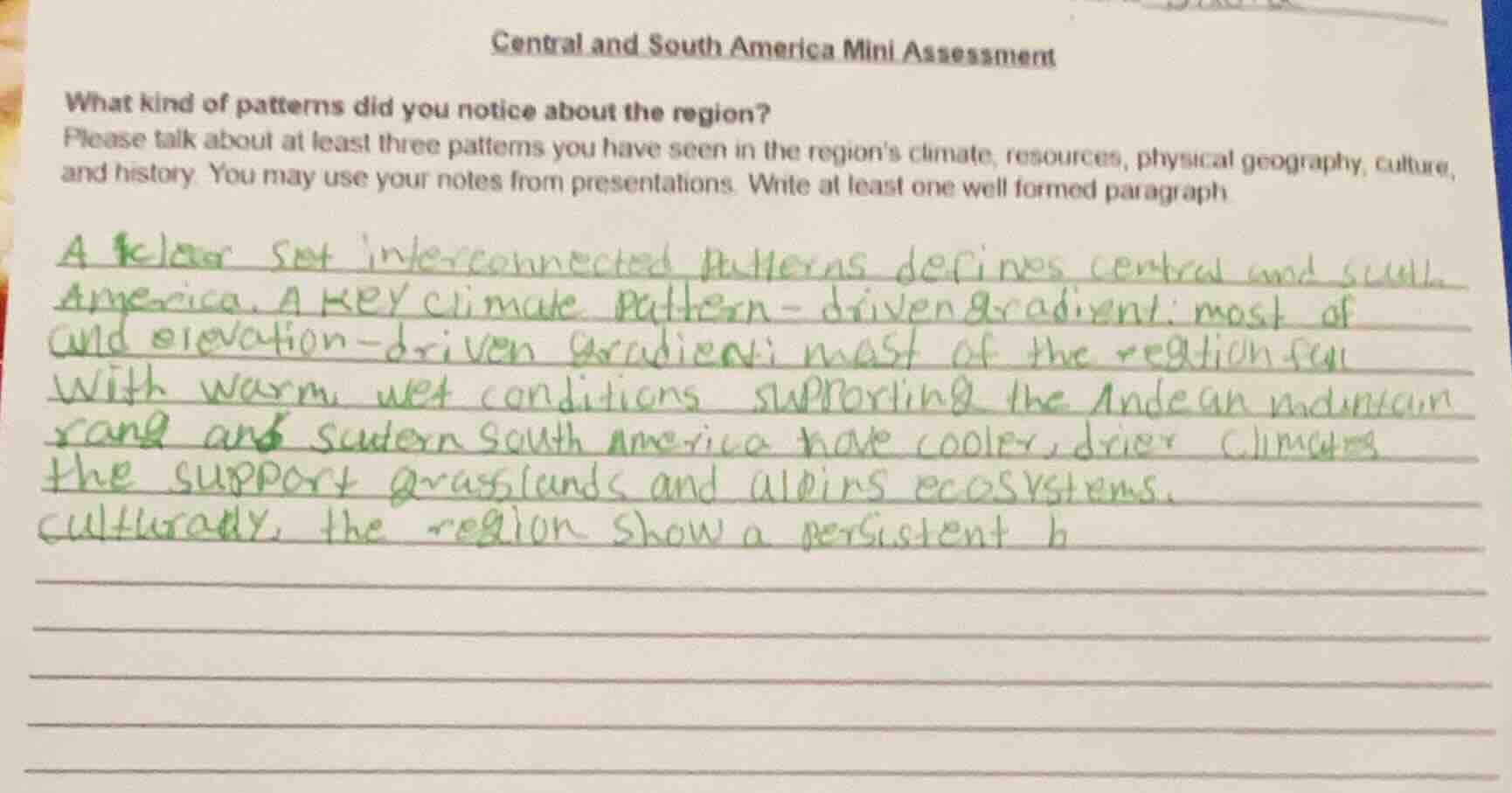
central and south america mini assessment
what kind of patterns did you notice about the region?
please talk about at least three patterns you have seen in the regions climate, resources, physical geography, culture,
and history. you may use your notes from presentations. write at least one well formed paragraph.
a set interconnected patterns defines central and south
america. a key climate pattern - driven gradient: most of
and elevation - driven gradient: most of the region feel
with warm, wet conditions supporting the andean mountain
rang and southern south america have cooler, drier climates
the support grasslands and altiplano ecosystems.
culturally, the region show a persistent b
First, a climate pattern tied to elevation and latitude is established: low-lying areas have warm, wet climates, while the Andes and southern South America have cooler, drier conditions. Next, a physical geography pattern: river systems (like the Amazon) follow lowland basins, while mountain ranges create natural barriers that shape settlement and ecosystem distribution. Finally, a cultural-historical pattern: Indigenous cultural practices (such as Andean terrace farming and Amazonian sustainable resource use) persist and blend with colonial-era European influences, creating mixed cultural identities across the region. These patterns are interconnected, as climate and physical geography shape resource availability, which in turn influences cultural and historical development.

Snap & solve any problem in the app
Get step-by-step solutions on Sovi AI
Photo-based solutions with guided steps
Explore more problems and detailed explanations
A clear set of interconnected patterns defines Central and South America. A key climate pattern, shaped by elevation and latitude, sees most low-lying parts of the region have warm, wet conditions that support dense rainforests like the Amazon, while the Andean mountain range and southern South America have cooler, drier climates that sustain grasslands and alpine ecosystems. Physically, the region follows a pattern of core lowland basins (like the Amazon Basin) and surrounding mountain or highland barriers, which direct river flow, create isolated ecosystems, and influence where human settlements developed. Culturally and historically, there is a persistent pattern of blended identities: Indigenous traditions (such as Inca agricultural techniques and Amazonian communal land use) have merged with European colonial influences, seen in language, religion, and political structures, creating a shared yet diverse cultural landscape across the region. These patterns are deeply linked, as the climate and physical geography determined the resources available to early communities, shaping their cultural practices and the trajectory of historical development in the region.