QUESTION IMAGE
Question
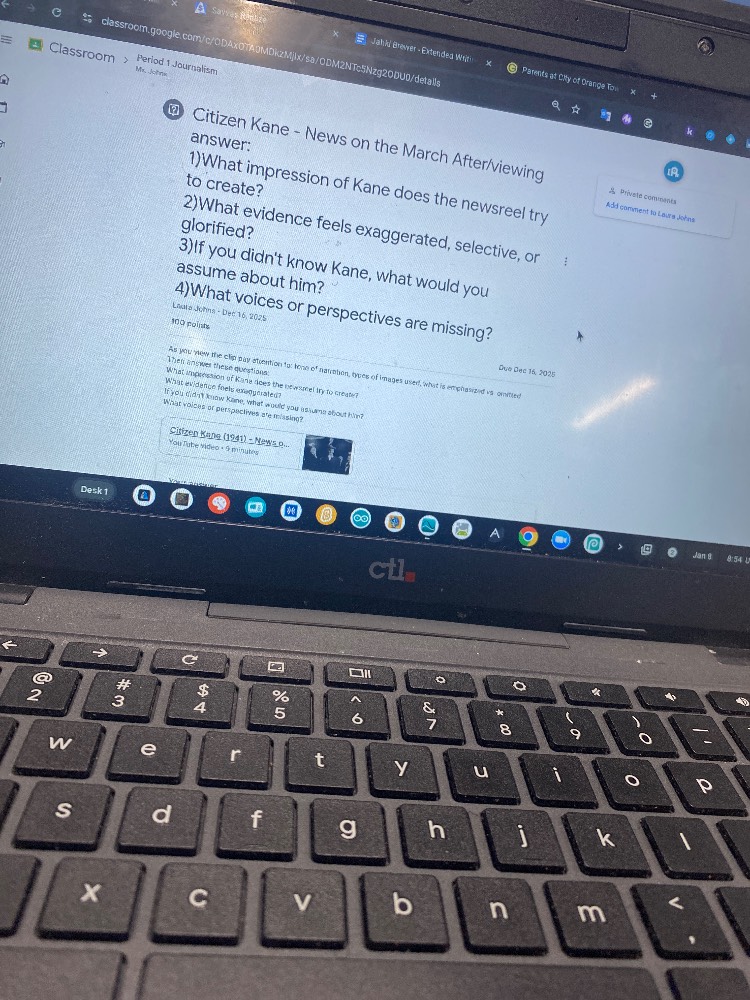
citizen kane - news on the march after/viewing answer:
1)what impression of kane does the newsreel try to create?
2)what evidence feels exaggerated, selective, or glorified?
3)if you didnt know kane, what would you assume about him?
4)what voices or perspectives are missing?
as you view the clip pay attention to tone of narration, types of images used, what is emphasized vs omitted
what impression of kane does the newsreel try to create?
what evidence feels exaggerated, selective, or glorified?
if you didnt know kane, what would you assume about him?
what voices or perspectives are missing?
citizen kane (1941) - newsreel
youtube video • 4 minutes
To answer these questions about Citizen Kane's "News on the March" newsreel, we analyze the newsreel's construction and perspective:
1) Impression of Kane the newsreel tries to create
The newsreel frames Kane as a larger - than - life, accomplished, and influential figure. It uses grand imagery (like his vast estates, business empire, and public appearances) to portray him as a powerful, successful, and almost mythic figure—someone who has shaped society and is worthy of public fascination and admiration.
2) Exaggerated, selective, or glorified evidence
- Exaggerated: The newsreel may inflate the scale of Kane’s achievements (e.g., making his business success seem more dominant than it might be in reality) or the public’s adoration (using crowd shots that feel overly enthusiastic).
- Selective: It omits any negative aspects of Kane’s life—like personal conflicts, business scandals, or criticisms from those he’s stepped on. It also focuses on his wealth and power while ignoring the human side of his story (e.g., personal struggles, relationships).
- Glorified: The narration and visuals (e.g., dramatic music, heroic - like shots of Kane) frame him as a hero - like figure, elevating his status beyond a typical businessman or public figure.
3) Assumptions without knowing Kane
If you didn’t know Kane, you’d assume he was a universally beloved, morally upright, and infinitely successful icon. You’d think he had no flaws, that his life was a continuous string of triumphs, and that he was a benevolent leader who only brought good to society (due to the newsreel’s one - sided, glorified portrayal).
4) Missing voices or perspectives
- Voices of critics: People who disagreed with Kane (e.g., business rivals, those affected by his ruthless business tactics, or former friends/lovers with negative experiences) are missing.
- Ordinary people’s perspectives: The newsreel focuses on Kane’s elite circle and public persona, ignoring how everyday people (not just admirers) actually perceived him. Did the working class see him as a exploiter? Did marginalized groups feel impacted by his power? These voices are absent.
- Intimate perspectives: Voices from his inner circle (like family members, close employees) that could reveal his personal struggles, insecurities, or less - than - heroic moments are missing.

Snap & solve any problem in the app
Get step-by-step solutions on Sovi AI
Photo-based solutions with guided steps
Explore more problems and detailed explanations
s (summarized for each question):
- The newsreel tries to create an impression of Kane as a powerful, successful, mythic, and universally admired figure.
- Evidence is exaggerated (e.g., achievement scale), selective (e.g., omits flaws/criticism), and glorified (e.g., heroic framing).
- You’d assume Kane was flawless, universally beloved, and infinitely successful.
- Missing voices: critics, ordinary people’s diverse perspectives, and intimate inner - circle accounts.