QUESTION IMAGE
Question
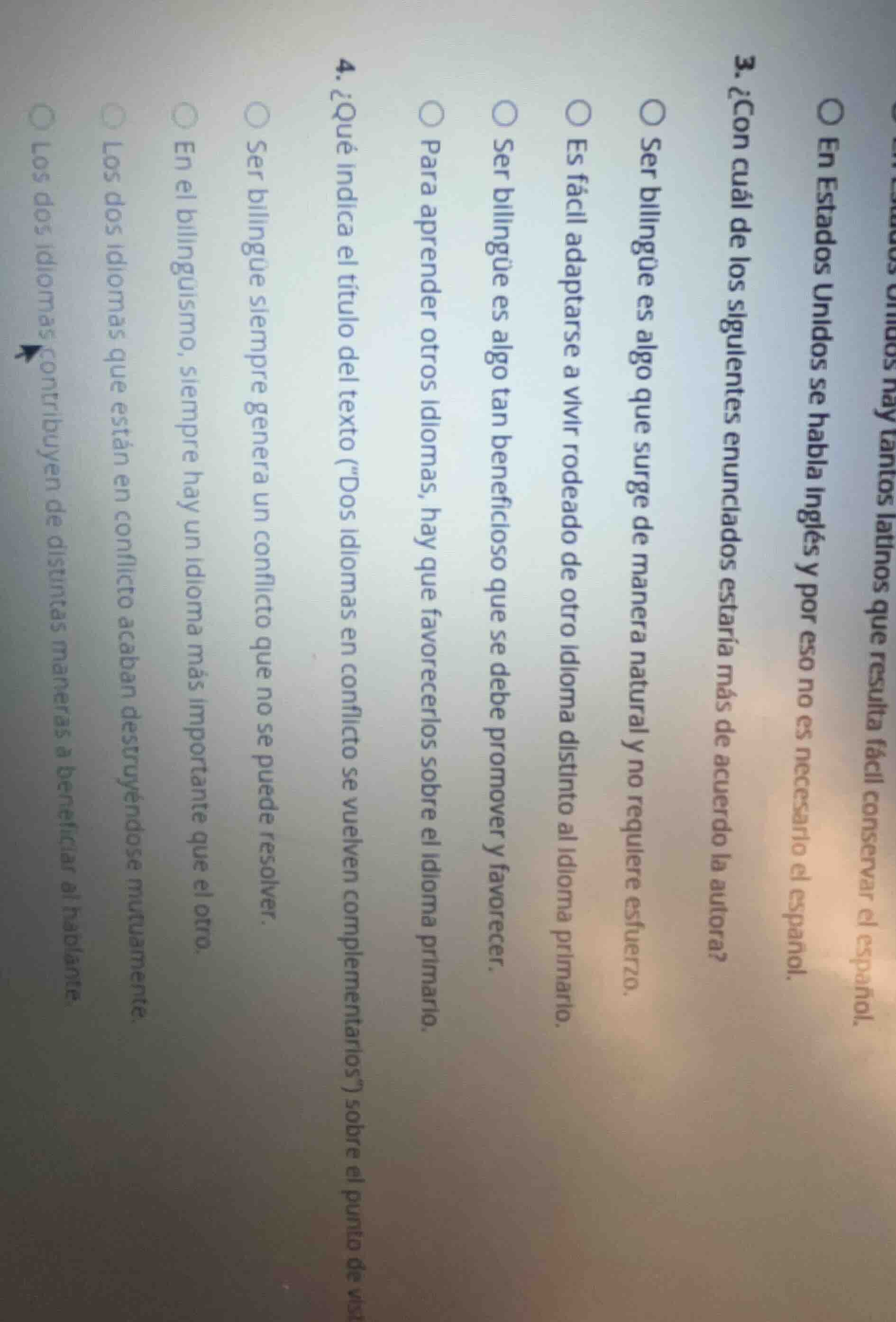
- ¿con cuál de los siguientes enunciados estaría más de acuerdo la autora?
○ ser bilingüe es algo que surge de manera natural y no requiere esfuerzo.
○ es fácil adaptarse a vivir rodeado de otro idioma distinto al idioma primario.
○ ser bilingüe es algo tan beneficioso que se debe promover y favorecer.
○ para aprender otros idiomas, hay que favorecerlos sobre el idioma primario.
- ¿qué indica el título del texto (\dos idiomas en conflicto se vuelven complementarios\) sobre el punto de vista del autor?
○ ser bilingüe siempre genera un conflicto que no se puede resolver.
○ en el bilingüismo, siempre hay un idioma más importante que el otro.
○ los dos idiomas que están en conflicto acaban destruyéndose mutuamente.
○ los dos idiomas contribuyen de distintas maneras a beneficiar al hablante.
Question 3 (¿Con cuál de los siguientes enunciados estaría más de acuerdo la autora? - Which of the following statements would the author most agree with?)
To solve this, we analyze each option:
- Option 1 (Ser bilingüe es algo que surge de manera natural y no requiere esfuerzo): Bilingualism often requires effort (learning, practice), so this is unlikely.
- Option 2 (Es fácil adaptarse a vivir rodeado de otro idioma distinto al idioma primario): Adapting to a different surrounding language can be challenging (cultural, linguistic barriers), so this is not accurate.
- Option 3 (Ser bilingüe es algo tan beneficioso que se debe promover y favorecer): Bilingualism has cognitive, social, and cultural benefits (better communication, cognitive flexibility, cultural understanding), so promoting it is reasonable.
- Option 4 (Para aprender otros idiomas, hay que favorecerlos sobre el idioma primario): Favoring other languages over the primary one is not necessary; bilingualism can co - exist without subordinating the primary language.
Question 4 (¿Qué indica el título del texto ("Dos idiomas en conflicto se vuelven complementarios") sobre el punto de vista del autor? - What does the text's title ("Two languages in conflict become complementary") indicate about the author's point of view?)
- Option 1 (Ser bilingüe siempre genera un conflicto que no se puede resolver): The title says they become complementary, so conflict is resolved, not permanent. Eliminate.
- Option 2 (En el bilingüismo, siempre hay un idioma más importante que el otro): The title implies equality (complementary), not hierarchy. Eliminate.
- Option 3 (Los dos idiomas que están en conflicto acaban destruyéndose mutuamente): The title says they become complementary, not destructive. Eliminate.
- Option 4 (Los dos idiomas contribuyen de distintas maneras a beneficiar al hablante): "Complementary" means they work together, each contributing in their own way to benefit the speaker (e.g., cognitive, social, cultural benefits). This matches the title's implication.
Analyzed each option's validity regarding bilingualism. Option 3 aligns with bilingualism's benefits.
Interpreted the title's meaning. "Complementary" implies mutual benefit, matching Option 4.

Snap & solve any problem in the app
Get step-by-step solutions on Sovi AI
Photo-based solutions with guided steps
Explore more problems and detailed explanations
s: