QUESTION IMAGE
Question
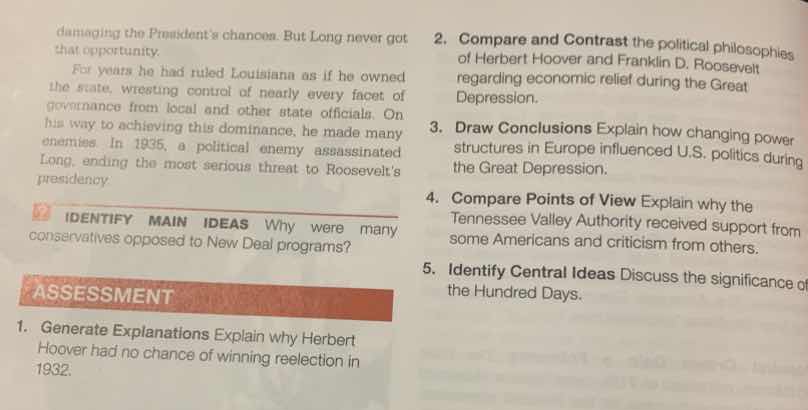
damaging the president’s chances. but long never got that opportunity. for years he had ruled louisiana as if he owned the state, wresting control of nearly every facet of governance from local and other state officials. on his way to achieving this dominance, he made many enemies. in 1935, a political enemy assassinated long, ending the most serious threat to roosevelt’s presidency. identify main ideas why were many conservatives opposed to new deal programs? assessment 1. generate explanations explain why herbert hoover had no chance of winning reelection in 1932. 2. compare and contrast the political philosophies of herbert hoover and franklin d. roosevelt regarding economic relief during the great depression. 3. draw conclusions explain how changing power structures in europe influenced u.s. politics during the great depression. 4. compare points of view explain why the tennessee valley authority received support from some americans and criticism from others. 5. identify central ideas discuss the significance of the hundred days.
Question 1
- Hoover's failure to address the Great Depression effectively, relying on voluntary business cooperation and limited government intervention, left millions unemployed and in poverty, eroding public trust.
- His handling of the Bonus Army protest (using military force against unemployed veterans) damaged his public image severely.
- Franklin D. Roosevelt offered a hopeful, proactive alternative with his New Deal platform, which resonated far more with voters suffering from the economic crisis.
- Herbert Hoover: Advocated for limited government intervention, believing in "rugged individualism," voluntary cooperation between businesses and charities, and balancing the federal budget. He thought economic recovery would come from private sector initiative, not federal relief programs.
- Franklin D. Roosevelt: Supported active, expansive government intervention. His New Deal used federal spending, regulatory agencies, and direct relief programs (like the WPA, AAA) to stimulate the economy, create jobs, and support vulnerable Americans, prioritizing economic recovery over immediate budget balance.
- The rise of totalitarian regimes (Nazi Germany, Fascist Italy, Stalinist USSR) in Europe made American voters prioritize economic stability and strong leadership, creating support for FDR's expansive government New Deal as a bulwark against extremism.
- European economic collapse reduced demand for American exports, worsening the Great Depression and increasing pressure on the U.S. government to implement domestic relief programs.
- The failure of European capitalist systems in the crisis undermined American conservative arguments against government intervention, making FDR's interventionist policies more politically acceptable.

Snap & solve any problem in the app
Get step-by-step solutions on Sovi AI
Photo-based solutions with guided steps
Explore more problems and detailed explanations
Herbert Hoover had no chance of winning reelection in 1932 because:
- His limited, voluntary-focused response to the Great Depression failed to alleviate widespread unemployment, poverty, and economic collapse, leaving the public disillusioned.
- His decision to use military force to disperse the Bonus Army (unemployed World War I veterans demanding promised payments) created a widespread perception of him as insensitive to struggling Americans.
- Franklin D. Roosevelt campaigned on a bold, proactive New Deal platform that promised direct government intervention to address the crisis, which was far more appealing to voters desperate for change.
---