QUESTION IMAGE
Question
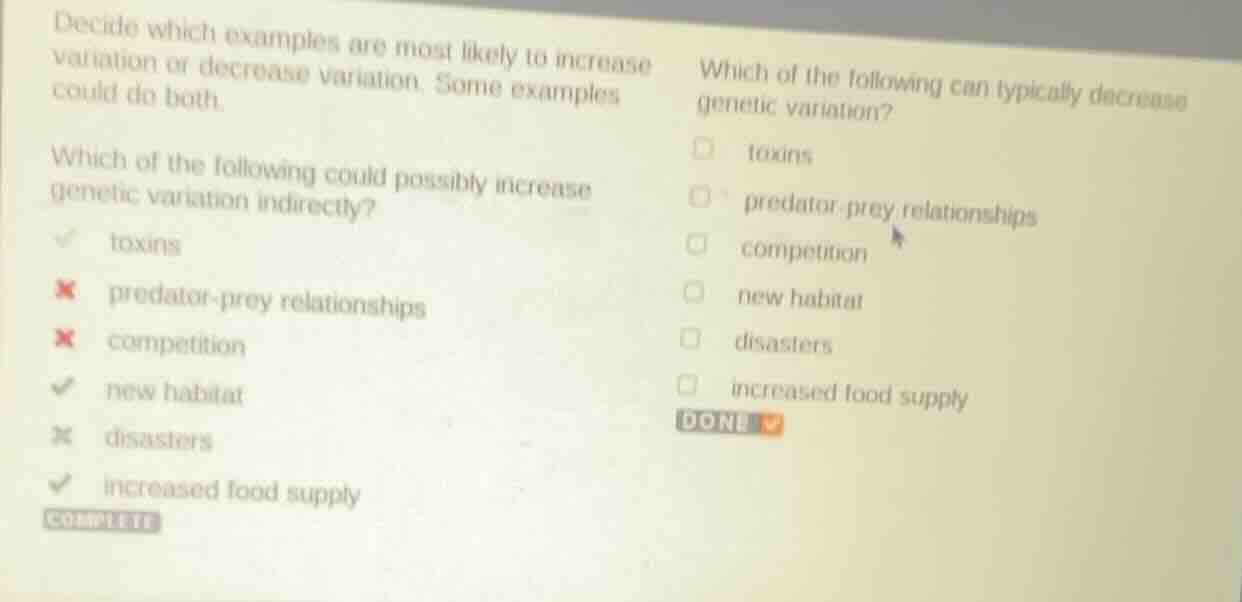
decide which examples are most likely to increase variation or decrease variation. some examples could do both.
which of the following could possibly increase genetic variation indirectly?
☑️ toxins
❌ predator - prey relationships
❌ competition
☑️ new habitat
❌ disasters
☑️ increased food supply
complete
which of the following can typically decrease genetic variation?
□ toxins
□ predator - prey relationships
□ competition
□ new habitat
□ disasters
□ increased food supply
done
For the first question (indirectly increasing genetic variation):
- Toxins can cause mutations that introduce new alleles, increasing variation.
- A new habitat presents novel selective pressures, favoring new traits and increasing variation over time.
- Increased food supply reduces resource stress, allowing more genetic traits to persist, increasing variation.
- Predator-prey relationships and competition typically act as selective pressures that reduce less favorable traits, decreasing variation; disasters cause population bottlenecks that reduce variation.
For the second question (decreasing genetic variation):
- Disasters cause population bottlenecks, where only a small subset of the original population survives, drastically reducing genetic diversity.
- Toxins can increase variation via mutations; predator-prey relationships, competition, new habitats, and increased food supply either increase or do not typically decrease genetic variation.

Snap & solve any problem in the app
Get step-by-step solutions on Sovi AI
Photo-based solutions with guided steps
Explore more problems and detailed explanations
First question (could possibly increase genetic variation indirectly):
- toxins
- new habitat
- increased food supply
Second question (can typically decrease genetic variation):
- disasters