QUESTION IMAGE
Question
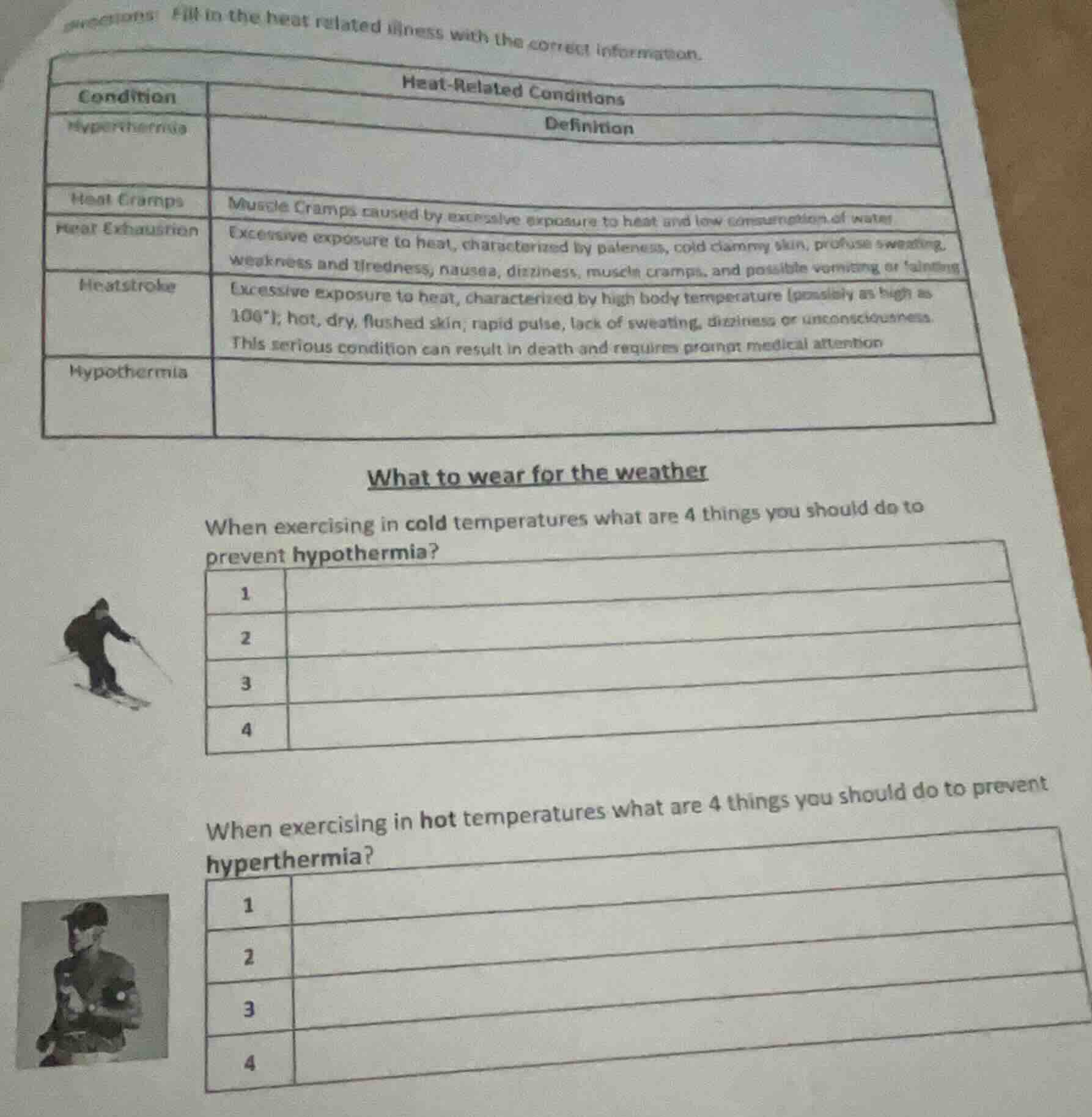
directions: fill in the heat related illness with the correct information.heat-related conditions| condition | definition || ---- | ---- || hyperthermia | || heat cramps | muscle cramps caused by excessive exposure to heat and low consumption of water || heat exhaustion | excessive exposure to heat, characterized by paleness, cold clammy skin, profuse sweating, weakness and tiredness, nausea, dizziness, muscle cramps, and possible vomiting or fainting || heatstroke | excessive exposure to heat, characterized by high body temperature (possibly as high as 106°); hot, dry, flushed skin; rapid pulse, lack of sweating, dizziness or unconsciousness. this serious condition can result in death and requires prompt medical attention || hypothermia | |what to wear for the weatherwhen exercising in cold temperatures what are 4 things you should do to prevent hypothermia?1. 2. 3. 4. when exercising in hot temperatures what are 4 things you should do to prevent hyperthermia?1. 2. 3. 4.
First, define the missing heat-related conditions: Hyperthermia is the umbrella term for elevated body temperature from heat exposure, while Hypothermia is low body temperature from cold exposure. Then list evidence-based prevention steps for each condition, focused on exercise scenarios.

Snap & solve any problem in the app
Get step-by-step solutions on Sovi AI
Photo-based solutions with guided steps
Explore more problems and detailed explanations
Heat-Related Conditions Table
| Condition | Definition |
|---|---|
| Heat Cramps | Muscle Cramps caused by excessive exposure to heat and low consumption of water |
| Heat Exhaustion | Excessive exposure to heat, characterized by paleness, cold clammy skin, profuse sweating, weakness and tiredness, nausea, dizziness, muscle cramps, and possible vomiting or fainting |
| Heatstroke | Excessive exposure to heat, characterized by high body temperature (possibly as high as 106°); hot, dry, flushed skin; rapid pulse, lack of sweating, dizziness or unconsciousness. This serious condition can result in death and requires prompt medical attention |
| Hypothermia | A dangerous drop in core body temperature (below 95°F/35°C) caused by prolonged cold exposure, characterized by shivering, confusion, slurred speech, weak pulse, and loss of coordination; can be fatal without treatment. |
Prevent Hypothermia (Cold Exercise)
- Wear layered, wind/water-resistant clothing
- Stay dry; change wet clothes immediately
- Eat calorie-dense, warm foods regularly
- Limit prolonged cold exposure; take warm breaks
Prevent Hyperthermia (Hot Exercise)
- Wear light, loose, breathable clothing
- Drink water/electrolytes at regular intervals
- Exercise during cooler parts of the day
- Take frequent shaded rest breaks to cool down