QUESTION IMAGE
Question
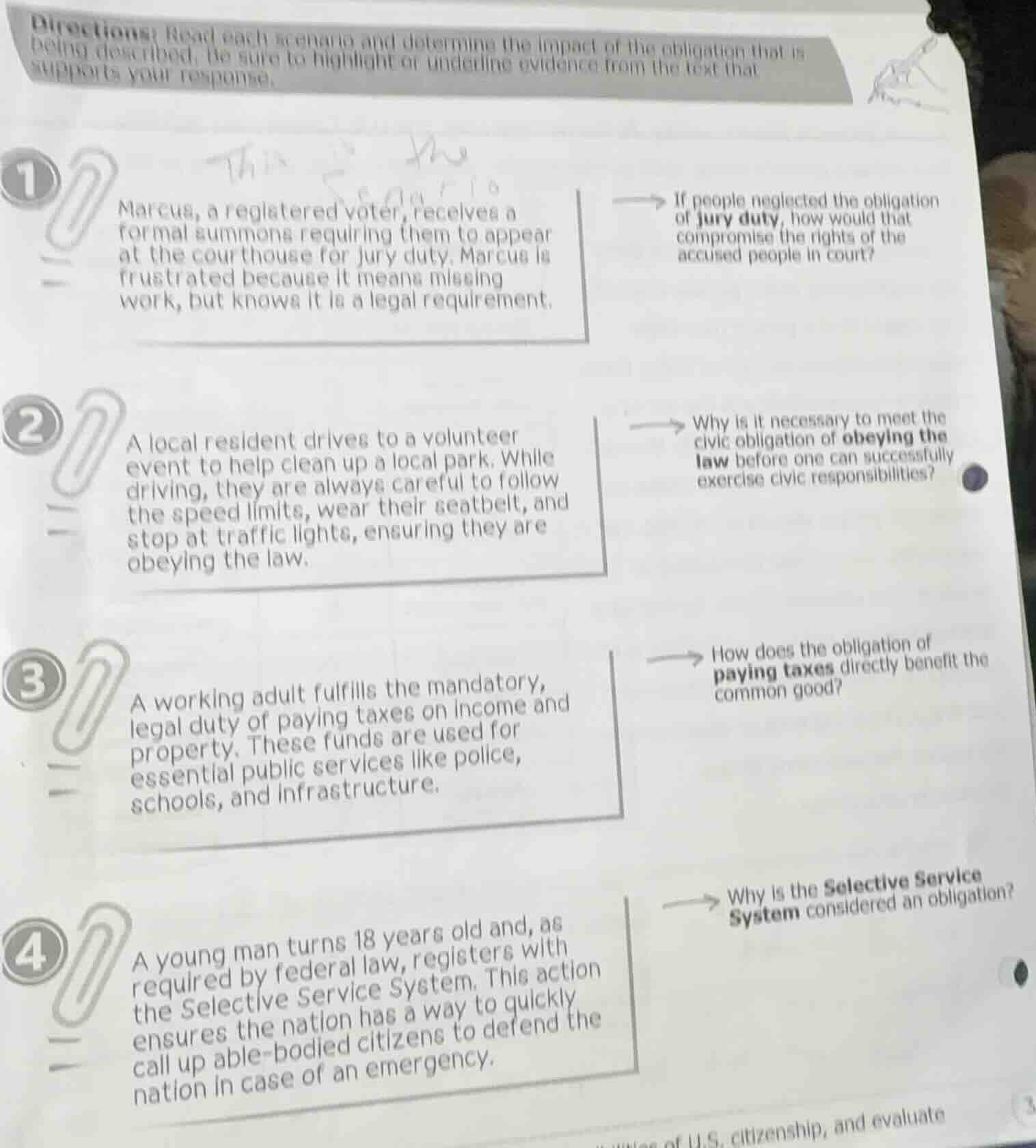
directions: read each scenario and determine the impact of the obligation that is being described. be sure to highlight or underline evidence from the text that supports your response.1marcus, a registered voter, receives a formal summons requiring them to appear at the courthouse for jury duty. marcus is frustrated because it means missing work, but knows it is a legal requirement.→ if people neglected the obligation of jury duty, how would that compromise the rights of the accused people in court?2a local resident drives to a volunteer event to help clean up a local park. while driving, they are always careful to follow the speed limits, wear their seatbelt, and stop at traffic lights, ensuring they are obeying the law.→ why is it necessary to meet the civic obligation of obeying the law before one can successfully exercise civic responsibilities?3a working adult fulfills the mandatory, legal duty of paying taxes on income and property. these funds are used for essential public services like police, schools, and infrastructure.→ how does the obligation of paying taxes directly benefit the common good?4a young man turns 18 years old and, as required by federal law, registers with the selective service system. this action ensures the nation has a way to quickly call up able-bodied citizens to defend the nation in case of an emergency.→ why is the selective service system considered an obligation?
- For jury duty: The right to a trial by a jury of one's peers is a core legal right for the accused. If people neglect jury duty, courts may struggle to form impartial juries, leading to delayed trials, unfair proceedings, or the denial of this fundamental right to accused individuals.
- For obeying the law: Laws establish the stable, orderly framework that allows civic responsibilities (like volunteering, voting, or community participation) to function. Without following basic laws, public order breaks down, making it impossible to effectively engage in civic life.
- For paying taxes: Tax funds directly fund shared public resources and services that benefit all members of society—including public safety (police), education (schools), and infrastructure (roads, public transit) that support community well-being and collective quality of life.
- For Selective Service: It is an obligation because it ensures the nation has a structured, fair way to raise a military force if a national emergency requires it, which is critical for defending the country's security and sovereignty.

Snap & solve any problem in the app
Get step-by-step solutions on Sovi AI
Photo-based solutions with guided steps
Explore more problems and detailed explanations
- Neglecting jury duty would compromise the accused's right to a trial by an impartial jury of their peers, potentially leading to unfair or delayed court proceedings.
- Obeying the law is necessary because it maintains the public order and stable framework required to safely and effectively exercise civic responsibilities.
- Paying taxes directly benefits the common good by funding essential shared public services: police, schools, and infrastructure that support all members of the community.
- The Selective Service System is an obligation because it creates a fair, structured method to call on able-bodied citizens to defend the nation in a national emergency, protecting collective security.