QUESTION IMAGE
Question
document e
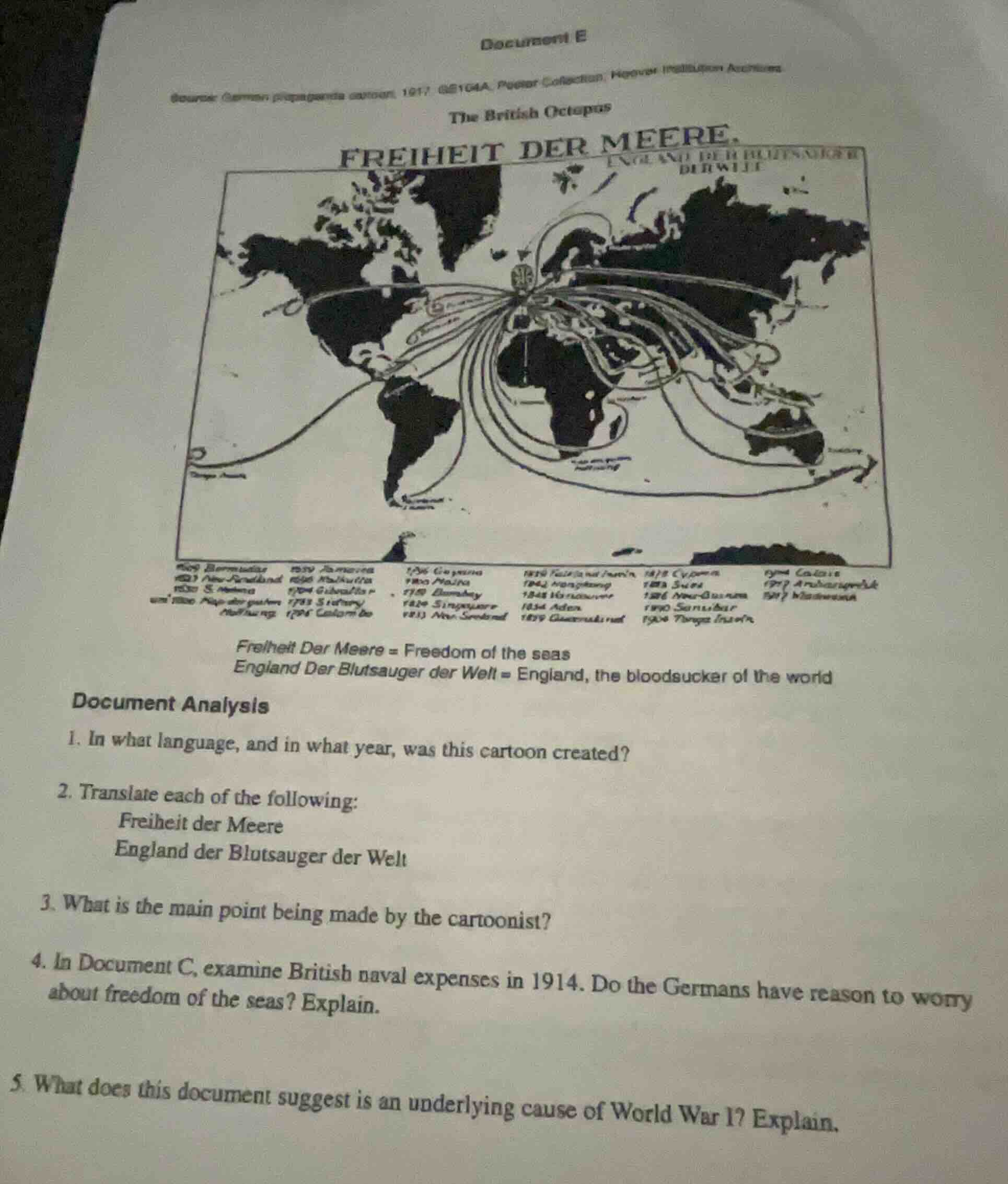
source: german propaganda cartoon, 1917. g81g4a, poster collection, hoover institution archives.
the british octopus
freiheit der meere
england der blutsauger der welt
freiheit der meere = freedom of the seas
england der blutsauger der welt = england, the bloodsucker of the world
document analysis
- in what language, and in what year, was this cartoon created?
- translate each of the following:
freiheit der meere
england der blutsauger der welt
- what is the main point being made by the cartoonist?
- in document c, examine british naval expenses in 1914. do the germans have reason to worry about freedom of the seas? explain.
- what does this document suggest is an underlying cause of world war i? explain.
Sub - Question 1
The text in the cartoon has German words (like "FREIHEIT DER MEERE", "England Der Blutsauger der Welt") and the source says "German propaganda cartoon, 1917". So we can determine the language and year from this information.
We know that "Freiheit" means "Freedom", "der Meere" means "of the seas"; "Blutsauger" means "bloodsucker", "der Welt" means "of the world". So we translate the phrases based on German - English word - to - word and context - based translation.
The cartoon is titled "The British Octopus" and shows Britain (represented as an octopus) with tentacles reaching out to many parts of the world. The German text also calls England a "bloodsucker of the world". So the cartoonist is trying to show that Britain has extensive global influence (through its navy or colonial/imperial reach) and is exploiting other parts of the world, and also that Britain's control is a threat to the "freedom of the seas".

Snap & solve any problem in the app
Get step-by-step solutions on Sovi AI
Photo-based solutions with guided steps
Explore more problems and detailed explanations
The cartoon was created in the German language in the year 1917.