QUESTION IMAGE
Question
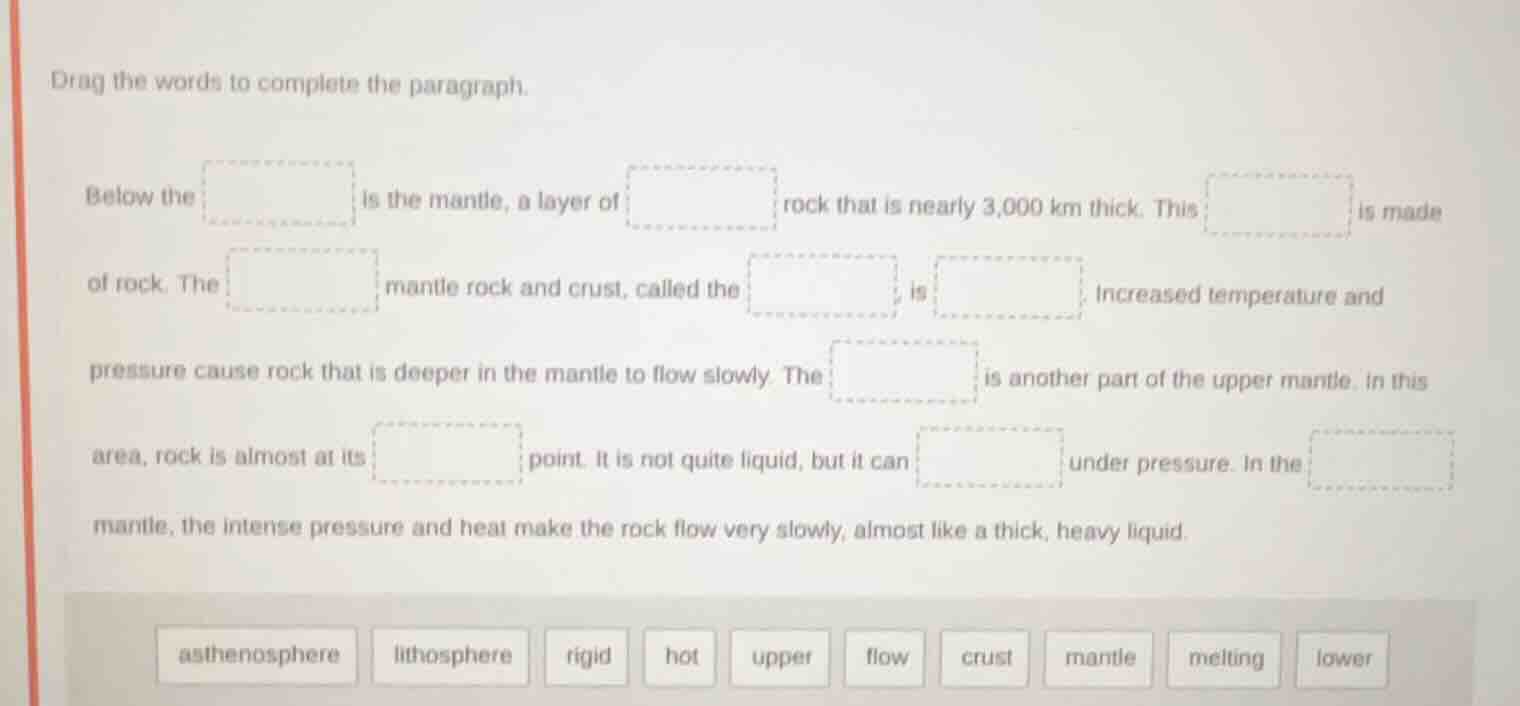
drag the words to complete the paragraph.
below the
is the mantle, a layer of
rock that is nearly 3,000 km thick. this
is made
of rock. the
mantle rock and crust, called the
is
. increased temperature and
pressure cause rock that is deeper in the mantle to flow slowly. the
is another part of the upper mantle. in this
area, rock is almost at its
point. it is not quite liquid, but it can
under pressure. in the
mantle, the intense pressure and heat make the rock flow very slowly, almost like a thick, heavy liquid.
ashenosphere lithosphere rigid hot upper flow crust mantle melting lower
This is a fill-in-the-blank about Earth's internal structure, matching key terms to their defined roles:
- The crust is the outermost layer, lying above the mantle.
- The mantle is a hot, thick rock layer.
- The mantle itself is composed of rock.
- The upper mantle combines with the crust to form the lithosphere, which is rigid.
- The asthenosphere is the ductile part of the upper mantle.
- Rock in the asthenosphere is near its melting point and can flow under pressure.
- The lower mantle has intense heat/pressure making rock flow slowly.

Snap & solve any problem in the app
Get step-by-step solutions on Sovi AI
Photo-based solutions with guided steps
Explore more problems and detailed explanations
- Below the crust is the mantle, a layer of hot rock that is nearly 3,000 km thick. This mantle is made of rock.
- The upper mantle rock and crust, called the lithosphere is rigid.
- The asthenosphere is another part of the upper mantle. In this area, rock is almost at its melting point. It is not quite liquid, but it can flow under pressure.
- In the lower mantle, the intense pressure and heat make the rock flow very slowly, almost like a thick, heavy liquid.