QUESTION IMAGE
Question
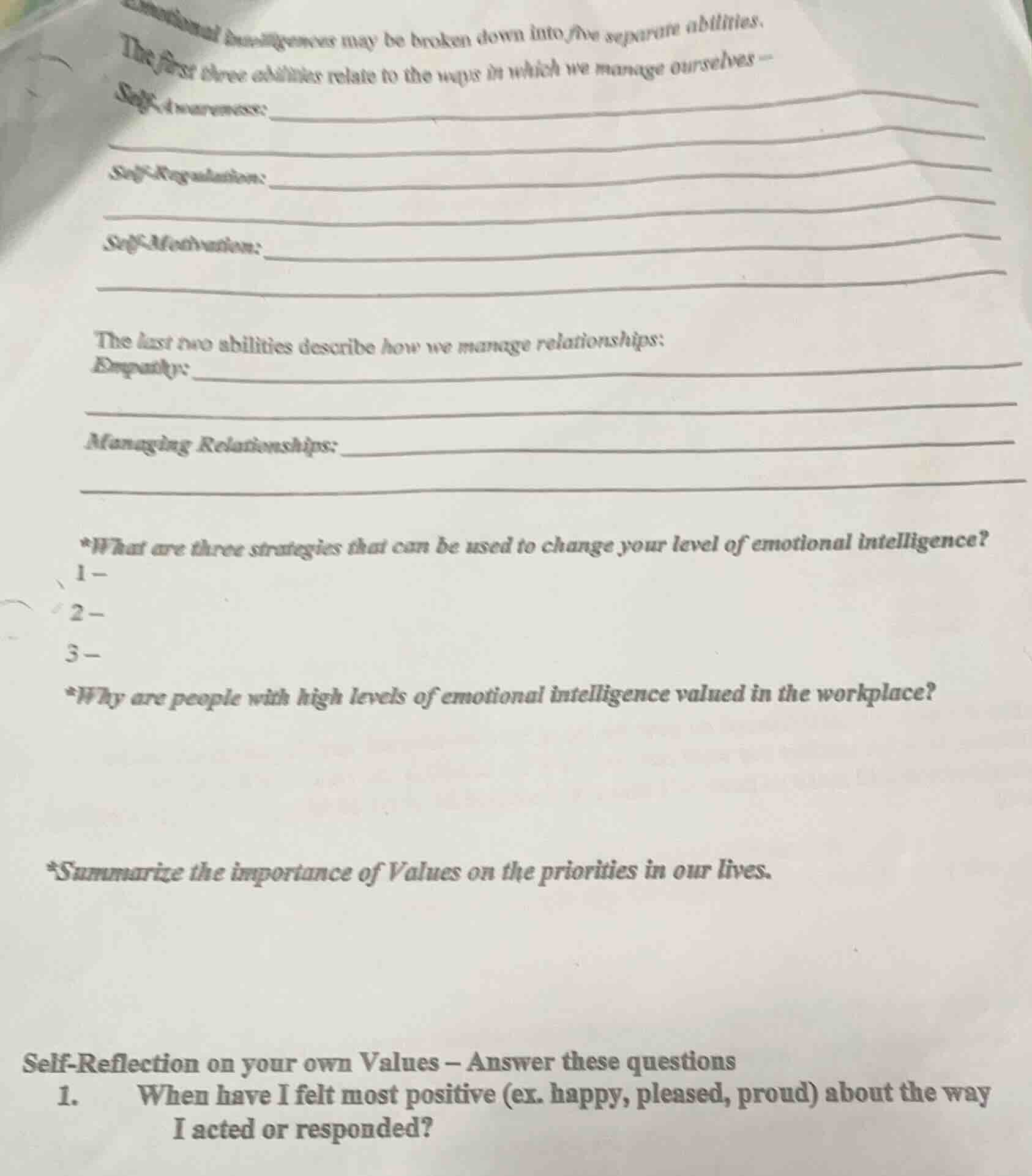
emotional intelligence may be broken down into five separate abilities.
the first three abilities relate to the ways in which we manage ourselves —
self - awareness:
self - regulation:
self - motivation:
the last two abilities describe how we manage relationships:
empathy:
managing relationships:
*what are three strategies that can be used to change your level of emotional intelligence?
1 –
2 –
3 –
*why are people with high levels of emotional intelligence valued in the workplace?
*summarize the importance of values on the priorities in our lives.
self - reflection on your own values – answer these questions
- when have i felt most positive (ex. happy, pleased, proud) about the way
i acted or responded?
Emotional Intelligence Abilities:
- Self-Awareness: Recognize personal emotions, strengths, weaknesses, and their impact on others.
- Self-Regulation: Manage and control impulsive feelings and behaviors, adapt to changing circumstances.
- Self-Motivation: Drive oneself to achieve goals, persist through setbacks, and maintain optimism.
- Empathy: Understand and share the emotions of others, recognize their perspectives.
- Managing Relationships: Build and maintain strong connections, communicate clearly, resolve conflicts.
Strategies to Improve Emotional Intelligence:
- Practice daily self-reflection to identify emotional triggers.
- Actively listen to others to build empathy skills.
- Engage in mindfulness or meditation to enhance emotional regulation.
Workplace Value of High EI:
People with high emotional intelligence foster better teamwork, resolve conflicts effectively, communicate clearly, and adapt to workplace changes, leading to higher productivity and a positive work environment.
Importance of Values on Life Priorities:
Values act as a guiding framework, shaping which goals, activities, and relationships we prioritize. They align our choices with our core beliefs, creating a sense of purpose and fulfillment by ensuring our actions reflect what we consider most important.
Self-Reflection Example:
I felt most positive when I stayed calm and helped a stressed coworker finish a tight deadline, rather than focusing on my own frustration about the workload. This aligned with my value of supporting others and collaboration.

Snap & solve any problem in the app
Get step-by-step solutions on Sovi AI
Photo-based solutions with guided steps
Explore more problems and detailed explanations
Emotional Intelligence Abilities:
- Self-Awareness: Recognize personal emotions and impacts.
- Self-Regulation: Control impulses and adapt to change.
- Self-Motivation: Persist toward goals despite setbacks.
- Empathy: Understand others' emotions and perspectives.
- Managing Relationships: Build connections and resolve conflicts.
Strategies to Improve Emotional Intelligence:
- Daily self-reflection to spot emotional triggers
- Active listening to build empathy
- Mindfulness practice for better regulation
Workplace Value of High EI:
They boost teamwork, resolve conflicts, communicate effectively, and adapt, improving productivity and workplace morale.
Importance of Values on Life Priorities:
Values define core priorities, aligning choices with beliefs to create purpose and fulfillment.
Self-Reflection Example:
I felt most positive when I supported a stressed coworker through a tight deadline, aligning with my value of collaboration.