QUESTION IMAGE
Question
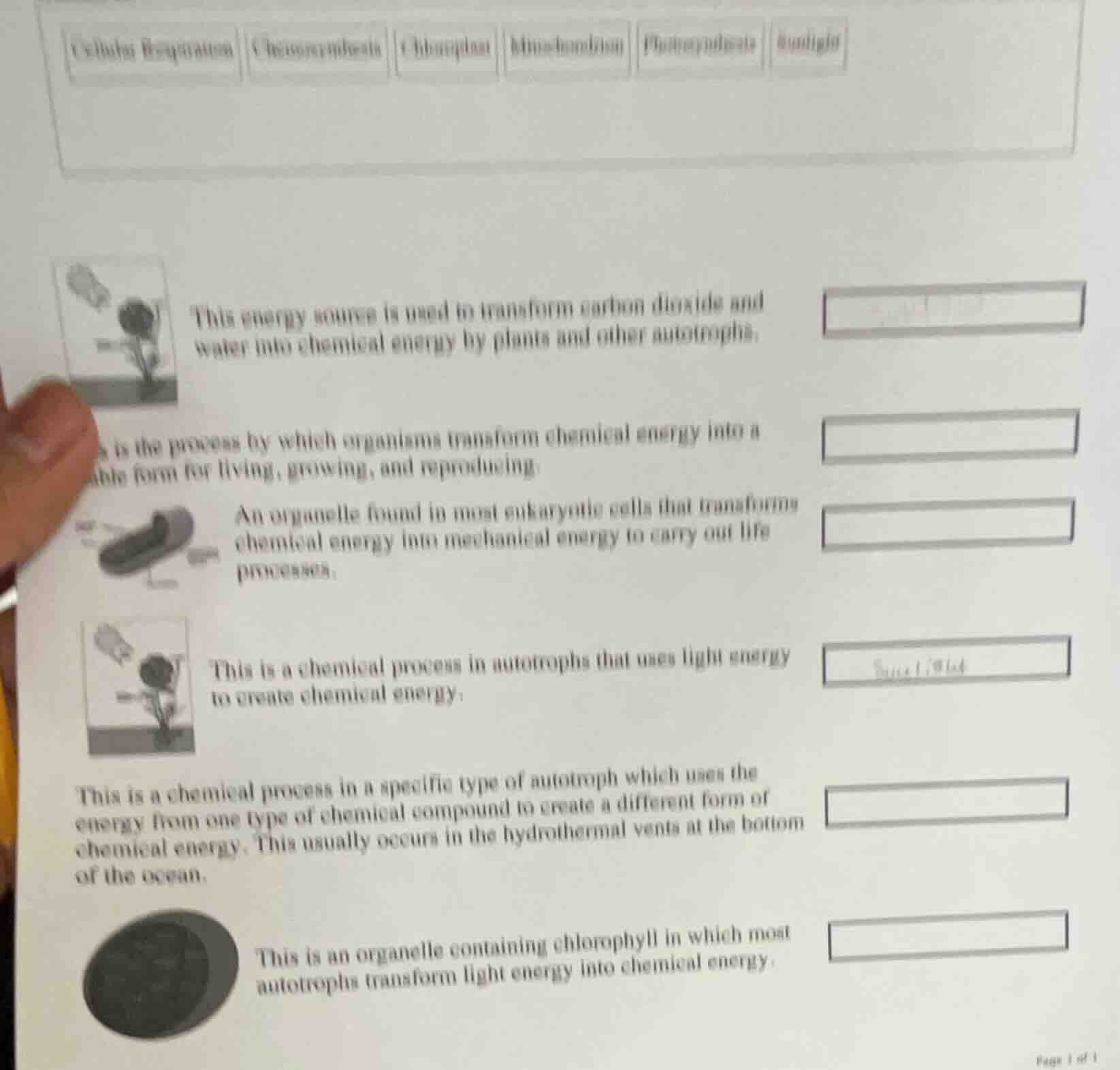
this energy source is used to transform carbon dioxide and water into chemical energy by plants and other autotrophs.
this is the process by which organisms transform chemical energy into a usable form for living, growing, and reproducing.
an organelle found in most eukaryotic cells that transforms chemical energy into mechanical energy to carry out life processes.
this is a chemical process in autotrophs that uses light energy to create chemical energy.
this is a chemical process in a specific type of autotroph which uses the energy from one type of chemical compound to create a different form of chemical energy. this usually occurs in the hydrothermal vents at the bottom of the ocean.
this is an organelle containing chlorophyll in which most autotrophs transform light energy into chemical energy.
- The energy source for plants/autotrophs to make chemical energy from CO₂ and water is sunlight.
- The process of turning chemical energy into usable energy for life functions is cellular respiration.
- The eukaryotic organelle that converts chemical energy to mechanical energy for life processes is the mitochondrion.
- The light-using chemical process in autotrophs to make chemical energy is photosynthesis.
- The chemical process in deep-sea autotrophs using chemical compounds for energy is chemosynthesis.
- The chlorophyll-containing organelle where light energy is turned to chemical energy is the chloroplast.

Snap & solve any problem in the app
Get step-by-step solutions on Sovi AI
Photo-based solutions with guided steps
Explore more problems and detailed explanations
- Sunlight
- Cellular Respiration
- Mitochondrion
- Photosynthesis
- Chemosynthesis
- Chloroplast